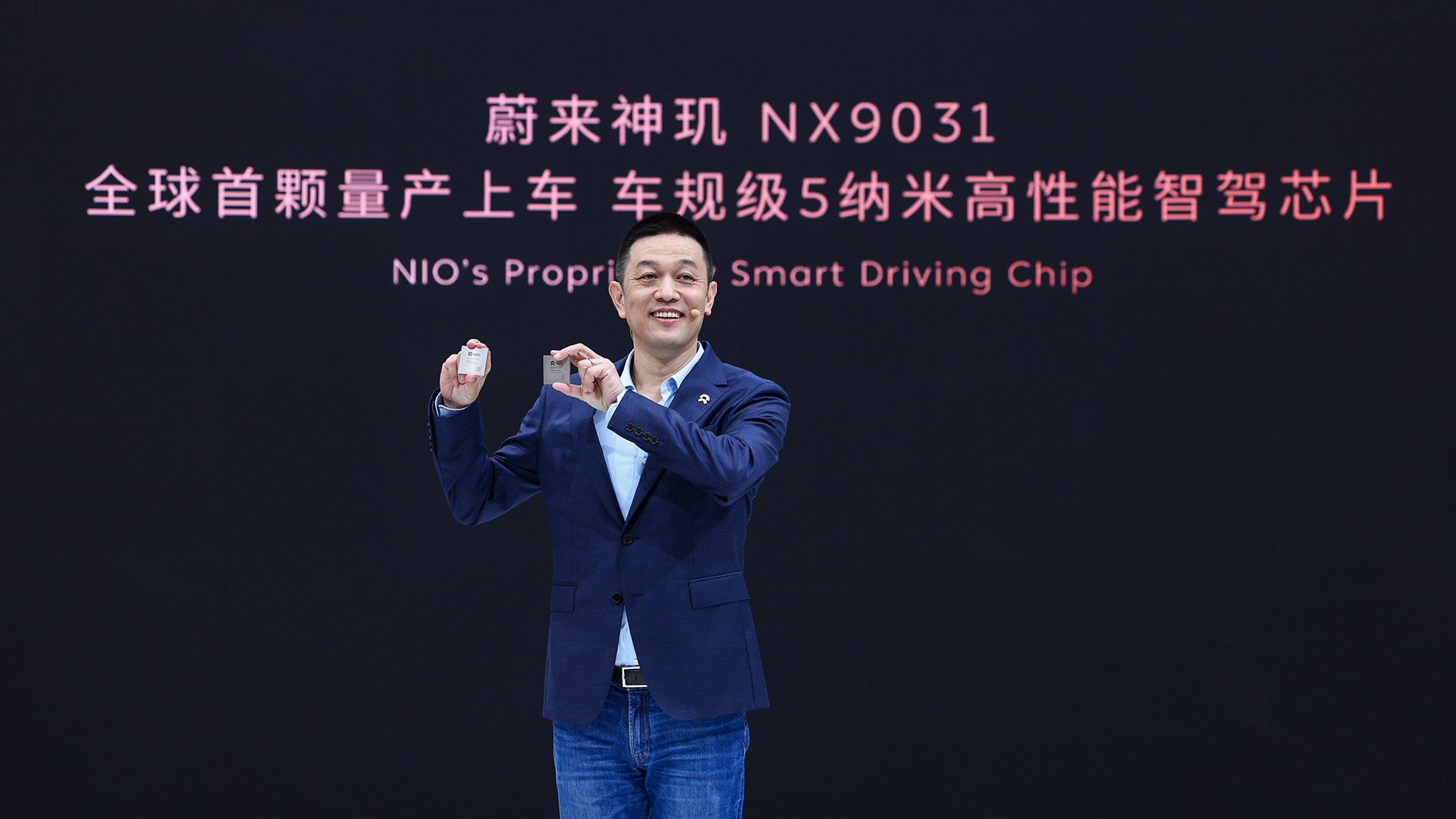
- NIO’s Shenji/Axera joint venture will supply the 700+ TOPS M97 chip externally to automakers like Leapmotor and Geely.
- M97 targets cost-sensitive OEMs by trimming NX9031 power to ~700 TOPS while keeping its architecture to cut costs.
- NIO monetizes chips to offset R&D costs, already earning several hundred million yuan in licensing revenue.
With over 700 TOPS, M97 chip targets cost-sensitive OEMs and rivals Horizon Robotics’ J6P.
NIO is accelerating efforts to supply its self-developed chips externally, with its semiconductor unit Shenji Technology and Axera Semiconductor Co., Ltd. engaging automakers including Leapmotor and Geely following the successful tape-out of the M97 assisted driving chip, according to a Chinese media report citing industry sources.
Last year, NIO spun off its chip business into an independent subsidiary, Shenji Technology.
The subsidiary subsequently established a joint venture with Axera and OmniVision Integrated Circuits, with registered capital of RMB 100 million ($14.5 million).

At this year’s earnings call, NIO CEO William Li made it clear that the company’s second automotive-grade chip will also adopt a 5nm process, delivering performance equivalent to three NVIDIA Orin X chips combined.
Notably, he indicated that the target partner would be a brand outside the NIO ecosystem—a statement that signals the company’s chip business is branching out into the external market.
Under the plan, the M97 chip will be supplied externally through the joint venture.
Axera previously disclosed that the chip is expected to be launched in the third quarter this year, delivering more than 700 TOPS of computing power, benchmarking Horizon Robotics’ Journey J6P (560 TOPS).
To control costs, the M97 retains the architecture of NIO’s NX9031 chip but reduces computing power from over 1,000 TOPS to around 700 TOPS.

According to sources close to the project, this pricing strategy is expected to appeal to cost-sensitive automakers such as Leapmotor and Geely.
For NIO, the shift in its chip business is closely tied to its broader financial strategy.
Financial results released on March 10 showed the company recorded a profit of more than RMB 1.27 billion ($184.66 million) in the fourth quarter of 2025, ending several quarters of significant losses.
William Li has been restructuring operations and tightening cost controls, with chips representing one of the most capital-intensive segments.
He previously noted that the R&D investment for a single NX9031 chip is equivalent to building 1,000 battery swap stations.

Against this backdrop, external chip supply has become a way to share costs. The company is reported to have already generated several hundred million yuan in licensing revenue from chip technology.
Meanwhile, in future chip development, Axera is taking the lead in specification definition and tape-out, further easing NIO’s financial burden.
In addition to the M97, the joint venture is also planning a lower-end chip, codenamed 9031e, targeting performance comparable to Horizon Robotics’ Journey J6M with 128 TOPS of computing power.
Discover more from ChinaEVHome
Subscribe to get the latest posts sent to your email.