- Zeekr locked a cross-border 9X for over 30 hours using a safety mechanism meant to prevent theft and smuggling.
- Zeekr rolled out fixes within 10 days: app auto-unlock, OTA feature switch (off by default), and 24-hour priority support.
- The incident exposes service gaps and forces automakers to speed up user communication and emergency response capabilities.
Recently, discussions surrounding the “Zeekr 9X remote lockout” incident have continued to intensify.
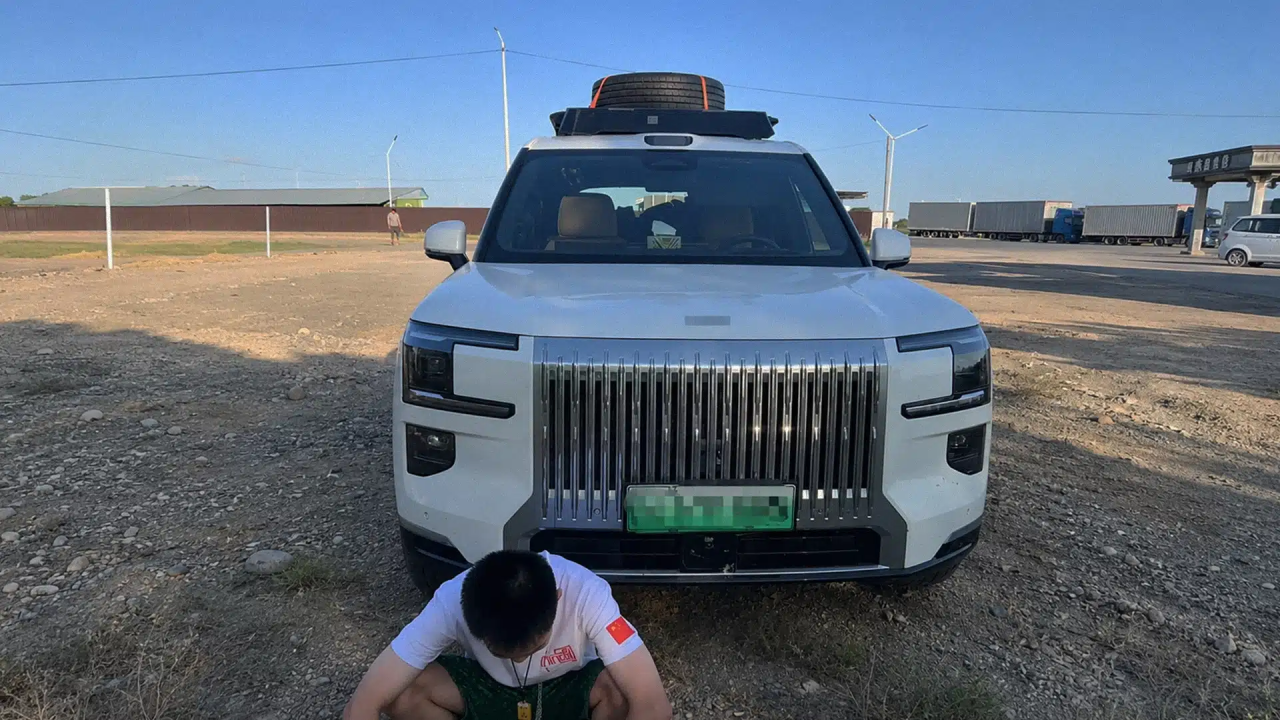
The controversy began after a Zeekr 9X owner claimed on social media that the vehicle was remotely locked while driving across borders.
Vehicle functions including navigation and in-car entertainment were restricted, while the fuel door could not be opened normally.

The situation reportedly lasted for more than 30 hours, quickly turning the phrase “remote lockout” into a major online debate.
Zeekr issued two public responses, explaining that the vehicle had remained located overseas for an extended period, which triggered the vehicle’s “built-in safety protection mechanism.”
The company said core driving functions, including power delivery and braking, were not affected.
On July 26, Zeekr issued another statement, saying the protection mechanism was designed to prevent theft, damage, unauthorized vehicle transfers and smuggling, and represented a “common security measure within the industry.”

The company also announced three improvements: adding an automatic unlocking option through the app under the “Cross-Border Protection” function; introducing a feature switch via future OTA updates (disabled by default); and providing a 24-hour priority customer service channel.
From the initial escalation of the incident to the rollout of solutions, the entire process took less than 10 days.
The cause is now clear and the fixes have been implemented, but two broader questions remain: where should automakers draw the boundary for vehicle software authority? And when similar cases occur again, can manufacturers respond quickly enough?
“Rules” vs. User-Friendly Experience
Why establish cross-border risk controls in the first place? Zeekr’s core explanation is “preventing theft, damage and smuggling.”
Zhengguan News quoted a Zeekr dealership salesperson as saying that cross-border resale of used vehicles has become increasingly common in recent years, with overseas vehicle unlocking services developing into an industry chain.
ChinaEV Home searched second-hand platforms and found that services related to “Zeekr vehicle unlocking” do exist, with prices ranging from RMB 1,600 to RMB 2,660 ($240–$390).

Zeekr’s explanation suggests that software unlocking, illegal transfers and vehicle smuggling have corresponding market demand and potentially significant profit margins.
Two years ago, Zeekr Technology Group Vice President Lin Jinwen celebrated the opening of Zeekr’s 500th global store in Singapore on social media.
He also mentioned that the Zeekr 009 started at SGD 409,999 in Singapore, equivalent to approximately RMB 2.21 million ($325,000).
Compared with the official domestic starting price of the same model, which begins at RMB 439,000 ($64,600), the enormous price gap may be the fundamental reason behind the continued existence of vehicle arbitrage and resale operations.
Zeekr has not disclosed further details about such resale activities.
However, the situation suggests that cross-border resale through domestic purchases followed by overseas unlocking has attracted close attention from automakers and relevant authorities.
The salesperson also said the function currently applies across the entire Zeekr lineup and is related to a 2025 notice jointly issued by four government departments, including the Ministry of Commerce.

“All new energy vehicle companies operate this way; it is not unique to Zeekr.”
Some users on platforms such as Zhihu and Weibo also argued that a single incident should not automatically be interpreted as the company “maliciously locking vehicles.”
Objectively speaking, such mechanisms have their necessity and rationale, but user experience also requires attention.
Generally, users planning cross-border self-driving trips are required to notify the automaker in advance.
According to the Zeekr 9X owner involved in the incident, the vehicle had undergone comprehensive maintenance at an authorized dealership before departure, and the owner had informed staff about the planned cross-border journey.
However, dealership personnel failed to provide timely guidance or warnings.
To some extent, this exposed a service gap within automakers. For smart electric vehicles, software restrictions directly affect the overall ownership experience.
When it comes to software boundaries, how should automakers respond?
A 2025 notice issued by the Ministry of Industry and Information Technology and the State Administration for Market Regulation already outlined several requirements, including clarifying system boundaries and security response measures, fulfilling disclosure obligations, and ensuring product functionality, performance and quality safety.
The notice does not prove that Zeekr’s cross-border risk control mechanism violated regulatory requirements.
Furthermore, through communication between the company and users, the “lockout incident” has already been effectively resolved.
The more important lesson for Zeekr and the wider industry is how to optimize service procedures, learn from real-world cases and prevent similar incidents from happening again.
Learning From Mistakes
Judging from the outcome, Zeekr’s response and corrective actions after the “lockout incident” were relatively fast.
The self-service unlocking function inside the app improved response efficiency, while future OTA updates will introduce corresponding control options.
The company also said it aims to reduce the entire service process time to within two hours.
From the perspective of online users, however, for an owner who had already waited more than 30 hours, the solution came too late.
Regardless of whether the incident was viewed positively or negatively, Zeekr learned from the experience and quickly launched corrective measures, taking the first step toward addressing the problem.
Shortly afterward, the five-seat version of the Zeekr 9X is expected to launch.
With the brand currently under public scrutiny, these corrective actions could also influence market reception after the new model arrives.
Cross-border self-driving represents a relatively limited niche scenario.

According to data from the China Belt and Road Portal, only 2,791 self-driving vehicles passed through the Horgos border checkpoint during the first five months of 2025.
Because such scenarios occur infrequently and involve both border management requirements and vehicle software controls, completely eliminating these situations during initial product design is unrealistic.
The significance of the Zeekr incident lies in the fact that a real-world case exposed gaps in the brand’s service systems and rule communication, while also providing the industry with a valuable test case for handling low-frequency scenarios.
From a long-term perspective, the new energy vehicle industry is still in a period of rapid experimentation, and encountering unexpected problems is inevitable for automakers.
When facing new challenges, the key factor is how companies respond and whether they have the ability to protect users when problems arise.
The remote lockout incident leaves two major lessons for the industry: automakers need stronger communication with users and faster service response capabilities.
As the EV industry enters a more intense “elimination phase,” NIO Inc. founder William Li has described the current competition as a battle of “system capabilities.”
When differences in product specifications become harder to maintain, comprehensive operational strength will increasingly determine winners and losers.
In other words, demonstrating the ability to correct mistakes, strengthen service resilience and provide reliable user support during critical situations will become an essential part of future competition among automakers.
Discover more from ChinaEVHome
Subscribe to get the latest posts sent to your email.