- Imports plunged 48% year‑over‑year to 23,000 vehicles in October, reflecting deeper market contraction and pressure from rising local alternatives and weakening premium demand.
- From January–October, imports totaled 310,000 units, down 23% year‑over‑year, retail sales fell about 45% to roughly 250,000 units, and NEVs made up only ~2% of imports.
- Japan and Germany remain top suppliers while imported luxury brands face share loss to domestic rivals, risking margins and volumes as local production and scaling accelerate.
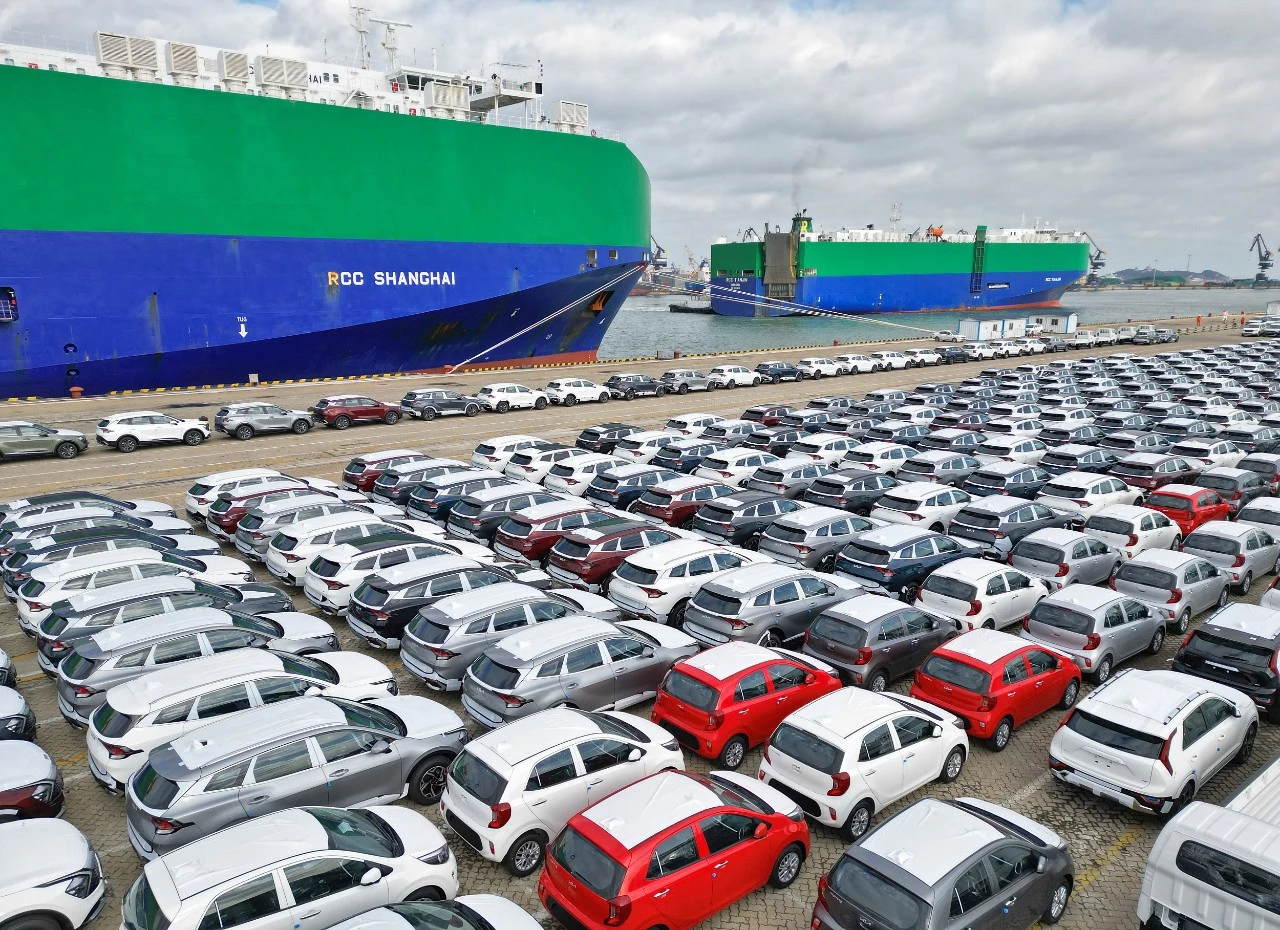
China imported 23,000 vehicles in October 2026, down 48% year over year but up 8% month over month, according to data released on November 27 by Cui Dongshu, secretary-general of the China Passenger Car Association (CPCA).
From January to October, total vehicle imports reached 310,000 units, down 23% year over year.
Even against a relatively low base in the same period last year, import volumes have shown no clear signs of recovery.
The contraction in China’s auto import market did not begin this year. Imports peaked at a record 1.43 million vehicles in 2014, before entering a prolonged downward trend.

The market briefly stabilized in 2016 and 2017, but imports resumed their decline in 2018. Annual volumes fell to 700,000 units in 2024 and dropped further to 480,000 in 2025.
Excluding short-term fluctuations between individual years, the import market has remained in a prolonged period of contraction.
Retail sales have also been weak. From January to October 2026, imported vehicle retail sales totaled approximately 250,000 units, down 45% year over year.
October sales stood at around 21,000 units, representing a decline of 46%.
The simultaneous decline in imports and retail sales indicates that demand remains under pressure, with little prospect of a near-term recovery in the imported vehicle market.

In terms of product mix, passenger cars continued to account for more than 99% of vehicle imports in the first 10 months of 2026.
However, new energy vehicles (NEVs) have yet to provide a meaningful source of growth. NEVs accounted for only around 2% of total imports during the period.
Imports of hybrid passenger cars fell 12% year over year, while battery electric vehicle (BEV) imports declined 27% and plug-in hybrid electric vehicle (PHEV) imports dropped 61%.
Internal combustion engine (ICE) passenger cars remained the mainstay of vehicle imports, while imported NEVs accounted for a relatively small share.
Import sources also remained concentrated among a handful of countries. Japan ranked first in October, with 8,365 vehicles shipped to China.

Germany followed with 7,347 units, ahead of the UK with 3,528. Slovakia and the United States accounted for 1,240 and 814 units, respectively.
From January to October, China imported 145,017 vehicles from Japan and 73,785 from Germany.
Imports from the United States, the UK and Slovakia totaled 29,164, 22,331 and 21,662 units, respectively.
Japan and Germany remain the two largest sources of imported vehicles for China, althoBMWugh imports from Japanese brands have shown considerable volatility in recent months.
Imported luxury cars are also facing mounting pressure.

As Chinese automakers expand into the mid- to high-end segments, consumers have more domestic luxury models to choose from, weakening the traditional brand and product advantages of imported vehicles.
In October, Lexus held an 8.1% share of China’s luxury car market, compared with 2.6% for Mercedes-Benz, 2% for BMW and 1.1% for Porsche.
Imported brands are finding it increasingly difficult to sustain their market positions through brand premiums alone.
As domestic automakers improve their products and multinational carmakers accelerate local production, demand for fully imported vehicles in China is undergoing a structural shift.
Discover more from ChinaEVHome
Subscribe to get the latest posts sent to your email.