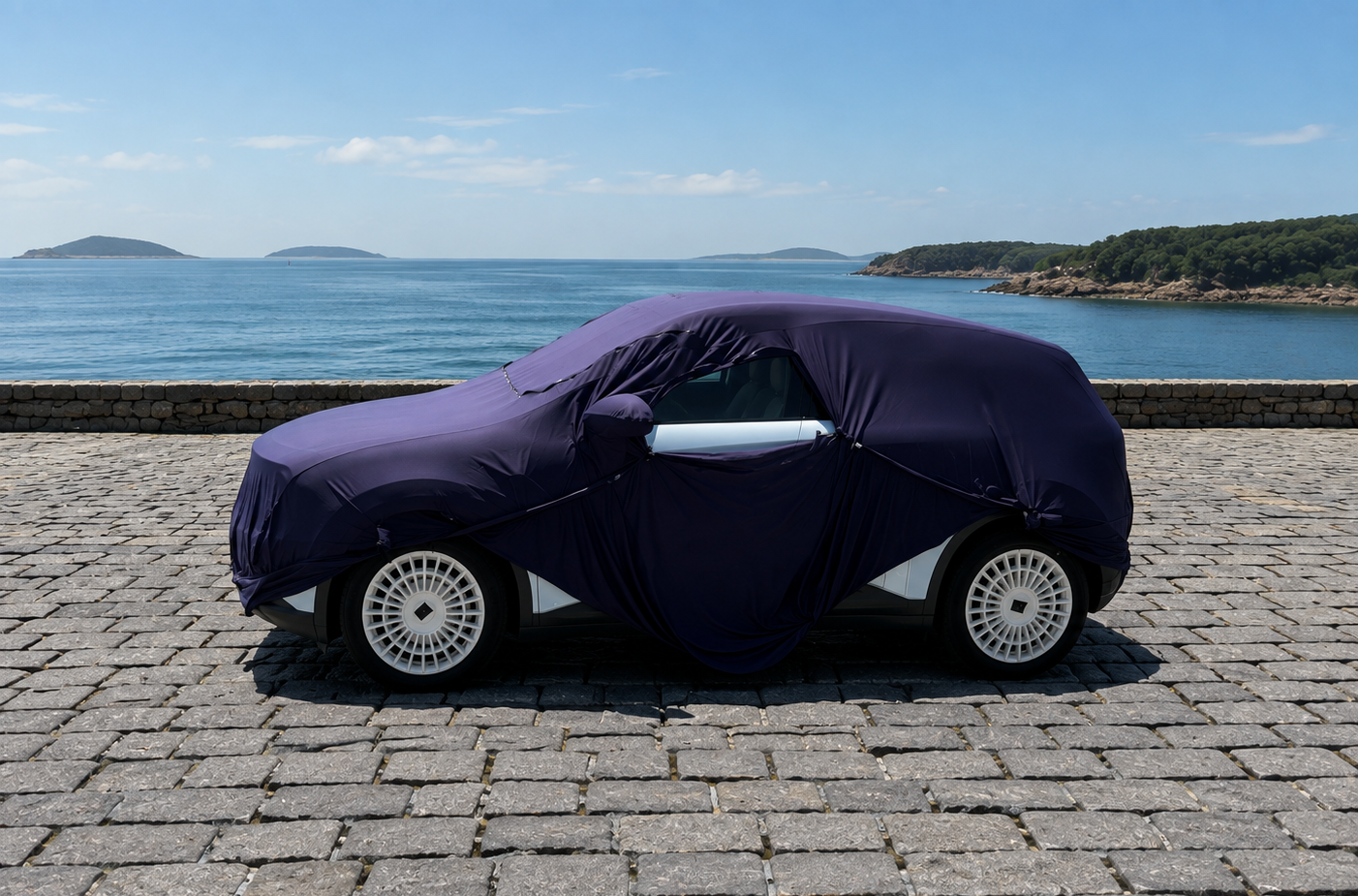
The Firefly Plan’s BaaS (Battery as a Service) scheme, was unveiled to the public on June 24th.
The BaaS scheme retains the familiar formula: the prices of Firefly’s two models are reduced by ¥40,000 (~$5,600) each, to ¥79,800 (~$11,100) and ¥85,800 (~$11,950) respectively, with a monthly battery rental fee of ¥399 (~USD 56). Customers who place an order before 24:00 on June 30th will enjoy a “buy 4, get 1 free” offer on the BaaS battery rental service for the first three years as the first owner.
This means that the first owner can enjoy up to 7 free periods within three years, amounting to a total of ¥2,793 (~$390).

However, it is worth noting that the Firefly battery swap station has not yet been activated. Previously, it was said that the fastest it would use NIO’s fifth-generation battery swap station would be in the first half of 2026.
After BaaS, Firefly is no longer just targeting smart and MINI, but expanding to a broader consumer group such as Starwish, Seagull, and Dolphin. However, this also brings greater competition.
The BaaS scheme is considered NIO’s unique price adjustment method, and its ultimate goal is still centered around promotion. Why did Firefly, which has only been on the market for just over two months, launch the BaaS scheme in advance?
Lowering the threshold
Without the BaaS scheme, the popular small hatchbacks in the market, such as BYD Seagull, Dolphin, Geely Geome, and BinguoEV, even in their top-of-the-line versions, cannot reach the entry-level model of Firefly, which is priced at ¥119,800 (~$16,700).

Although Firefly’s mission is to compete with smart, MINI, and capture the European market, for NIO, which aims to turn a profit in the fourth quarter of this year, volume is also needed to bring marginal contributions and improve financial conditions.
After BaaS, Firefly enters the ¥80,000 (~$11,150)market segment. Compared with the current mainstream small hatchbacks, which require trade-offs in driving control, range, and safety, Firefly has a more significant advantage in terms of comprehensiveness.
The users of small hatchbacks are mainly female, and they are more often used as grocery shopping vehicles and school pick-up vehicles. For these users, the aesthetics of the interior and exterior and safety are the most important product points.
Appearance is a matter of personal taste, but as a small hatchback positioned as a pure electric premium compact car, Firefly’s interior features a leather steering wheel, dual-density high-rebound foam with zero-pressure soft surface layer, and it also comes standard with outlets with intelligent sweeping mode, 256-color ambient lighting, and reading lights for both front and rear rows to enhance the car’s interior refinement.

In contrast, although Seagull and Starwish also have details such as a vanity mirror and reading lights for both front and rear rows, there are still differences in the functional interior configurations compared to Firefly.
For example, both Seagull and Starwish only come standard with 4 speakers, while Firefly comes standard with 14. Another example is the 256-color ambient lighting, which is only standard on the top-of-the-line version of Starwish priced at ¥97,800 (~$11,150)
Such configuration differences are also evident in terms of safety. Firefly has a body stiffness of 35,700 N·m/meg, and it comes standard with 9 airbags, including dual-chamber far-side airbags in the front row, while both Starwish and Seagull have only 6 airbags.

In terms of driving performance, Firefly adopts a rear-wheel drive + five-link independent suspension, which is rare in this price range. In May, the top two small hatchbacks, Geely Geome, although also rear-wheel drive, uses a multi-link suspension, and BYD Seagull is front-wheel drive + torsion beam suspension. In terms of driving feel, Firefly is more compact.
Matching this is Firefly’s ample power. The car’s electric motor has a maximum power of 105 kW, which is significantly higher than the 85 kW of Geome UP/Ultra starting at ¥84,800 (~$11,800), and the 55 kW of BYD Seagull.
Not to mention Firefly’s 420 km range under CLTC conditions, compared to the 410 km of Starwish starting at ¥81,800 (~$11,400) and the 405 km version of Seagull starting at ¥85,800 (~$11,950).

Even in terms of assisted driving, Firefly is equipped with a 120TOPS computing chip, featuring intelligent parking assistance (voice control, remote parking, close-range summoning, etc.), NOP, and active safety configurations such as misacceleration suppression assistance and emergency active braking.
This is in stark contrast to most small hatchbacks that only have a 20TOPS assisted driving chip or even lack assisted driving capabilities.
After BaaS, Firefly is entering the ¥80,000 (~$11,150) market with a configuration close to the ¥120,000 (~$16,700) level, which seems to be very advantageous. However, no one dares to guarantee that “Firefly will sell like hotcakes after BaaS.”
The market below ¥100,000 is an absolutely price-sensitive market.
Starwish offers a 5-year, 24-period 0% interest rate, and a ¥20,000 (~$2,800) trade-in subsidy, which can bring the starting price below ¥60,000 (~$8,350). Seagull has a ¥4,000 (~$560) terminal discount, bringing the mid-range model close to a starting price of ¥70,000 (~$9,750).
Yet, the Firefly’s official guide price of ¥119,800 (~$16,700) remains fixed. Even with the combined benefits of BaaS and various national subsidies, its pricing flexibility still falls short compared to the other two competitors.
BaaS in advance to accelerate volume
The reason why Firefly launched the BaaS scheme two months in advance may be found in Firefly’s recent weekly sales.
In the past month or so, the best weekly sales performance Firefly has achieved was 1,130 units from May 19th to 25th. Last week (June 16th to 22nd), Firefly’s weekly sales were 470 units.

Before Firefly’s launch, the official information revealed and people’s guesses indicated that this was not a model that would take on the role of a high-volume seller. It was positioned to compete with the relatively personalized smart and MINI. Its sales in May (3,680 units) indeed exceeded smart (2,806 units) and MINI (2,239 units).
Li Bin previously revealed that Firefly, in addition to its cost-performance ratio, can also maintain a good profit margin. NIO is also promoting Firefly’s entry into Europe. However, under the ever-changing international situation and NIO’s profit pressure, NIO apparently has higher sales requirements for Firefly internally.
In Firefly’s user community, there are many NIO main brand users or Le Dao users who repurchase Firefly. Li Bin has also mentioned several times the overlap between NIO users and Firefly users. The user loyalty brought by NIO’s products is certainly worth affirming, but “breaking the circle” has always been a challenge for NIO.
Using BaaS as a springboard to participate in the competition of mainstream small hatchbacks is the path Firefly has chosen to enter the consumer’s field of vision and consideration list. This is also a microcosm of NIO’s strategy to participate in a broader competition.
From the stories of NIO’s main brand and Le Dao, we have already seen the attractiveness of BaaS. Over time, it is also clear that the power of BaaS is not as strong as when it first appeared. The ultimate focus still lies in product strength and cost-performance ratio.

As both supporters and opponents of the BaaS policy have mentioned, “That ¥40,000 (~$5,600) still needs to be paid back.” BaaS can only dilute, not dissolve, the original price. Its long-term effect remains to be seen.
But in this week or next week, we will see the increase in Firefly’s sales brought about by the BaaS policy. After all, entering the NIO “cow house” for ¥80,000 (~$11,150) still has some appeal.
(The end)
Discover more from ChinaEVHome
Subscribe to get the latest posts sent to your email.