On the morning of June 23rd, the much-anticipated Xiaomi YU7 had its official release date confirmed.
Lei Jun announced via Weibo that the Xiaomi YU7 launch event would take place at 7 p.m. on June 26th. Along with a range of tech gadgets, a “personal smart device for the next era” would also be unveiled.

After revealing the official release date, Lei Jun posted multiple Weibo messages in a row, discussing the product positioning of YU7. These series of Weibo posts were forwarded and supported by some new energy vehicle (NEV) founders.
Li Xiang (Li Auto), He Xiaopeng (XPeng), and William Li (NIO) successively forwarded Lei Jun’s official announcement Weibo, offering their congratulations while also giving a preview of their upcoming key new models. Their congratulatory Weibo posts were all retweeted by Lei Jun in response.
The positive interactions between the founders of “NIO, XPeng, and Li Auto” and Lei Jun were described by some netizens as a “big unity in the automotive circle.” Others commented that “this is what peers should do,” echoing the stance taken by Li Yunfei from BYD at the beginning of the month, who believed that the frequent mutual disparagement and “dissing” phenomena in the automotive circle were not desirable.

Of course, there were also some skeptical voices, claiming that this was a mutual “hitchhiking on popularity” between “NIO, XPeng, and Li Auto” and Xiaomi.
However, an important change is that in 2025, when YU7 was released, Lei Jun no longer needed to pay tribute to competitors through large-scale advertisements as he did before the debut of SU7 at the end of 2023!
Interactive marketing
The interactions between Li Xiang, He Xiaopeng, and William Li with Lei Jun, though originally intended to congratulate the launch of YU7, turned into a large-scale “sales promotion site” in their content.
Li Xiang set an example for the other executives by directly congratulating the launch of YU7 at the beginning, and then using the rest of the space to build up anticipation for his new car, the i8.
Li Xiang introduced the product positioning and features of the i8 under the topic of “6-seater SUV,” and more importantly, its launch time—formal release in late July. He also emphasized that, unlike YU7’s emphasis on sports orientation, the i8 is “family-oriented,” with a three-row, six-seater layout, which can form a differentiated competition with YU7.

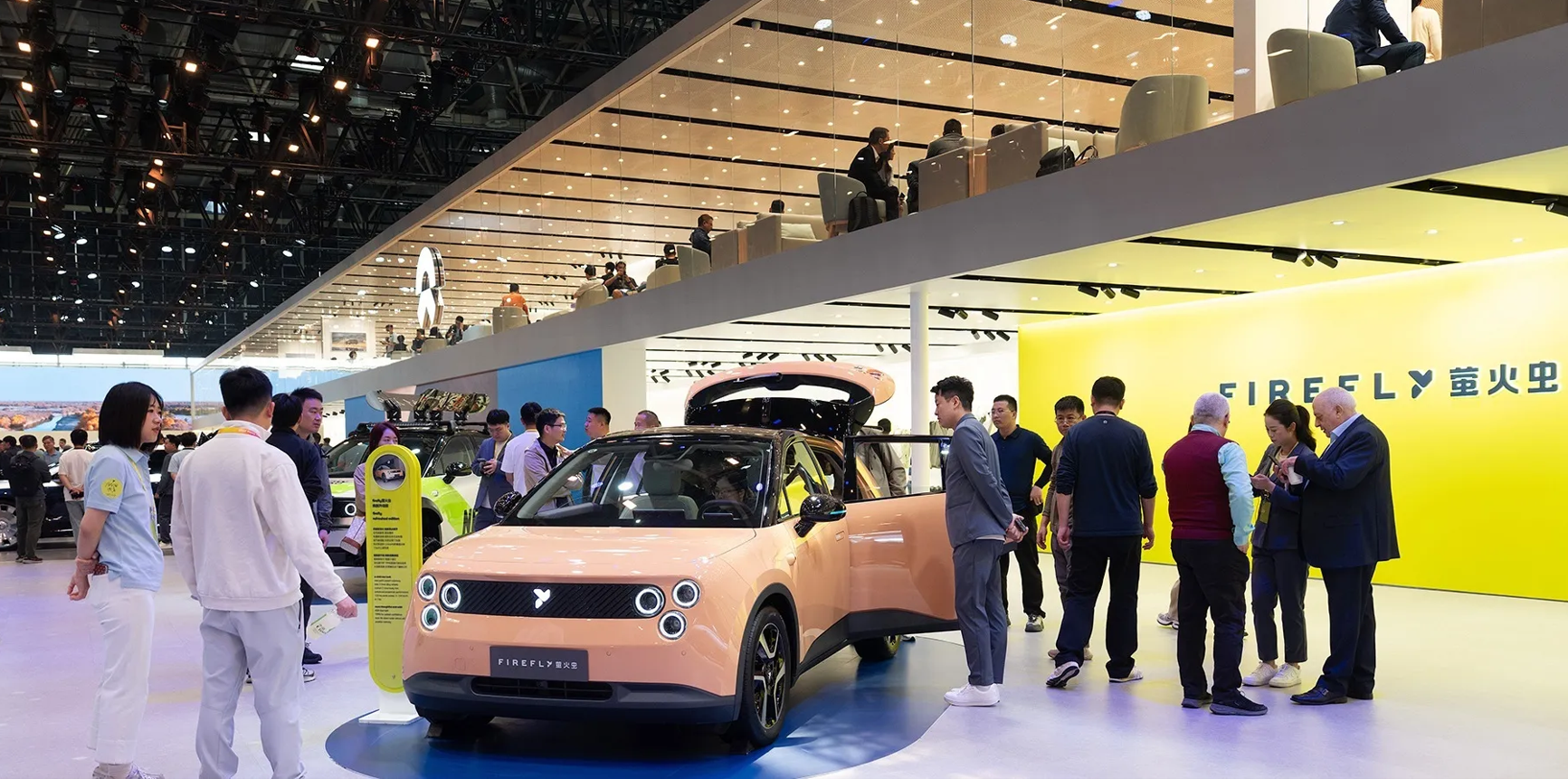
Subsequently, the content forwarded by He Xiaopeng, Shen Fei, and William Li followed the same format. He Xiaopeng focused on the G7, which is characterized by “technology, space, and comfort,” and is also a model that can complement YU7. The key point of “to be released next week” was “friendly mentioned” by Lei Jun in his response.

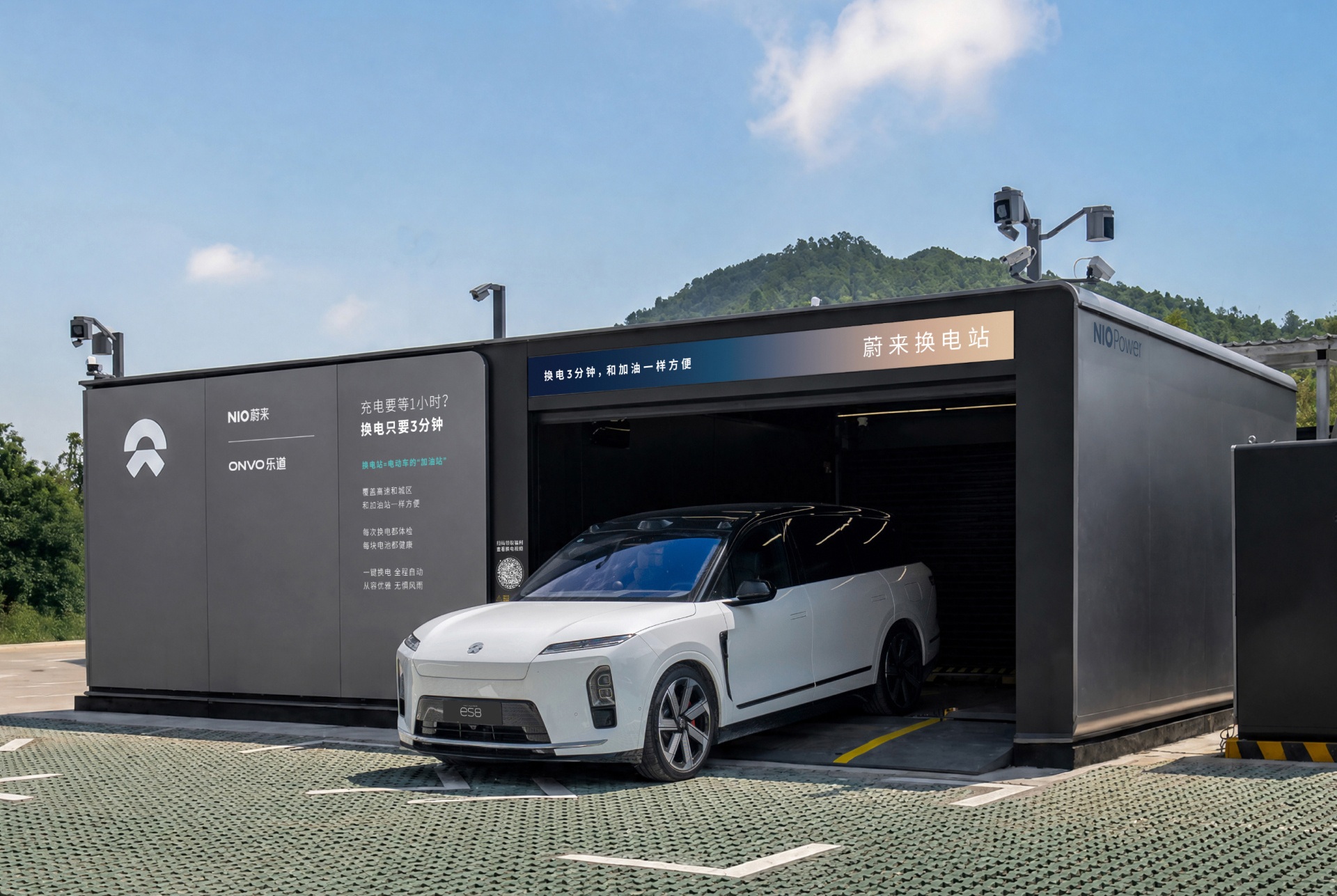
Shen Fei and William Li introduced the new model, the ONVO L90, which will start pre-sales in early July. The main selling points of the car are “extreme space” and “extreme energy efficiency,” and of course, the advantage of being rechargeable and swappable cannot be overlooked.

No wonder some netizens thought that “NIO, XPeng, and Li Auto” were “hitchhiking on popularity.” After all, compared to the congratulations on the launch of YU7, the four executives of the three brands used longer paragraphs to introduce their upcoming key new products in their retweets of Lei Jun’s Weibo, with all the key information such as product highlights and launch times included.
But from another perspective, after being retweeted by the core executives of “NIO, XPeng, and Li Auto,” the Xiaomi YU7 also received wider traffic exposure and is expected to penetrate deeper into the core user groups of “NIO, XPeng, and Li Auto.”
So, the interaction between Li Xiang, He Xiaopeng, William Li, Shen Fei, and Lei Jun can be seen as “mutually beneficial” and “each getting what they want.”
Xiaomi saw the appeal and industry reputation of “NIO, XPeng, and Li Auto,” and interacting with them was equivalent to getting a certain “industry endorsement”; for “NIO, XPeng, and Li Auto,” Lei Jun is a top traffic pool in the Chinese Internet. The new cars can be exposed together with YU7 and gain a significant early traffic advantage.
Setting aside these interest factors, in the current situation where the atmosphere in the automotive industry is increasingly tense and the verbal sparring between automotive executives is becoming more ruthless, the positive interaction between the three NEV companies and Xiaomi is truly precious.
Although this “unity” is still in its early stages at present, and only these three companies have taken the initiative to congratulate the launch of YU7.
However, these three companies are of great importance in the new energy vehicle industry. Their collective show of goodwill is sufficient to indicate that Xiaomi is no longer a novice in the automotive industry.
Sales are the premise of “respect”
Looking back to more than a year ago, at the end of December 2023, Lei Jun, to lament the difficulty of car manufacturing, publicly “paid tribute” to car companies/suppliers such as BYD, Huawei, NIO, Li Auto, and XPeng in both online and offline ways before the first appearance of SU7.

However, not all the car companies that were paid tribute to responded publicly to Xiaomi’s tribute.
Online opinions were also divided into two camps. Some people thought that Lei Jun’s tribute could reflect his “great vision” and “modest” attitude, while others thought it was just a part of the marketing strategy.
The first round of Lei Jun’s active tribute did not achieve particularly good results, which may be related to the fact that SU7 was just starting out. But a year later, the reaction in the public opinion field seemed to have a complete reversal.
In mid-2025, the news of the new car’s launch alone could attract the retweets and congratulations from the executives of the three major NEV companies, NIO, XPeng, and Li Auto. In addition to Lei Jun’s rich personal connections and strong influence, it is also directly related to the improvement of Xiaomi’s industry status.
The improvement of Xiaomi’s industry status in the automotive sector is inseparable from its sales success.
Since the delivery began in April 2024, within about 14 months (up to June 6th), the delivery volume of Xiaomi SU7 has reached 250,000 units. So far in 2025, Xiaomi’s monthly car sales have all been above 20,000 units.

If we discuss the sub-segment track, Xiaomi SU7 is the sales champion of pure electric sedans above 200,000 yuan, and it has suppressed Tesla Model 3 for quite a long time.
Therefore, considering the time when Xiaomi entered the automotive industry and the convincing sales performance as support, it is natural for Xiaomi to gain the respect of other “pioneers” in the new energy vehicle industry.
Looking back, the netizens’ comments are not false. Whether it was the “active tribute” more than a year ago or the friendly interaction with “NIO, XPeng, and Li Auto” this time, the essence is a marketing strategy.
However, compared with the mainstream “dissing” and “slander” in the industry, Xiaomi’s marketing approach is more sophisticated and more acceptable to the public.
On the one hand, Lei Jun responded to the public’s desire to see “unity in the automotive circle” and got along well with competitors. On the other hand, Xiaomi’s hypothetical enemy has never been Chinese new energy vehicle companies, but the long-standing sales king in the pure electric SUV track – Model Y.
United we stand
The eight words “unite friends and confront the enemy” are enough to summarize the series of pre-launch communication actions of YU7.
Lei Jun clearly mentioned in his Weibo post that “Xiaomi YU7 will continue to challenge Model Y.”
In May 2025, Tesla Model Y was still the sales champion of the SUV category, regardless of power form, with a monthly sales volume of 24,700 units. Looking back at the whole year of 2024, Model Y’s domestic sales volume reached 657,000 units, an increase of 8.8% year-on-year. In the second half of 2024, several “Model Y killer” SUVs emerged in the domestic market, but none of them managed to shake Model Y’s dominant position.

Sales data and past actions of other car companies tell us that using a pure electric SUV to challenge the dominant position of Model Y is still the most arduous task in the Chinese car market at present.
And to achieve the “unbelievable” goal mentioned by Lei Jun, it seems that Xiaomi YU7 is well-prepared in terms of “product strength” at present.
To enhance product strength, YU7, which is built on the same platform as SU7, has made many upgrades, such as the standard configuration of 800V high-voltage platform, laser radar, and advanced driving assistance system for the whole series; the entry-level model’s range has exceeded 800 kilometers (CLTC condition), and the top model’s 0-100 km/h acceleration time of 3.23 seconds is comparable to the high-performance version of the 2024 Model Y.

Although the price has not been announced yet and will be revealed at the launch event, it can be imagined that if YU7 wants to challenge Model Y, the price distribution of its different SKUs is likely to be at a similar level.
However, the reality is that in late 2024, the pure electric SUVs called “Model Y killers” all had configuration and price advantages compared to Model Y. But models such as ZEEKR 7X, ONVO L60, LUXEED R7, XPeng G6/G9 still have a certain gap in sales compared to Model Y.
Still taking May 2025 as an example, the “Model Y killer” with the highest sales volume closest to Model Y is ONVO L60, with a monthly sales volume of 6,281 units.

Judging from the experience of predecessors, for Chinese new energy vehicle companies to challenge Model Y, relying solely on “product strength” is not reliable. Looking back at the story of SU7’s battle with Model 3, it can be found that “brand strength” is also very important.
Speaking of which, the logic is now complete – Xiaomi’s unity with other new energy vehicle brands is an important means of strengthening its brand strength.
Through the interaction with the executives of “NIO, XPeng, and Li Auto,” Xiaomi can not only accumulate a positive brand image but also penetrate into more “high-value” users. It should be noted that the fans of “NIO, XPeng, and Li Auto” are almost the earliest and most loyal supporters of new energy vehicles in the Chinese market.
Therefore, in front of the grand narrative of “defeating Model Y,” whether their interaction is “polite” or “hitchhiking on popularity” is no longer important.
And with such a background, it is even more exciting to see whether Xiaomi YU7 can truly become a “Model Y killer” not by “quarreling” but with a “smiling face.”
(The end)
Discover more from ChinaEVHome
Subscribe to get the latest posts sent to your email.