Xiaomi launched the YU7 on June 26, receiving over 240,000 orders in 18 hours. This time, Tesla may finally have met a challenger worth taking seriously.
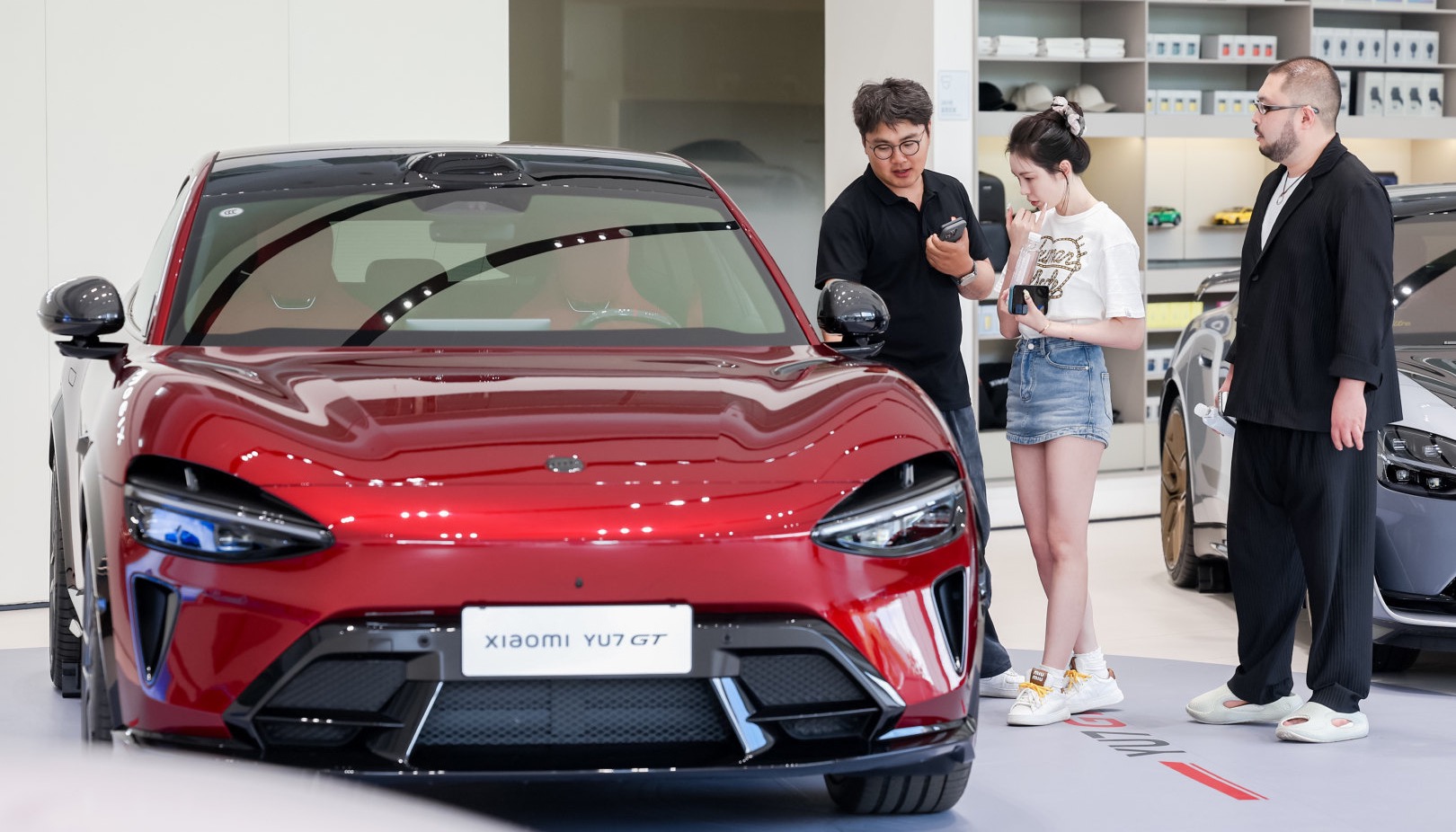
On the evening of June 26, Xiaomi officially unveiled the YU7.
As the brand’s second model — and its first entry into the SUV segment — the YU7 secured 240,000 confirmed orders within just 18 hours of launch.

This result far exceeded expectations and once again sparked debate over whether a real “Model Y challenger” had finally arrived.
Even during the product pre-launch phase, Xiaomi CEO Lei Jun repeatedly tried to manage pricing expectations. He publicly compared the YU7 to the Tesla Model Y, stating that a model with such specifications should cost at least RMB 60,000–70,000 more than the Tesla, and certainly couldn’t be priced just RMB 20,000–30,000 above the SU7.

After all that buildup, Xiaomi ultimately released a pricing strategy that landed in a relatively reasonable range.
Specifically, the YU7 comes in three versions:
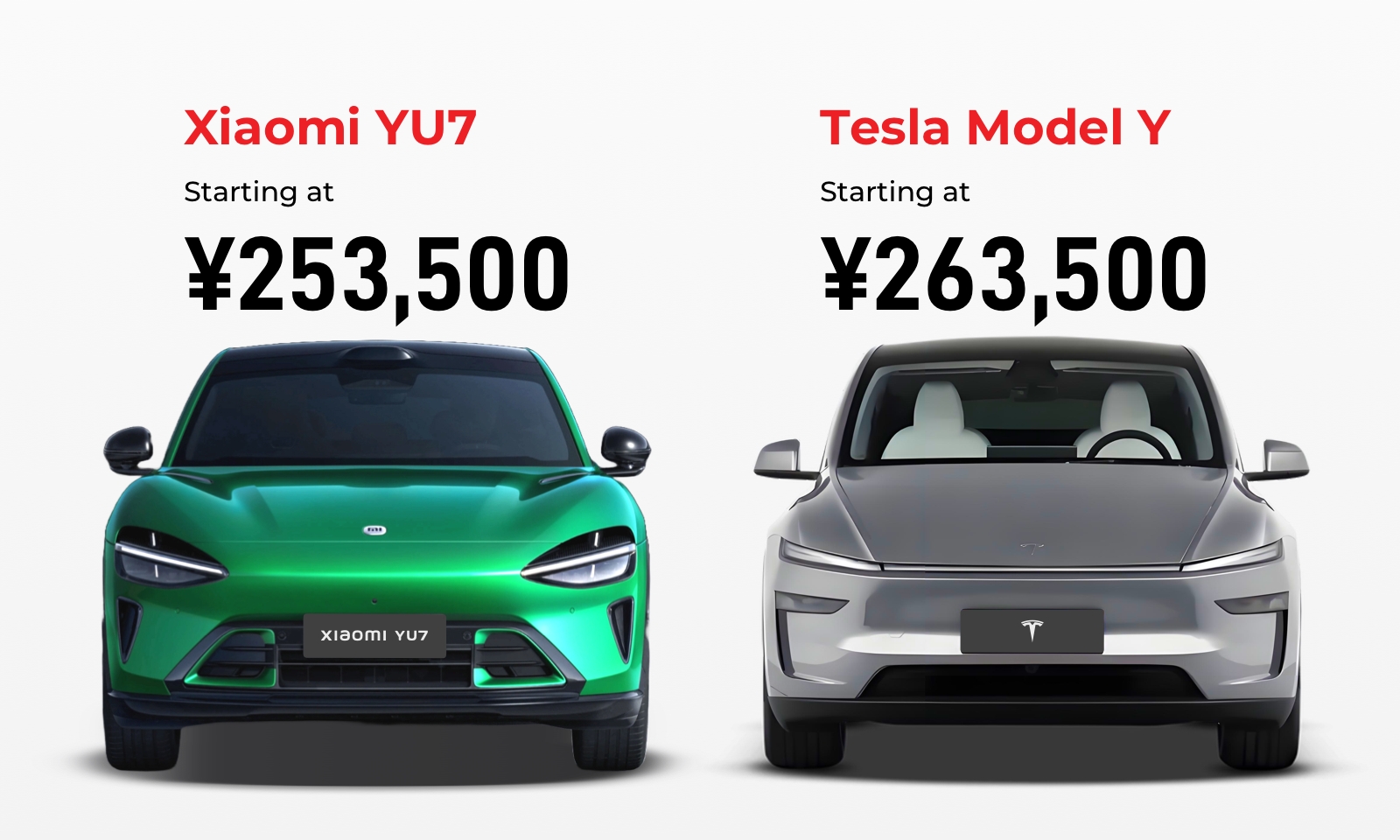
- Standard: RMB 253,500
- Pro: RMB 279,900
- Max: RMB 329,900
This pricing puts it directly in the Model Y’s territory, but with more competitive specs and features, giving the YU7 a differentiated edge.

In terms of dimensions, the YU7 measures 4999 × 1996 × 1608 (or 1600) mm, with a wheelbase of 3000 mm — all larger than the Model Y (wheelbase 2890 mm, length 4797 mm), offering superior space.
For core EV hardware, all YU7 variants are built on an 800V high-voltage platform. The Standard and Pro versions use a 96.3 kWh LFP battery supplied by FinDreams, while the Max is equipped with a 101.7 kWh NCM battery from CATL, supporting ultra-fast 5.2C charging. In contrast, the Model Y remains on a 400V platform, with either a 62.5 kWh or 78.4 kWh pack and a peak charging rate of around 3C — a notable gap in hardware.

As for range, the YU7 offers 835 km (Standard), 770 km (Pro), and 760 km (Max) on the CLTC cycle — all exceeding the Model Y Long Range’s 719 km.
Performance differs by version:
- The Standard model is rear-wheel drive with a single motor rated at 230 kW, delivering 0–100 km/h in 5.8 seconds.
- The Pro adds dual-motor AWD with 365 kW and a 0–100 km/h time of 4.27 seconds.
- The Max retains AWD but boosts power to 508 kW, hitting 100 km/h in just 3.23 seconds.

On the intelligence front, the YU7 features Qualcomm’s Snapdragon 8 Gen 3 chipset for the cabin system and NVIDIA’s Thor-U chip for driver assistance, delivering 700 TOPS of compute. While Tesla still holds an edge with its custom FSD chip, Xiaomi’s 10-million-Clip smart driving model could give it a localized advantage in Chinese driving conditions.

Inside the cabin, the YU7 offers optional zero-gravity seats for the driver and front passenger, and electric rear seat adjustments with recline angles up to 135°. Combined with magnetic accessories and an electrochromic panoramic roof, the in-cabin experience is tailored to Chinese consumer preferences.

Interior design is always subjective — some may prefer Tesla’s minimalist style, while others might appreciate Xiaomi’s more feature-rich approach. What’s noteworthy is how extensive the YU7’s optional accessories are, ranging from magnetic physical buttons to advanced roof systems — arguably among the most customizable setups in today’s EV market.

That said, challenging the Model Y is no easy feat. Many Chinese EVs have tried — offering better specs and sharper prices — but none have yet dethroned the Model Y as China’s top-selling electric SUV.
Xiaomi’s momentum with the YU7 is real. The 289,000 orders in just one hour reflect a mix of brand heat, consumer enthusiasm, and a well-calibrated pricing strategy. The SU7 managed to outperform the Model 3 — now the question is: can the YU7 do the same to the Model Y?
It’s still too early to say. But one thing is certain: this time, Tesla may finally have met a challenger worth taking seriously.
Discover more from ChinaEVHome
Subscribe to get the latest posts sent to your email.