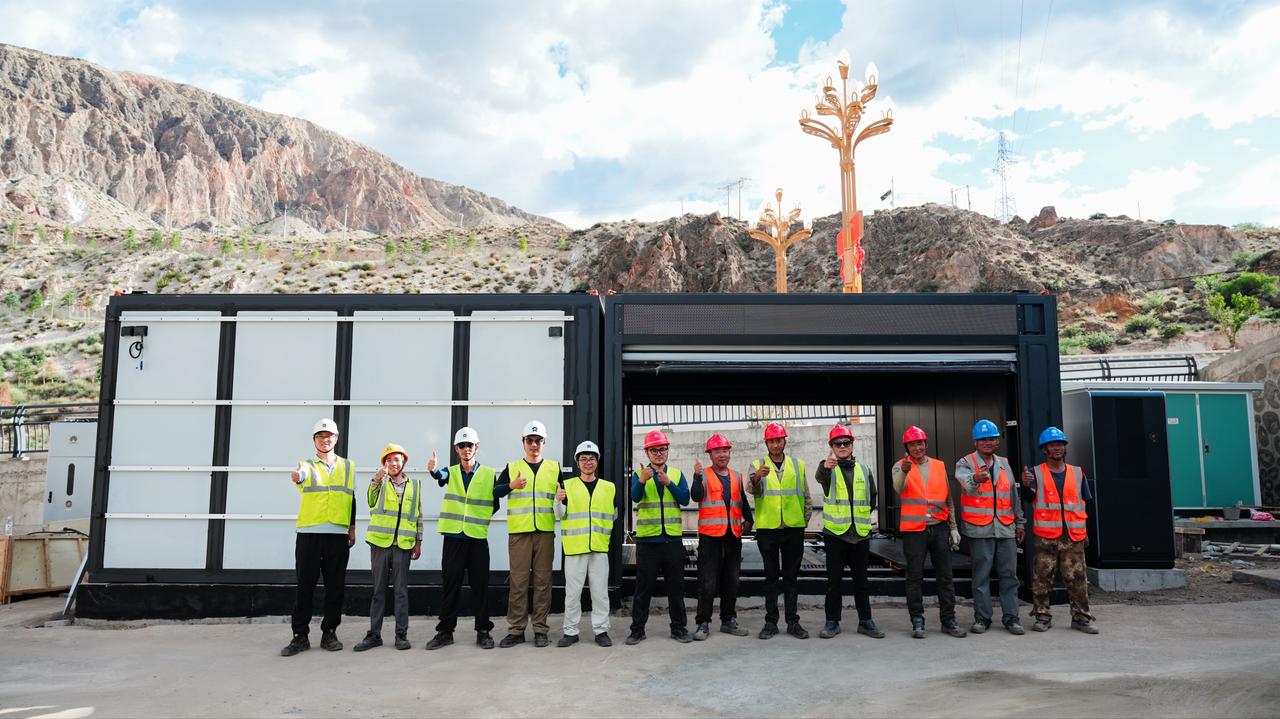
NIO plans to build 15 battery swap stations along the G318 Sichuan-Xizang Highway. As of now, 10 are operational and 5 are under preparation.
On August 4, NIO announced the completion of its 15th battery swap station along the G318 Sichuan-Xizang Highway—the new station located in Baxoi County, Chamdo, Xizang. The station is expected to be officially put into operation soon.

Baxoi is a key waypoint on the Sichuan-Xizang Highway, situated in a region of high-altitude valleys with complex climate conditions. It has long been a difficult area for deploying new energy infrastructure.
According to NIO’s plan, a total of 15 battery swap stations will be built along the G318 Sichuan-Xizang Highway, creating a continuous energy replenishment route stretching from western Sichuan to eastern Xizang.
Currently, 10 of these stations are already operational. These include 3 in Ya’an, 2 in Lhasa, 2 in Nyingchi, 2 in Garzê, 1 in Zogang, and 1 in Shigatse. The remaining 5 stations—located in Bomê County, Tingri County, Litang County, Gongbo’gyamda County, and Baxoi County—are now in the final stages of preparation for launch.
The completion of the Baxoi station signifies that one of China’s most iconic self-driving routes, the G318, will soon offer seamless battery swapping from Chengdu all the way to Mount Everest.

As of publication, NIO has built a total of 3,434 battery swap stations across China, with users having completed over 81 million swaps. Among these, 1,000 stations are located along highways, connecting 550 cities nationwide. This forms a fast-charging and swapping network that covers “9 vertical, 11 horizontal, and 16 major city clusters.”
The full deployment of battery swap infrastructure along the G318 is a key milestone in NIO’s western expansion strategy, reinforcing a vital energy replenishment artery.
Discover more from ChinaEVHome
Subscribe to get the latest posts sent to your email.