The fuel consumption of BYD’s fifth-generation DM hybrid technology has been further reduced from the previous 2.9L/100km to 2.6L/100km, marking a 10% decrease.
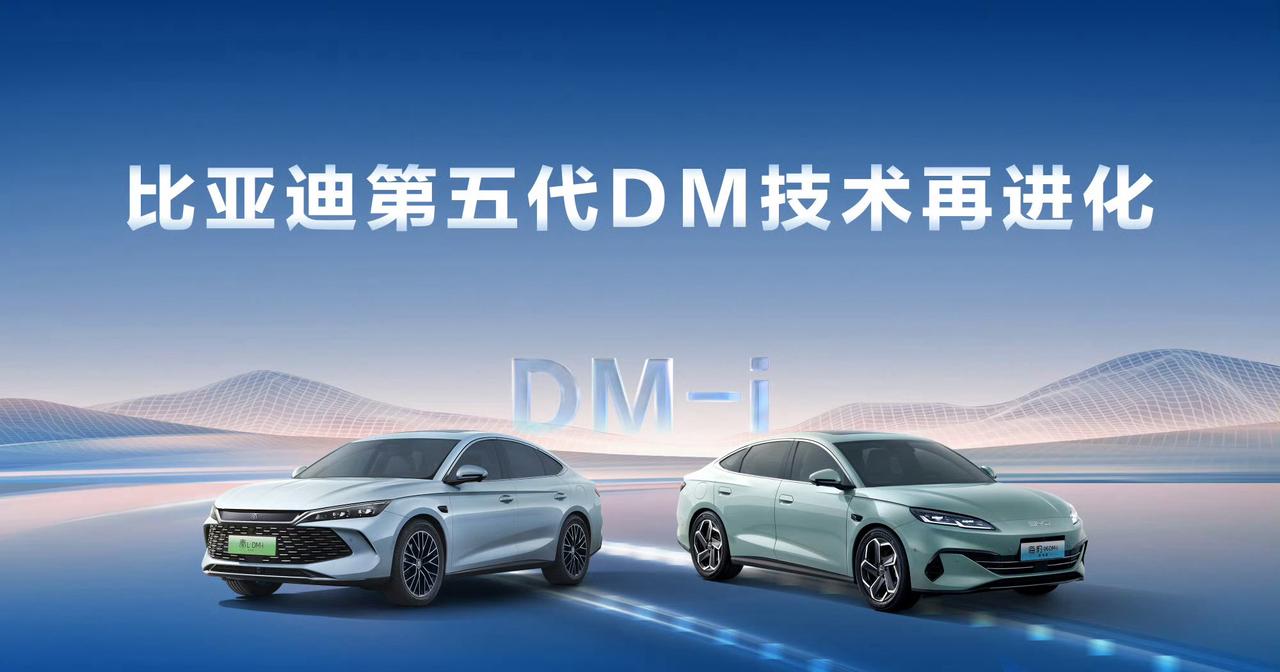
On August 5, BYD held a technology launch event titled “King of Hybrid: Further Evolution” in Kunming, Yunnan province, officially announcing a breakthrough in its fifth-generation DM (Dual Mode) hybrid technology: NEDC fuel consumption under depleted battery conditions has dropped from 2.9L/100km to 2.6L/100km — a 10% reduction.
According to the company, this new achievement has been certified by the National Automobile Quality Supervision and Inspection Center (Guangdong).

This marks another significant upgrade since the launch of the DM 5.0 system in May 2024.
The core of this upgrade lies in BYD’s coordination of software and hardware strategies. Even as hardware efficiency approaches its limit, improvements have been made in thermal efficiency, electric drive systems, and performance under low battery conditions.
What’s more, the driving force behind this technological advancement is not hardware, but AI algorithms and massive amounts of real-world driving data. According to BYD, vehicles equipped with the fifth-generation DM technology have sold over 1.5 million units, generating an average of more than 2.8 billion kilometers of driving data per month, covering over 1.8 million distinct driving scenarios.
Leveraging the vehicle-level intelligence of its proprietary XUANJI Architecture, BYD has developed AI models for both the engine and the three-electric (motor, battery, controller) systems. These models apply deep learning to vast amounts of user driving data, enabling the system to generate optimal fuel-saving strategies for each driving condition.

Take the Qin L DM-i and Seal 06 DM-i — both equipped with the new technology — as examples. With a full tank and full charge, the combined driving range can reach up to 2,100 km. Under the latest OTA update, fuel consumption can be reduced by an additional 0.3L per 100 km, saving drivers around ¥40–50 ($5.60–$7.00) per tank of fuel.
BYD has announced that this technology upgrade will be pushed to all fifth-generation DM models via OTA updates free of charge.

According to data, BYD sold 344,296 passenger vehicles in July, a year-on-year increase of 0.56%, but a 10.01% decline compared to the previous month. Among these, plug-in hybrid electric vehicles (PHEVs) accounted for 163,143 units, representing a year-on-year decline of 22.61% and a month-on-month decrease of 4.45%. This marks the fourth consecutive month of year-on-year decline in PHEV sales for BYD.
The introduction of this new technology may provide fresh competitive momentum for BYD’s hybrid product lineup.
Discover more from ChinaEVHome
Subscribe to get the latest posts sent to your email.