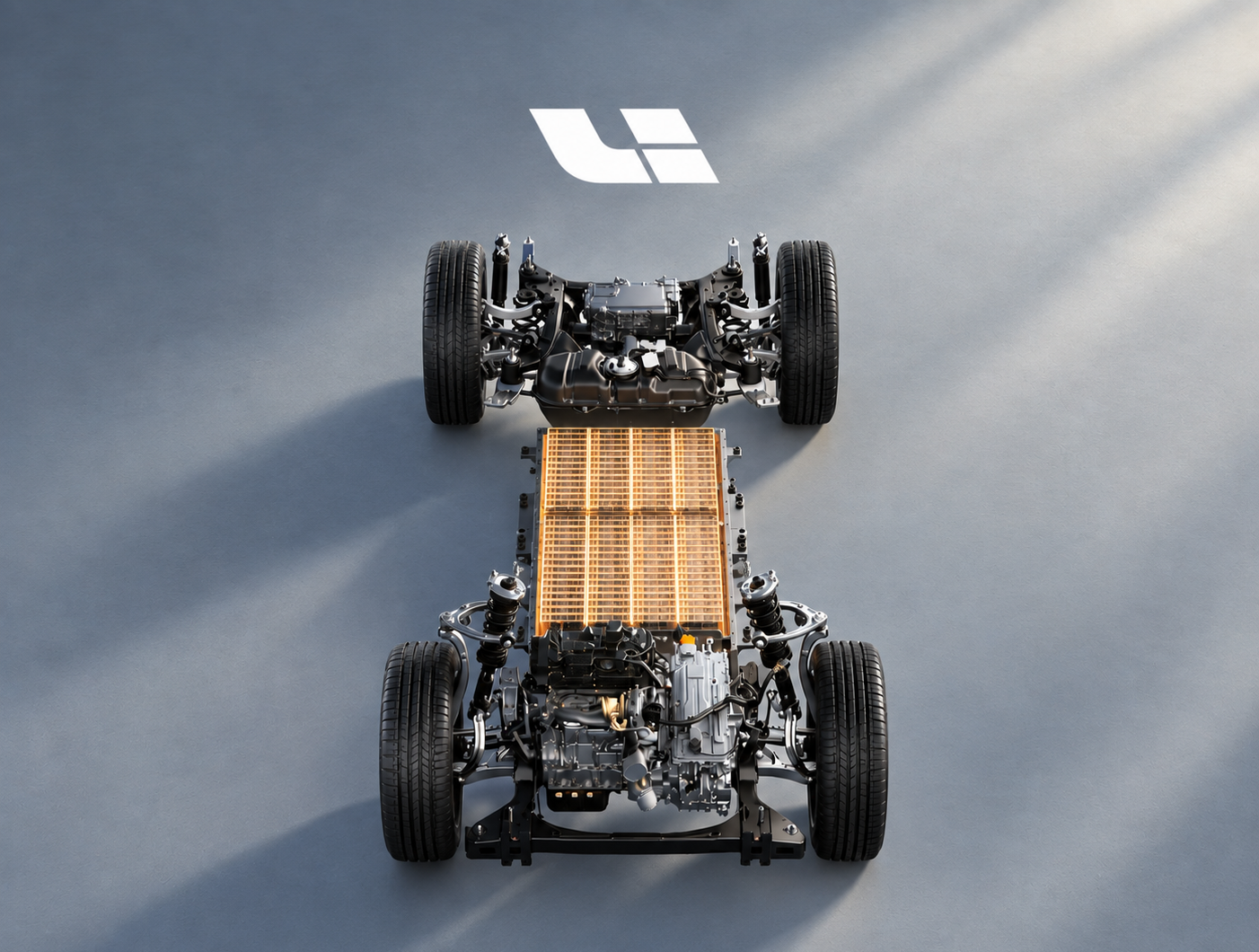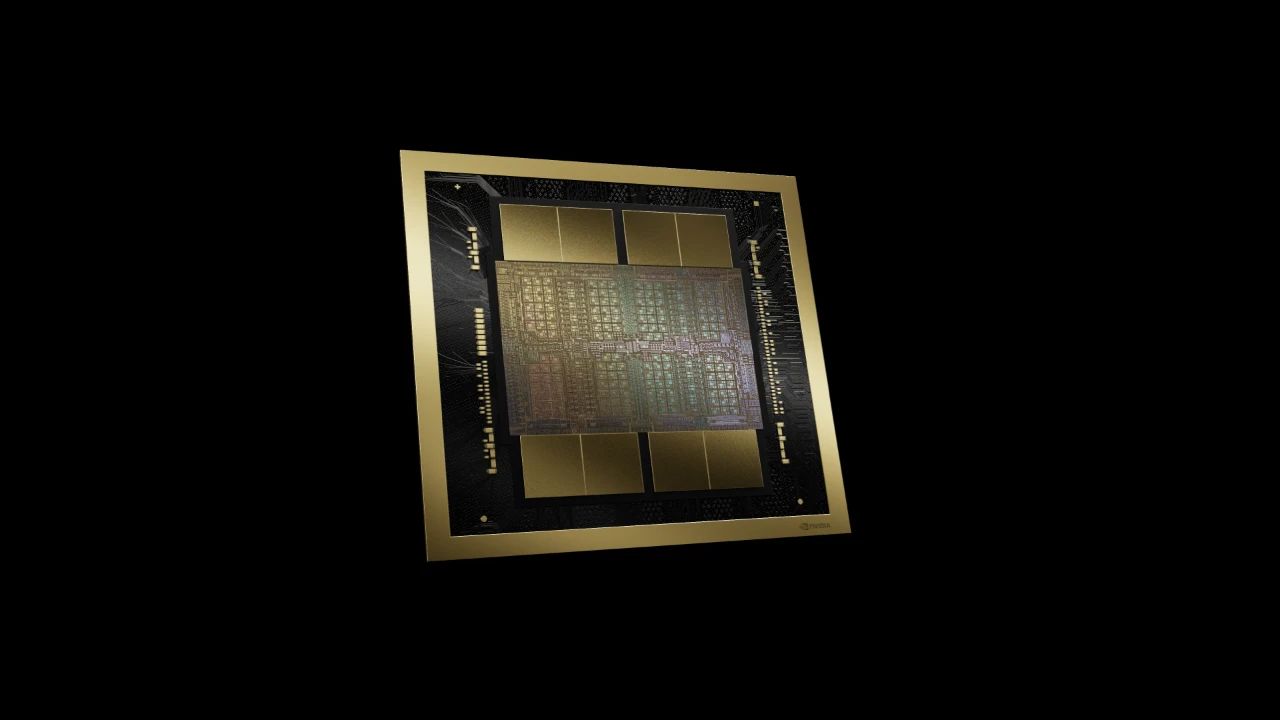
Why can Li Auto achieve 2000 TOPS computing power with the same Thor chip?
This belated explainer aims to clarify the recent controversy over raw compute performance that has emerged in the past month.
Let’s rewind to the Li Auto i8 launch event two weeks ago.
At the launch event, Li Auto’s head of intelligent driving, Lang Xianpeng, stated that the Thor chip deployed in the i8 can achieve 2,000 TOPS of compute—as measured on a single chip.
However, since Thor’s release, the standard Thor-U version has consistently appeared in various promotional materials with “700 TOPS” of single-chip computing power.
That discrepancy begs the question: why does Li Auto assert their Thor-U runs at 2,000 TOPS? Is NVIDIA downplaying its chip’s capabilities—or is Li Auto exaggerating?
The reality is straightforward: while each Thor-U chip can achieve up to 2,000 TOPS under certain configurations, not every automaker can harness that full capability immediately.
In 2025, competition in driver-assist chips continues to escalate. Car buyers are now facing more than just numerical spec wars—concepts like inference precision significantly influence a vehicle’s theoretical compute capability.
The concept we aim to clarify today is Precision.
Did Li Auto Exaggerate?
Before diving into NVIDIA and Li Auto, it’s worth introducing two other examples—Qualcomm and Leapmotor.
In March this year, Leapmotor officially launched the B10, one of the first production models equipped with the Qualcomm Snapdragon SA8650 ADAS chip.

Interestingly, if you search for the SA8650’s computing power, you might find two different numbers:
- 100 TOPS (Dense INT8)
- 200 TOPS (Sparse INT8)
For instance, Leapmotor initially promoted the SA8650 using the “100 TOPS dense INT8” figure.
Dense computing power inherently performs indiscriminate calculations on all contiguous data, like a diligent worker focused solely on the task. Sparse computing power, however, is dynamic computation based on conditional judgments—more like a shrewd worker who picks the perfect moment to act.
In other words, a chip’s compute power isn’t a fixed number. Under different operating conditions, the very same chip can deliver markedly different performance.
The reason Li Auto claims their Thor-U can achieve 2000 TOPS lies in the condition of “Precision.”
Precision can be simply understood as the level of detail in the calculation. For example:
- High Precision: My height is computed as 1.801234 m.
- Low Precision: My height is computed as 1.8 m.
In this context, there’s no practical difference in the outcome (knowing how tall I am) at the application level. But it causes a world of difference in the computation process (one using a measuring tape, the other requiring a laser device).

Precision Standards: More Than Just Sparse/Dense
Also, because different standards use different algorithms, besides sparse/dense, we must also factor in “Precision” to determine a chip’s actual computing power under specific working conditions.
Dating back to the i8 launch slides, Lang Xianpeng’s presentation showed that in the industry-standard FP16 precision, the Thor-U could unleash 500 TOPS.

FP16 is currently the commonly used, high-efficiency native precision in the industry. According to NVIDIA’s blog, the Thor platform places greater emphasis on “FP8” precision.
At this precision, NVIDIA’s official blog gives a figure of 1000 TOPS, matching the number on Li Auto’s official slide.

However, William Li stated on Weibo that because Li Auto officially uses “INT8 and FP8 mixed inference,” the final achievable computing power is 700 TOPS per chip. This has been the Thor-U figure promoted by automakers over the past year.

In fact, Li Auto’s use of mixed precision (dual-precision) inference is standard practice.
Looking back at automakers’ Thor promotions, the numbers consistently referred to mixed precision, or rather, leaned towards the INT8 precision’s 700 TOPS figure. Documents provided by an industry source familiar with intelligent driving confirm that Thor’s pure INT8 precision computing power is exactly 700 TOPS.
The reason the same Thor chip also calculates with different precisions is essentially because the previous generation Orin X’s official specs were “254 TOPS INT8 computing power.”
With the Thor generation, it now simultaneously supports both FP8 and INT8 precisions. This leads us to the next conclusion: Mixed inference between different precisions also impacts the final computing power figure, resulting in the various performance numbers we see.
We won’t delve too deep into the principles. Simply put: In mainstream inference environments, INT8 computations consume more resources than FP8, and mixed-precision inference adds further overhead due to format conversions.
Back to the numbers: So far, 500, 700, and 1000 TOPS all align with the promotional claims from both NVIDIA and automakers.
But where did the 2000 TOPS come from?
The Performance Game & Implementation Difficulty
The answer is straightforward: If precision can drop from 16 to 8, why not drop from 8 to 4?
While the use cases differ (gaming, ADAS, AI training), NVIDIA’s chips strive to converge on the same underlying architecture. The Thor series is built on the Blackwell architecture.
And the Blackwell architecture is the first NVIDIA architecture to support FP4 precision at the architectural level.

At lower precisions, the same chip naturally yields higher computing power figures. For instance, the Thor-U can soar to an impressive 2000 TOPS.
Even Qualcomm’s SA8650 next door already supports FP4 and INT4 precisions. However, manufacturers within the Qualcomm camp still generally promote the INT8 figure.
Theoretically, companies should lead with the maximum parameters. But in terms of computing power, everyone seems a bit… conservative?

For example, the 2000 TOPS figure mentioned by Li Auto at the L8 launch is not currently utilized in their main driver model for this year’s flagship VLA. The VLA primarily runs using INT8/FP8 precision.
Let’s take a slight detour: Tesla has consistently used dense FP16 and BF16 (also used by Google), making their computing power figures difficult to directly compare with those of NVIDIA, Qualcomm, and Horizon Robotics. Huawei’s MDC platform is in a similar boat.
Chip companies can support ultra-low precisions, but OEMs (like automakers) need time to implement them in production vehicles. William Li’s response echoes this: ”In the future, we will gradually optimize towards FP4 precision,” without revealing a specific timeline.

Why the delay? Because low precision carries risks – especially in safety-critical applications like cars.
In reality, while FP4 and FP8 seem like proportional reductions, the industry hasn’t even settled on a universally accepted “standard format” for FP4 yet.
Then there’s the training phase. There isn’t yet a model purely trained at FP4 precision because such low precision is notoriously prone to causing failures (divergence).
Current AI research on FP4 is mostly focused on mixed-precision inference using FP8 as a backup for FP4. Taking a further step relies heavily on the adoption of the latest chips from NVIDIA, Qualcomm, AMD, etc.
Given these factors, despite FP4 enabling a surge in theoretical computing power, the industry essentially lacks the capability to open the FP4 “Pandora’s box.” Especially in 2025, where ADAS experiences are far from surpassing human capability; experimenting with “tricks” like this is even more challenging.
The takeaway is simple:
- Li Auto did not exaggerate: Because the 2000 TOPS capability is inherent to the Thor-U chip based on its FP4 specs.
- But… we’ll have to wait a long time to see Thor-U deliver on that 2000 TOPS potential. It might never fully materialize in mainstream ADAS, given the extreme difficulty of implementing FP4 reliably.
- You could view this as William Li “painting a vision,” but the gap between theory and engineering reality remains significant.
Ultimately, Thor remains one of the latest and most powerful ADAS chips you can currently buy. And computing power itself is far from the only metric determining how “smart” a car is.
When buying a car, is computing power the most important factor?
(End)
Discover more from ChinaEVHome
Subscribe to get the latest posts sent to your email.