Rolls-Royce’s electric Spectre struggles in sales, prompting ultra-luxury brands to reassess their electrification strategies amid Chinese competition.
Rolls-Royce fired the first shot in the ultra-luxury EV race when it launched its first mass-produced electric model, the Spectre, in October 2022.
That night, then-CEO Torsten Müller-Ötvös called the debut the brand’s “second beginning.”
He also described it as “one of the most perfect models in Rolls-Royce history.”
Yet this first move failed to truly usher ultra-luxury marques into the battery-electric age.

In April 2025, Spectre sales in China totaled just four units, plunging 75% month-on-month. About 85% of dealers moved no cars, and discounts reached RMB 850,000 ($117,000), reinforcing the perception that wealthy clients are reluctant to buy it.
Facing weak demand, some ultra-luxury marques announced plans to slow electrification and extend ICE production.
But in the second half of 2025, the space has become more active.
Beyond Rolls-Royce, Ferrari and Bentley have begun preview campaigns or official confirmations of pure-electric models and platforms. Jaguar and Toyota Century are also seeking to reposition — via product and branding upgrades — into the ultra-luxury arena.

While many still ask how ultra-luxury can survive without internal-combustion engines, the brands themselves are already looking to 2026 and beyond.
The question remains: Can these century-old icons find their “soul” in electrification — and how will they counter the rapid ascent of China’s homegrown premium brands?
Their roadmaps may offer hints.
A new starting line for the ultra-luxury class
In the two to three years after Rolls-Royce launched the Spectre, the ultra-luxury EV landscape fell mostly quiet.
Bentley CEO Frank-Steffen Walliser summed it up this way: “Demand for luxury EVs is declining. Customer appetite is insufficient to support a fully electric strategy.”
Across the segment, the consensus is that battery-electric systems cannot replicate the emotional value of large-displacement ICEs — still central to the ultra-luxury experience.
Even so, the shift has merely slowed — not stopped.
A burst of activity in 2025 suggests that “the Rolls-Royce cohort” may be preparing a renewed push.

So what are legacy ultra-luxury brands doing for their EV relaunch?
New pure-electric models
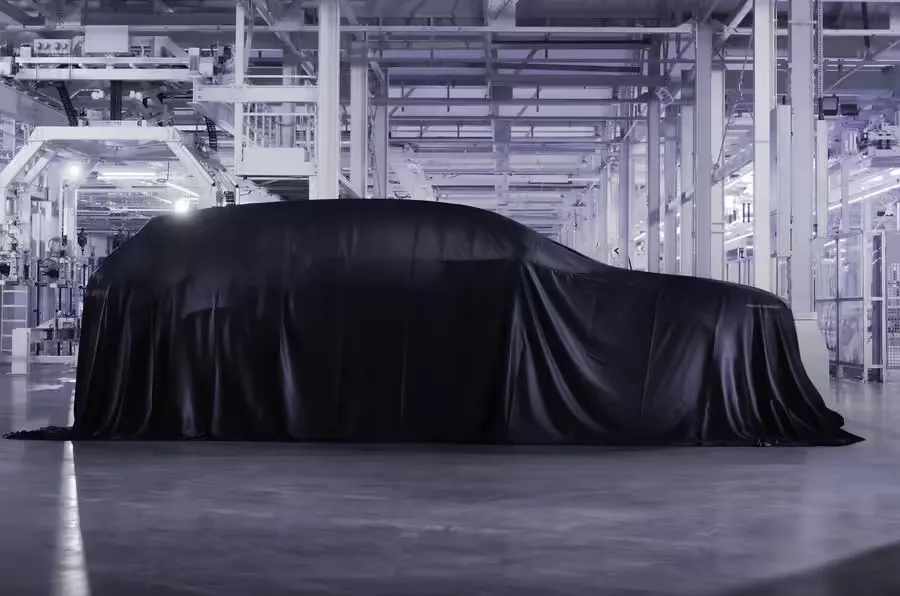
Bentley recently teased its first battery-electric vehicle — a sub-5-meter SUV positioned slightly below the Bentayga.

The model is expected to ride on the PPE platform co-developed by Porsche and Audi. Before its official reveal in mid-October, it was spotted repeatedly lapping the Nürburgring.

Bentley R&D chief Matthias Rabe said the interior features 30 m² of leather stitched with 130,000 threads over 150 meters of sewing lines — an effort to preserve the brand’s ultra-luxury craftsmanship.
He added that the EV would be “as comfortable as the Flying Spur, yet as agile as the Continental GT.”
In October, Ferrari unveiled its first dedicated EV architecture at its Maranello HQ.
It features short overhangs and a battery-to-chassis integrated layout. The company says the vehicle’s center of gravity is 80 mm lower than an equivalent ICE model, with most critical components packed into the floor assembly.

Ferrari says the model will not simulate ICE noise or artificial EV soundtracks; instead, it will amplify authentic electric-drive acoustics.
The approach shows Ferrari built a specific EV architecture but still relies on a conventional floor-pack battery layout — a relatively traditional choice.
In the EV age, large-displacement engines are no longer the entry ticket to pinnacle luxury, creating room for new players.
Jaguar, for example, unveiled a concept (internal code “Type 00”) in December last year, after a full-scale brand overhaul.
Its camouflaged production prototype was spotted testing at the Nürburgring in September and October.
Images show a bold design featuring a high-opening rear trunk and no rear window.

The model uses the Jaguar Electrical Architecture platform with a centralized E/E layout, running Nvidia Orin-X and Qualcomm 8295P chips.
Overall, this wave of new EVs from legacy ultra-luxury brands is backed by dedicated or upgraded electric architectures, showing stronger EV intent.
But a closer look at the numbers suggests they lack the shock value once delivered by large-displacement ICEs.
The numbers game
In the ICE era, large engines like Rolls-Royce’s 6.75-liter V8 and Bentley’s 6.0-liter W12 formed the brands’ defensive moat.
Even today, big engines remain quasi-untouchable status symbols at the top end.
But in the EV era, these brands are not as dominant in the numbers race as expected.

Horsepower itself is no longer a high-prestige metric.
Ferrari’s first EV peaks at 1,000 hp; Jaguar’s at 986 hp.
Both offer fast-charging and high-voltage systems. Jaguar claims the production Type 00 can add 322 km in 15 minutes, while Ferrari’s Elettrica supports up to 880 volts.
These numbers may impress overseas, but in China’s hyper-competitive EV market, they are far from standout.
By comparison, the pure-electric Denza Z9 GT delivers 710 kW (roughly 965 hp) starting at RMB 354,800 ($49,000).

Meanwhile, the BYD Han L EV — priced under RMB 300,000 ($41,500) — claims 1,100 hp and a 1,000-volt architecture supporting “megawatt fast-charging,” replenishing fully in under 10 minutes.
The Xiaomi SU7 Ultra ships with 1,500 hp — the same model Ferrari reportedly purchased for benchmarking.
Chinese EVs in the RMB 300,000–400,000 ($41,500–$55,300) range typically achieve 650–770 km CLTC range.

In short, it is not that legacy ultra-luxury brands lack capability; rather, they no longer dominate specs as they once did in the ICE era. Specs alone no longer justify ultra-luxury premiums.
Centralized E/E architectures and skateboard-style battery-chassis integration are also no longer differentiators in China.
To exceed EV-native competitors, ultra-luxury brands cannot rely on numbers alone. Over time, their craftsmanship advantage may also fade.
This leaves handling, design, and a less-tangible “heritage factor” as the remaining keys to distinctiveness.
Brand soul
For ultra-luxury marques, electrification is much more than swapping engines for motors.
Large-displacement ICEs are rare assets. Beyond that, identity, heritage, and storytelling remain essential to their pricing power.
The sound of a V8 or V12 — the “soul” of these brands — cannot be replicated by EV components.

So how will they hold their ground without them?
Bentley CEO Frank-Steffen Walliser recently said EV demand is below expectations.
But he added that Bentley’s mission is to carry the “magic carpet” experience into the electric age — matching the Flying Spur’s comfort and NVH performance — or customers won’t buy.
Ferrari’s stance is even clearer.
In May 2023, former CEO Benedetto Vigna said Ferrari would “never build a car that drives for you,” underscoring its commitment to driving engagement.
He also described Ferrari’s EV challenge as “turning an elephant into a horse”: using in-house motors, inverters and castings to make EVs light.
Bentley and Ferrari reflect different philosophies:
One sees operating-theatre-grade comfort and luxury as its foundation; the other worships pure driver involvement.

Handling is also Porsche’s trademark: CEO Oliver Blume said in 2021 that high-performance EV batteries would be as central to Porsche as ICEs once were.
ICE history is integral to ultra-luxury identity — but these brands want the market to know they can still serve the world’s most demanding clientele, regardless of propulsion.
The question is how long brand equity alone will hold in a market crowded with new EV challengers — and whether these marques are truly ready for electrification.
Where is the turning point?
The ultra-luxury arena is now part of the NEV battleground.
While legacy brands believe there is no real demand for pure-electric ultra-luxury, Chinese players appear to disagree.
Chinese OEMs have launched top-tier flagships such as Yangwang U8 and U9, NIO ET9, and Maextro S800 under the Huawei-backed Harmony Intelligent Mobility Alliance (HIMA).

In October, Maextro S800 sales reached 1,918 units — surpassing the Mercedes-Benz S-Class (including Maybach) at 1,548 units.
In the past week, deliveries reached new highs, according to sources from auto blogger @孙少军09.

By contrast, data published by Cui Dongshu, secretary-general of the China Passenger Car Association, show Bentley deliveries in China fell 20% year-on-year to 884 units in January–May 2025. Rolls-Royce sales dropped 23% to 289 units.
Ferrari, Lamborghini and others also posted declines. Porsche’s profit collapsed 99% in the first three quarters — the weakest showing in years.
Chinese brands are capturing mindshare through innovation, while multinationals retain brand-premium advantages that have yet to fully translate to EVs.

A McKinsey “2025 China Auto Consumer Insight” report found 50% of consumers are unwilling to pay high premiums for imported EVs; only 3% accept premiums exceeding 20%.
The report also found new models and technologies deliver a net stimulation effect of 10.8%, with wealthier buyers showing stronger preference for innovation.
Put differently, customers are still willing to pay — but the logic has shifted from brand-driven to innovation-driven.
Another factor is the consumption-tax reform for ultra-luxury cars effective July 20: the tax threshold fell from RMB 1.3 million ($180,000) to RMB 900,000 ($124,000), influencing purchase decisions.
So where is the turning point for traditional ultra-luxury?
For now, the answer looks challenging.
Rolls-Royce, the earliest to mass-produce EVs, has gone quiet — aside from new bespoke Spectre configurations.
Bentley, Jaguar and Ferrari are making moves, but production timing remains uncertain, and specs do not significantly outperform high-volume Chinese models.

Meanwhile, Chinese EVs are scaling the luxury ladder and proving the existence of a viable ultra-luxury BEV market — supported by real sales.
More “million-class” products are coming, and the upward push will continue.
As Chinese brands surge, legacy ultra-luxury marques face mounting urgency.
There is no quick cure: defining “ultra-luxury” in the EV era is a long game.
Time is no longer on the side of the “Rolls-Royces.”
Discover more from ChinaEVHome
Subscribe to get the latest posts sent to your email.

.jpg)
