IM Motors launched the LS9 SUV, featuring two battery options, priced at RMB 322,800 ($45,200) and RMB 352,800 ($49,300), respectively.
Last night, IM Motors officially launched the LS9.
The LS9 lineup is remarkably streamlined, offering only two battery options—52 kWh and 66 kWh—as the primary distinction. The 66 kWh version also includes power-closing doors.
The two variants are priced at RMB 322,800 ($45,200) and RMB 352,800 ($49,300), respectively. Measuring 5.28 meters long and 2 meters wide, the large SUV rivals the AITO M9 in size but targets the price range of the AITO M7.

During the launch period, IM Motors is offering an extensive suite of complimentary features, including B&O audio, a robotic arm massage seat, electric side steps, a half-sized steering wheel, roof-mounted spotlight, three premium paint finishes, and 21-inch wheels.

Under this high-value configuration strategy, the LS9 secured 5,000 firm orders within just 25 minutes.
Yet 2024 has become a fiercely contested year for China’s “9-series SUVs,” and the battle is far from over.
How will the LS9 help IM Motors break into the high-end market—and does it truly deserve the title of SAIC’s “flagship”?
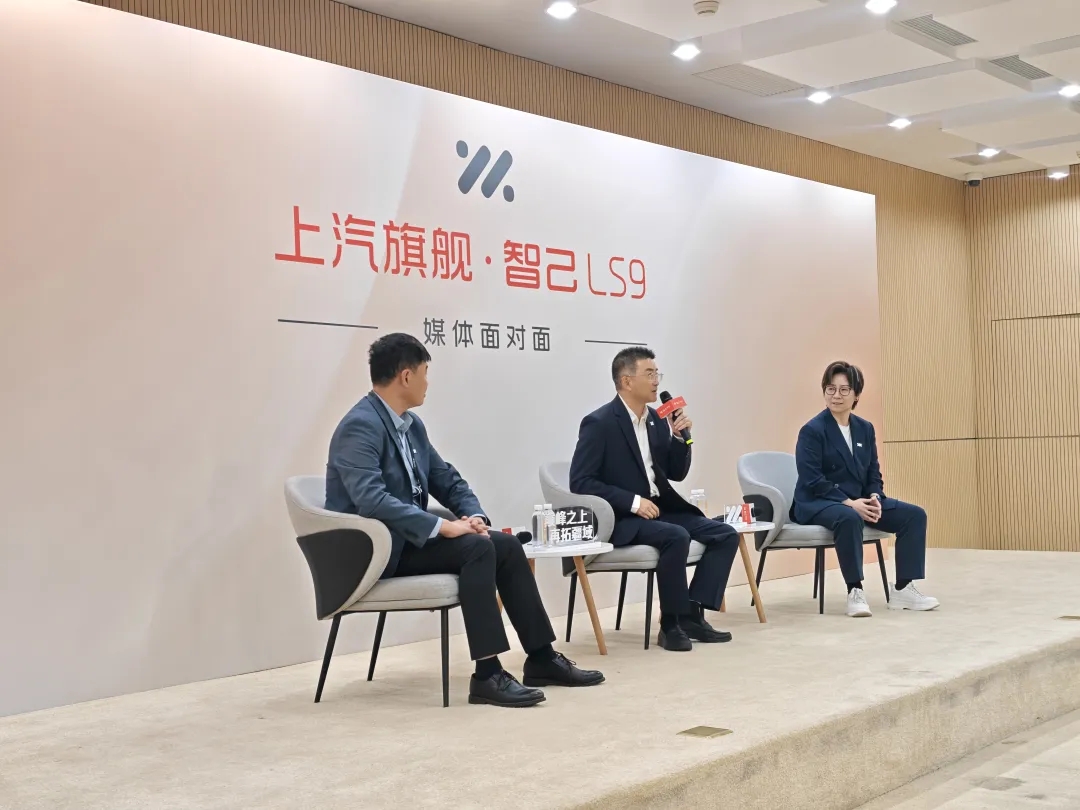
After the launch event, ChinaEV Home interviewed IM Motors Co-CEO Liu Tao, CMO Li Weimeng, and CTO Xiang Jiao to understand how the company defines and positions the LS9.
Building a car with no weaknesses?
Discussing the LS9’s positioning, Liu Tao said that as a flagship model, it “cannot have any weaknesses—and must feature extraordinarily strong advantages.”

This philosophy is evident in the LS9’s specification sheet: it matches leading domestic 9-series SUVs in equipment while retaining IM Motors’ distinctive strengths.
For example, its 24° dual-direction rear-wheel steering enables the 5,279 mm-long LS9 to achieve a turning radius of just 4.95 meters—comparable to that of the compact 4,053 mm Volkswagen Polo.
Other notable chassis technologies include a 150 mm dual-chamber air suspension, high-bandwidth electronically controlled dampers, and an MK C2 brake-by-wire system, giving the LS9 an edge in handling performance at its price point.

As Liu noted, “The chassis is a tougher challenge than refrigerators, TVs, or big sofas.”
To make these high-end components accessible, Xiang Jiao said the team made significant efforts to lower the entry threshold for customers.
From an engineering standpoint, he said offering everything possible would be ideal, but commercial realities required cost control.
Still, Xiang expressed strong confidence: “IM Motors has integrated SAIC’s best supply chain resources,” he said, adding that the LS9 offers “the most sincere and competitive price” among peers.

For instance, the complimentary “robotic arm massage” feature comes with a patented collapse-protection system. The same seat incorporates eight to nine newly developed material technologies to ensure comfort even when the massage unit is inactive—despite having just 40 mm of available padding space.
Backed by such features and pricing, the LS9 achieved 5,000 confirmed orders within 25 minutes.
According to Li Weimeng, this exceeded expectations: “We were already pleased with the early reservation numbers, but the conversion rate to firm orders was a pleasant surprise.”

She added that the brand’s market momentum has shifted significantly: unlike previous models that required active promotion, many partners and customers are now inquiring about and test-driving the LS9 on their own initiative.
“I truly believe the LS9 lives up to the title of SAIC’s flagship,” Li said.
The 9-series SUV showdown and IM’s position within SAIC
The battle for dominance among China’s “9-series” new energy SUVs has become a central theme in the country’s high-end automotive market this year.
One clear sign of intensifying competition is the growing battery capacity among plug-in hybrid models—Leapmotor’s D19, for instance, features an 80 kWh pack.
Liu Tao emphasized that at 66 kWh, the LS9’s pack remains “the largest among currently available 9-series flagships,” noting that IM Motors’ ability to deliver these vehicles ahead of rivals validates its strategic direction.

Xiang Jiao added that while competitors may also use large batteries, IM Motors differentiates itself with SAIC’s advanced 1.5T engine, achieving a combined fuel consumption as low as 2.81 L/100 km.
He said the LS9’s fuel consumption when running on depleted battery (“charge-depleting mode”) is 10–15% lower than comparable 9-series models, while actual power consumption is also reduced by roughly the same margin.
Energy efficiency, agility, and comfort—these were the three defining traits repeatedly emphasized by all three executives when describing the LS9.
With a starting price of RMB 322,800 ($45,200), the LS9 is positioned competitively among domestic 9-series rivals. However, that price bracket overlaps with the previous-generation LS7.
Liu Tao revealed that the next-generation LS7 is already under development and will offer both all-electric and range-extended versions.
Given the LS6’s current pricing of RMB 197,900–269,900 ($27,700–37,800), the new LS7 may target the RMB 250,000–300,000 ($35,000–42,000) range—directly competing with Xiaomi’s YU7.

Now in its fifth year, IM Motors is entering a phase of accelerated growth. The brand sold 13,159 vehicles in October, marking a new record.
“This year marks the shift from quantitative to qualitative growth,” said Li Weimeng, citing progress across sales channels, marketing, and technology.
“Whether in brand maturity, technological advancement, or user experience, I believe this year has truly become the right moment,” Liu Tao concluded, summarizing both the LS9 and IM Motors’ progress in 2024.
Discover more from ChinaEVHome
Subscribe to get the latest posts sent to your email.