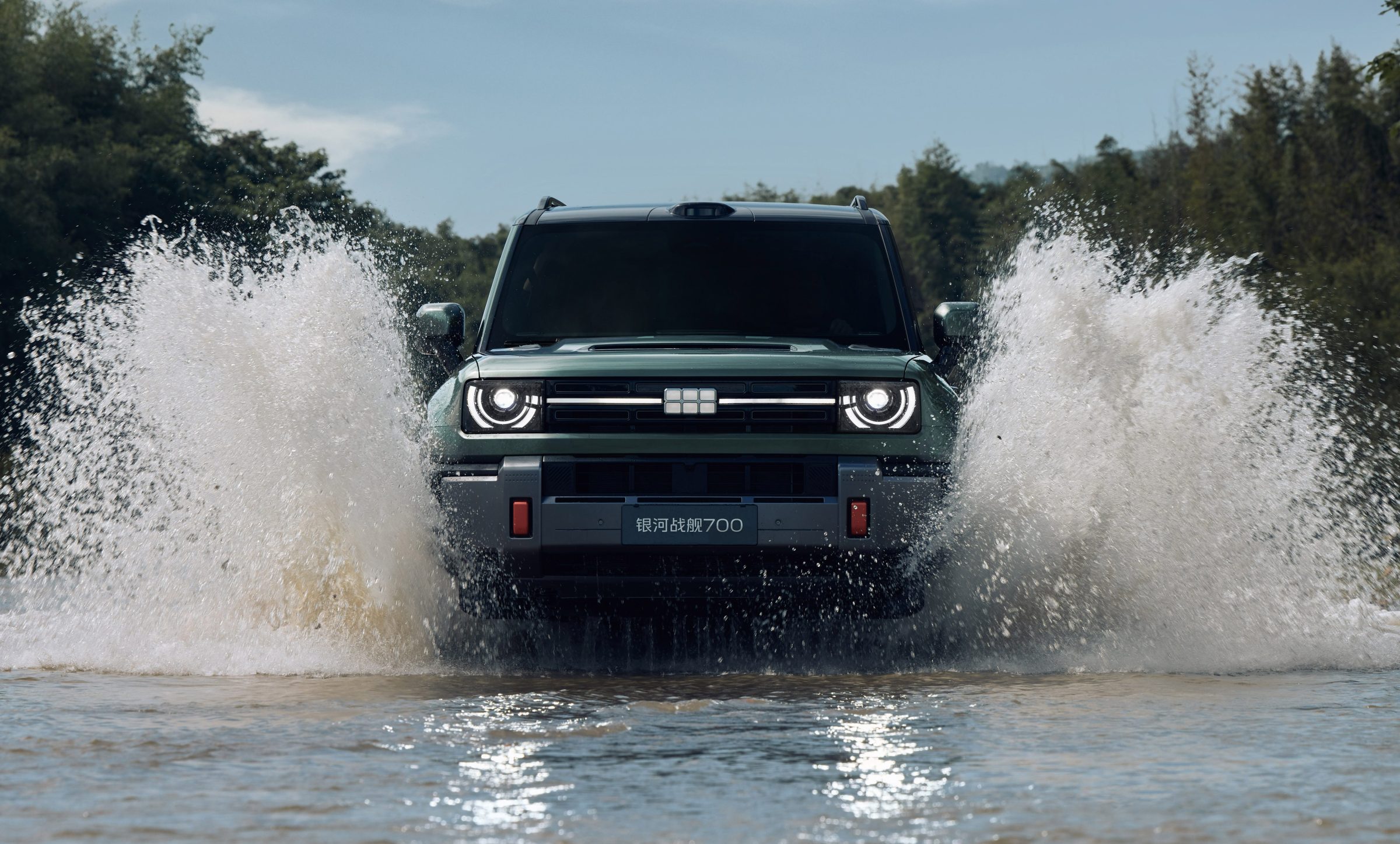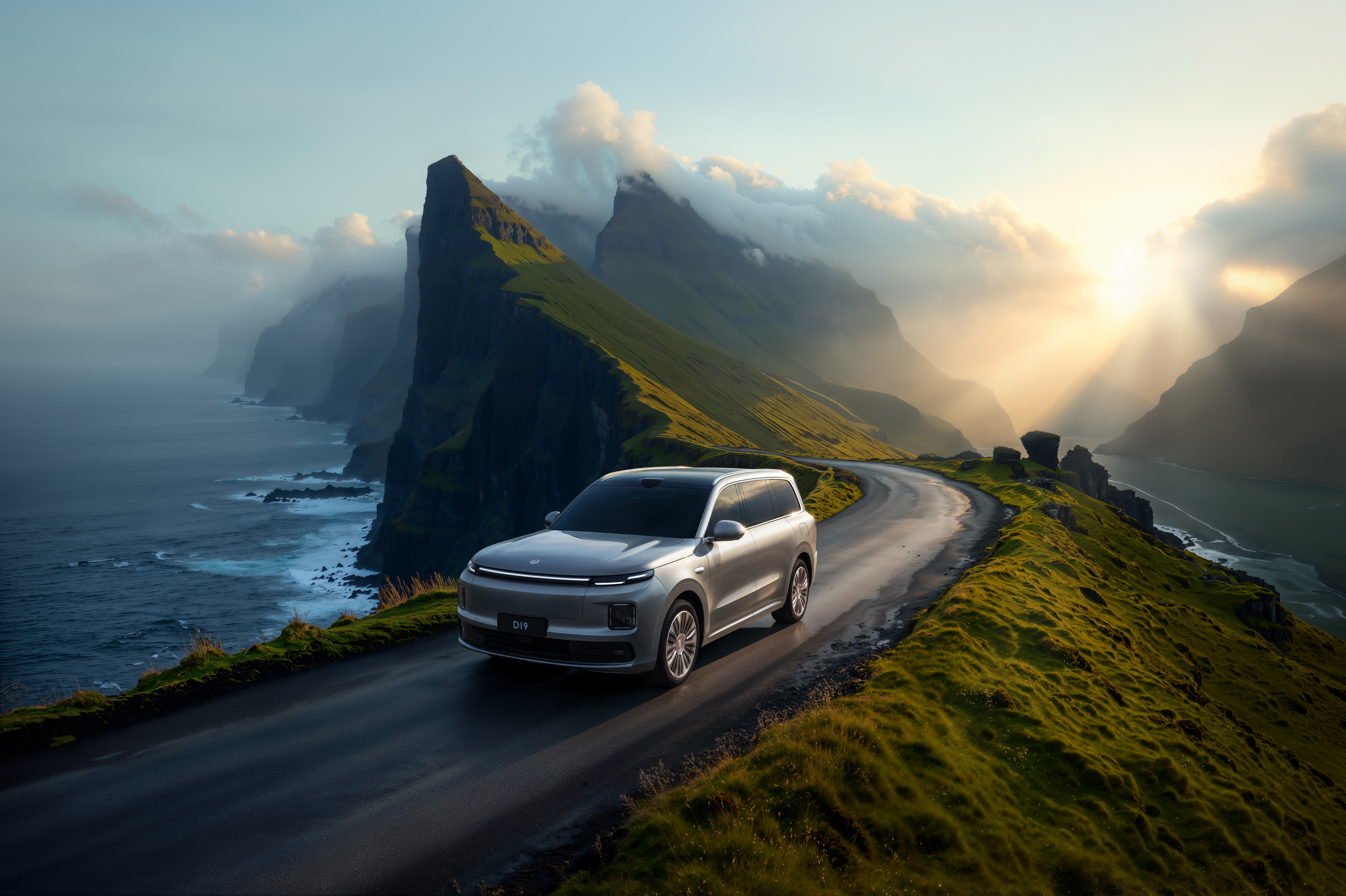
This article has selected the 10 most-noteworthy premieres at the Auto Guangzhou 2025, based on product freshness, technical competitiveness, and market positioning.
Auto Guangzhou 2025 opens on November 21. According to the organizing committee, 93 all-new models will make their global premiere at this year’s event, surpassing the 78 unveiled in 2024.

Every auto show has its defining theme, and based on this year’s debuts, the strongest signals for China’s automotive market heading into late 2025 are the rise of large three-row models and next-generation range-extender systems.
As a result, three-row SUVs and models equipped with next-generation extended-range powertrains are set to become must-see products for show visitors.
In addition, several joint-venture brands are preparing key models backed by new partnerships and technology upgrades, aiming to reshape market dynamics for the coming year and beyond.
Although many manufacturers have already wrapped up their year-end launches outside the auto-show cycle, Guangzhou still offers a strong product lineup and remains one of the best opportunities to preview next-generation vehicles one to two years ahead of mass delivery.
ChinaEV Home has selected the 10 most-noteworthy premieres at the Auto Guangzhou 2025, based on product freshness, technical competitiveness, and market positioning — a practical guide for visitors looking to make the most of their time at the show.
(Ranked in no particular order)
Leapmotor D19
- Estimated price: RMB 250,000–300,000 ($35,000–$42,000)
Leapmotor will bring three new models to the show, with the flagship D19 expected to announce pre-sale pricing and make its official public debut.

Previous data indicates the D19 measures 5,250 mm in length with a 3,120 mm wheelbase, though detailed dimensions remain undisclosed.
The D19 will offer both pure-electric and range-extended powertrains. The pure-electric variant features a 1000-V platform and a tri-motor AWD setup, paired with a 115-kWh battery for a range of up to 720 km.
The range-extended version uses an 80-kWh-plus pack, enabling more than 500 km of electric-only CLTC range, comparable to full EVs. It also supports 800-V fast charging, filling from 30% to 80% in around 15 minutes.
Other highlights include dual Qualcomm 8797 chips and dual-chamber air suspension. For visitors, exterior design and cabin ambience will be the most direct takeaway, while driving impressions must wait for future testing.
Leapmotor A10
- Estimated price: RMB 60,000–100,000 ($8,400–$14,000)
Technically speaking, the A10 is Leapmotor’s true premiere model at Guangzhou, as the D19 is already open for blind ordering and Lafa5 is entering sales.
As the first model in the A series, design is the key focus, with front and rear lighting themed around a “smile” motif — maintaining Leapmotor’s family language while adjusting for segment positioning.

Official renderings released by Cao Li also show a roof-mounted lidar unit, signaling the availability of advanced assisted-driving features in a model priced below RMB 100,000 ($14,000).
Details such as power configuration, battery size, and vehicle dimensions remain undisclosed. The A10 is expected to serve as a spiritual successor to the T03 and compete against the BYD Yuan UP.
For show-goers, design proportions and real-world size will be core viewing points.
Voyah Taishan
- Price: RMB 379,900–509,900 ($53,000–$71,400)
Voyah Taishan officially launched on November 18, and the auto show offers one of the earliest opportunities for in-person evaluation.
Its entry price of RMB 379,900 strategically targets the RMB-400,000 ($56,000) segment, positioned as a large six-seat full-size SUV emphasizing space and luxury.

Taishan uses the Voyah “Land-Sea Intelligent Hybrid” system combining a 1.5T dedicated engine with dual motors. Built on an 800-V platform, it packs a CATL 65-kWh battery providing 370 km CLTC electric range and 1,400 km combined range, supporting 5C charging with 320-kW peak power.
It is equipped with Huawei ADS 4 autonomous driving and the HarmonyOS 5 cockpit, plus premium chassis hardware such as three-chamber air suspension, EDC active damping, and 16° rear-wheel steering.
With size, luxury appeal, and Huawei-supported intelligence, strong early sales performance appears within reach.
Buick Electra Family MPV
- Estimated price: RMB 350,000–450,000 ($49,000–$63,000)
The Buick Electra Family MPV is a core launch for SAIC-GM Buick in 2025, positioned between the GL8 Century and the GL8 Crea, filling a gap around the RMB-400,000 ($56,000) segment.
It uses Buick’s latest “Zhenlong” plug-in hybrid system offering 170–180 km electric range and 1,400 km combined range. Body dimensions measure 5,260/2,023/1,820 mm with a 3,160-mm wheelbase. Second- and third-row seats each get independent sliding rails to maximize comfort.

Additional features include the Qualcomm 8775 chip and Momenta R6 assisted driving, upgrading its smart-tech competitiveness.
Compared with the more premium Century, the new Electra Family emphasizes practicality and family/commercial versatility.
Geely Galaxy V900
- Estimated price: RMB 250,000–300,000 ($35,000–$42,000)
The Galaxy V900’s announcement was unexpected, introducing the brand’s first MPV and first model with an extended-range powertrain under the Galaxy sub-brand.
Essentially a twin to the previously released LEVC L380, the V900 shares platform fundamentals and space-focused attributes that drew considerable attention for the L380.

Compared with the L380, the V900 reportedly upgrades key features such as Galaxy M9-level assisted driving (Qianli Haohan H5) and switches from a pure-electric architecture to extended-range power to reduce cost.
Battery options of 42 kWh and 52 kWh enable practical short-distance EV-like usage.
The V900’s standout advantage remains its exceptional interior space — likely its most decisive differentiator.
Xpeng X9 EREV
- Estimated price: RMB 350,000–370,000 ($49,000–$51,800)
The first model using Xpeng’s new extended-range system will officially launch on November 20, with pre-sale pricing starting at RMB 350,000.
Design, cabin layout, and most equipment are unchanged from the 2025 pure-electric X9. Dimensions are measured at 5,316/1,988/1,785 mm, with a 3,160-mm wheelbase.

The Max version features the Xpeng Turing chip delivering 750 TOPS, while the Ultra carries three chips for 2,250 TOPS.
The 800-V architecture supports 5C fast charging, powered by a 63.3-kWh battery for 452 km electric range and 1,602 km combined range.
The real transformation lies in the core power strategy, best validated through real use rather than static display — but still worth a visit for those curious about the technology.
IM LS9
- Price: RMB 336,900–366,900 ($47,200–$51,400)
The IM LS9 launched on November 12 and Guangzhou marks its first major public event.
The LS9 fits perfectly into the show’s theme — a large three-row six-seat SUV equipped with a super-range-extender using a 1.5T generator and 52- or 66-kWh battery, enabling 402-km EV mode and over 1,500-km total range.

IM claims superior NVH performance: even with generator intervention, cabin noise is nearly imperceptible, offering EV-like refinement.
Dimensions measure 5,279/2,000/1,806 mm with a 3,160-mm wheelbase. Chassis features include 24° dual-direction rear-wheel steering and dual-chamber closed air suspension.
Stelato S9
- Estimated price: RMB 318,000 ($44,500)
The 2025 update for the Stelato S9 brings mostly software-hardware upgrades for Huawei’s QianKun ADS 4 system rather than exterior changes. The signature blue autonomous-driving indicator light is expected to become standard.
The Stelato S9 is a large sedan measuring 5,160/1,987/1,486 mm with a 3,050-mm wheelbase, available in pure-electric and extended-range formats.

The S9T variant released mid-year increased sensor count from 27 to 36, and the update is expected to follow.
New functions include megapixel adaptive headlights, nebula tail lights, and digital side mirrors. EV range reaches 816 km, and ER version achieves 1,378 km combined.
Nissan N6
- Estimated price: RMB 109,900–121,900 ($15,400–$17,100)
Following the positive market response to the N7, Nissan accelerated its N-series NEV rollout. The N6 is the latest effort from Nissan’s Huadu team and makes its official debut at Guangzhou despite an initial appearance in August.
The N6 measures 4,831/1,885/1,494 mm with a 2,815-mm wheelbase — slightly smaller than the N7 but still within the A+ sedan category.

Unlike the fully electric N7, the N6 adopts a PHEV system using a 21.1-kWh battery expected to support around 150 km EV-only range, while total range figures remain undisclosed.
The N6 extends the youthful design language of the N7 and retains its popular AI-Zero-Pressure cloud-cushion seat concept aimed at family comfort.
Toyota bZ7
- Price not yet disclosed
Strictly speaking, the Auto Guangzhou 2025 is not the first reveal for the GAC-Toyota bZ7, which debuted at the Shanghai Auto Show in April. However, new updates will appear at Guangzhou, including a full interior debut.
The bZ7 mirrors the successful strategy behind the bZ3X, with strong involvement from GAC Group and core smart-car capabilities developed with local Chinese suppliers.

Positioned near the electric Toyota Crown, the bZ7 measures 5,1301,9651,506 mm with a 3,020-mm wheelbase. It is expected to use Momenta assisted-driving software and Huawei HarmonyOS 5 cockpit, plus Huawei DriveOne powertrains.
In a notable integration move, the bZ7 will support Xiaomi AIoT ecosystem connectivity.
With this pace, market launch may slip to spring 2026. Whether it can replicate bZ3X’s sales success will depend largely on whether Toyota sets a sufficiently competitive price.
Discover more from ChinaEVHome
Subscribe to get the latest posts sent to your email.