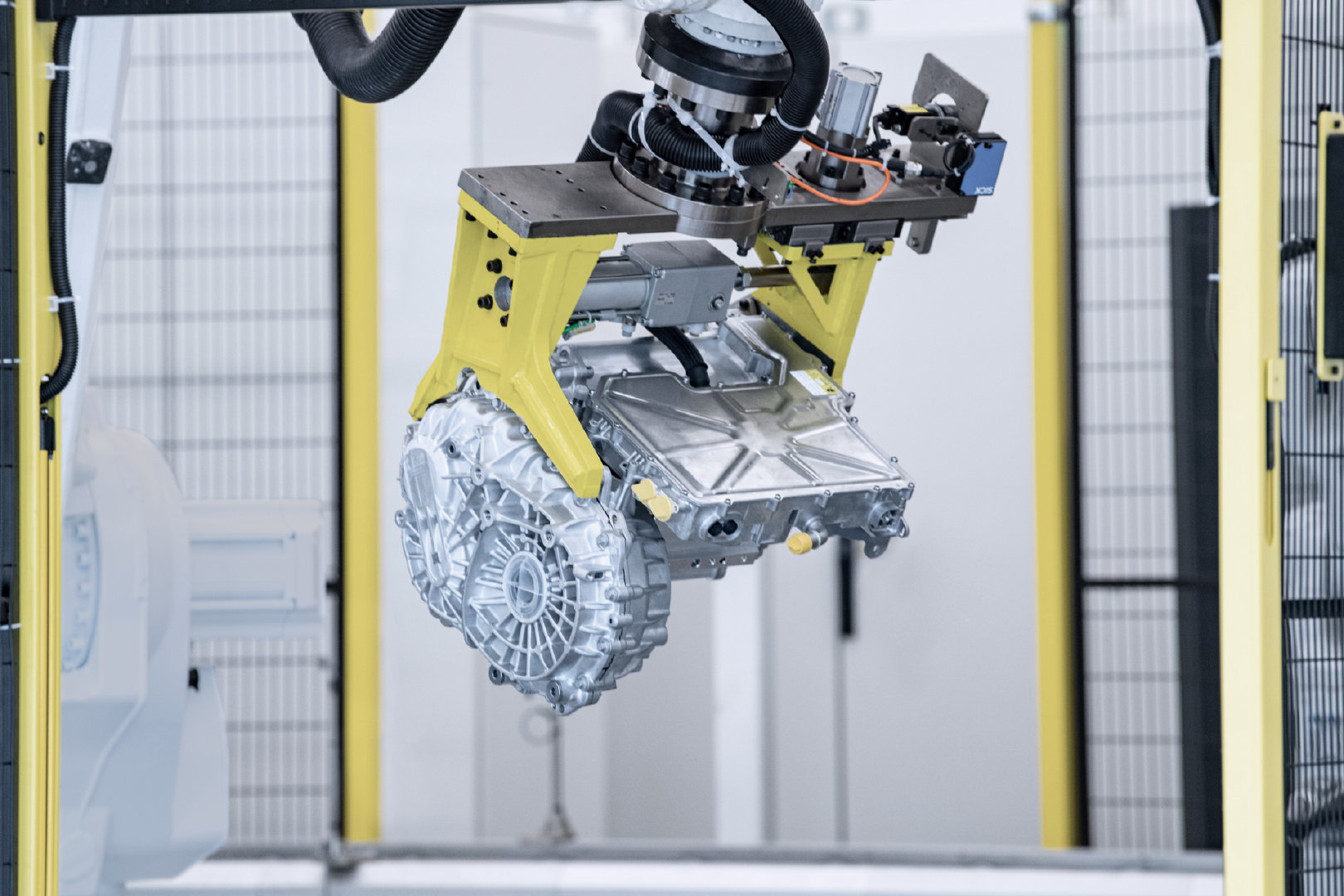
The brake is designed to brake the transmission shaft of the electric drive system, with its core structure adopting a “sandwich” style friction disc layout.
Information from the China National Intellectual Property Administration shows that in September of this year, NIO officially applied for a patent named “Brake and Vehicle Electric Drive System,” which has now entered the publication stage.

Unlike traditional brake discs and calipers located beside the wheels, this technology takes a completely different path.
According to the patent abstract, this brake is designed to brake the transmission shaft of the electric drive system. Its core structure adopts a “sandwich” friction disc layout.
The friction disc is sleeved on the transmission shaft and rotates synchronously with it. On one side is a fixed disc secured inside the housing, and on the other side is a drive disc that can move axially. During normal driving, the discs are separated; when braking is needed, the friction disc is clamped to generate braking force.

Instead of using a traditional hydraulic caliper, the patent employs a threaded pair structure. The outer edge of the drive disc is designed with an external thread, and it is sleeved with a ring gear featuring an internal thread.
A small motor drives the ring gear to rotate via a worm gear, causing the drive disc to move back and forth along the thread, thereby completing the clamping or releasing action.
Compared to traditional braking systems, NIO’s shaft-mounted braking technology brings several core innovations.

The most intuitive is the significant reduction in unsprung mass. Traditional wheel-side braking systems increase non-suspended mass, affecting chassis response and handling. Integrating the brake into the electric drive system noticeably reduces the unsprung mass controlled by the suspension, which directly benefits chassis response, comfort, and extreme handling. Simultaneously, this technology frees up space within the wheel housing, providing design margin for optimizing aerodynamics or increasing steering angle.
The second is the specialized improvement of the cooling system. Traditional wheel-side brakes primarily rely on airflow for heat dissipation, whereas the shaft-mounted brake is enclosed within a metal housing and adopts a dual-sided liquid cooling design. Cooling channels are arranged between the back of the drive disc and the housing, with coolant flowing spirally from the outside in. Both sides of the friction disc are almost “attached to water-cooling plates,” effectively preventing thermal fade even under conditions like long downhill slopes or frequent heavy braking.

The third advantage is the contained management of brake dust. Friction dust generated by conventional wheel-side brakes is directly emitted into the air, polluting the environment and dirtying the wheel hubs. The enclosed shaft-mounted brake can confine particulate matter inside the housing for centralized disposal during maintenance.
The following is a comparison of the core differences between the two:

Although shaft-mounted braking technology offers several advantages, achieving mass production still faces significant challenges.
The first is thermal management. The electric drive system itself already needs to handle heat generated by the motor and gears. Introducing the large amount of instantaneous heat produced by braking friction places higher demands on cooling capacity and system design. Once the cooling system malfunctions, it could simultaneously affect the safety of both the brakes and the entire electric drive system.
Second, shaft-mounted braking means all transmission components must withstand the braking force. In this architecture, braking force needs to pass through gears, bearings, and even the motor rotor. The strength and lifespan design requirements for related components under extreme conditions are higher, thereby increasing cost and design difficulty.
Furthermore, deep integration brings new challenges for maintenance and repair. The braking system becomes part of the electric drive assembly. Servicing or replacing brake pads may require disassembling the motor, complicating what was originally simple maintenance.
Discover more from ChinaEVHome
Subscribe to get the latest posts sent to your email.