China’s auto market cooled toward year-end, with December sales down 8% YoY, but full-year volumes still rose 9% to 34.4 million units, driven by exports and NEVs.
On January 15, Cui Dongshu, secretary general of the China Passenger Car Association, released data on vehicle sub-segment performance and automaker competition for December 2025.
Overall, the auto market showed stronger momentum early in the year and steadier performance later on, driven by policy support and structural shifts, with NEVs remaining the most stable source of growth.
Data showed total vehicle sales reached 3.23 million units in December 2025, down 8% year on year. Full-year sales totaled 34.40 million units, up 9% from a year earlier.
In the first half of the year, retail sales grew significantly faster than wholesale volumes, supported by subsidy policies.

From July to December, retail growth gradually slowed, while automaker shipments remained resilient, leaving room for an early-year sales push in 2026.
From a manufacturer perspective, domestic brands continued to strengthen their position, with a relatively stable competitive structure. Most automakers saw month-on-month declines in December.
SAIC Motor and BYD showed relatively steady performance, while Geely, Dongfeng and Changan posted solid year-on-year growth. Traditional major automaker GAC recorded a sharp year-on-year decline of 34%.

In the passenger car segment, narrow-definition passenger vehicle sales totaled 29.56 million units in 2025, up 9% year on year. December sales stood at 2.79 million units, down 9% from a year earlier.
Continued advances in new-energy technologies and stronger competitiveness of new models contrasted with relatively weak supply of new internal combustion engine vehicles.
Following the Lunar New Year, the NEV market ramped up quickly, maintaining solid growth of around 14% from May to September. Despite a higher comparison base in December, full-year performance remained broadly stable.
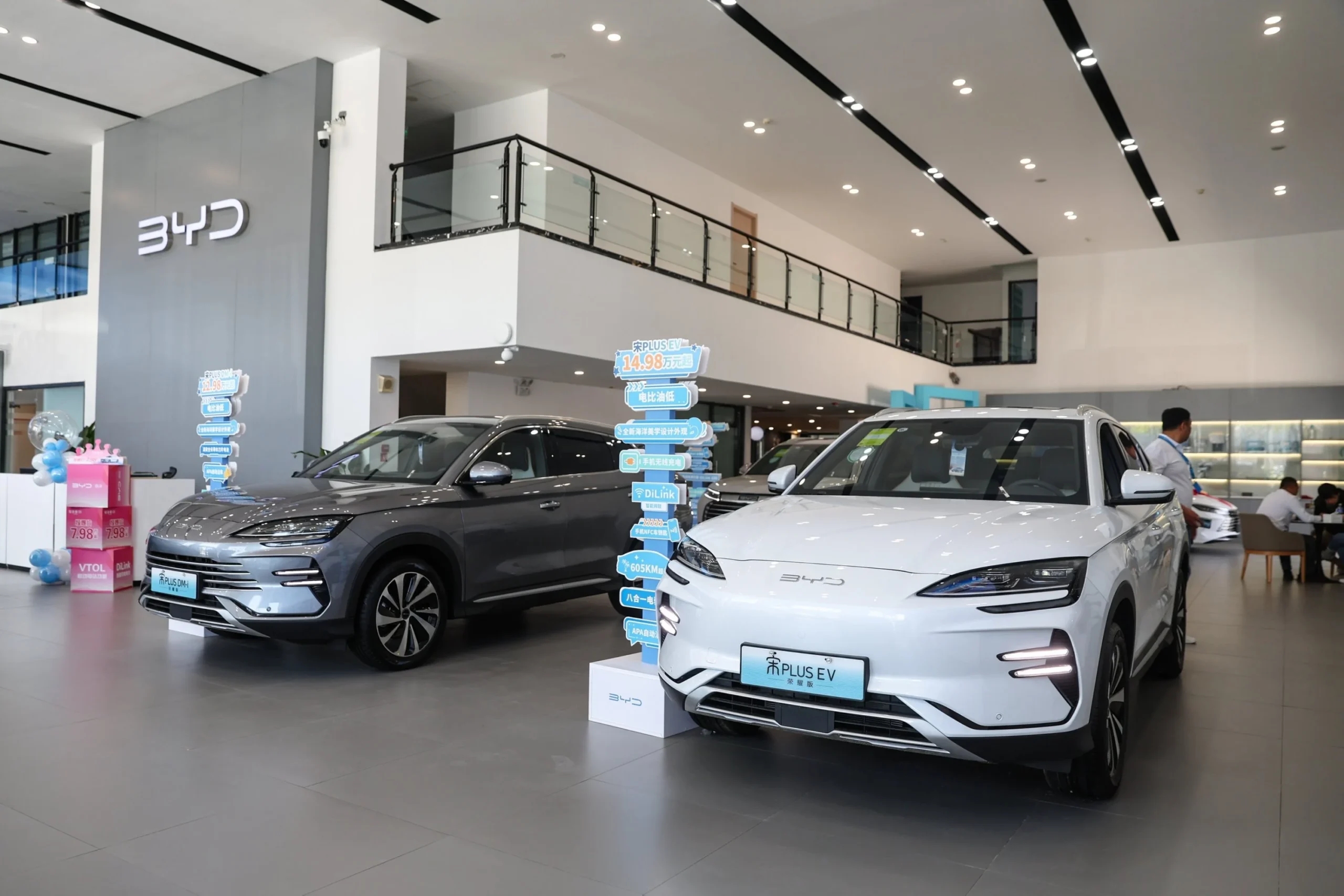
In terms of automaker performance, leading carmakers generally faced pressure in December. Domestic brands outperformed, while joint-venture automakers showed weaker trends. BYD led the market in December, followed by Geely and Chery.
NEV passenger cars remained the core pillar of growth. Retail sales of NEV passenger cars reached 1.34 million units in December, up 3%. Full-year retail sales totaled 12.81 million units, up 18%.

In the first half, growth was driven mainly by scrappage replacement subsidies, price reductions and an intensive rollout of new models. In the second half, exports played a larger role in supporting demand.
At the manufacturer level, leading players expanded faster, while second-tier brands accelerated, widening divergence across regions and automakers.

In December 2025, Tesla, Seres and Xiaomi showed relatively strong momentum, while Geely and BYD recorded slower trends.
Overall, the auto market saw a degree of pullback in December 2025. However, supported by continued growth in NEVs and expanding exports, the market delivered a resilient performance for the full year.
Discover more from ChinaEVHome
Subscribe to get the latest posts sent to your email.