China’s auto industry is navigating a pragmatic 2026 with varied sales targets amid intense competition.
China’s auto industry has closed a turbulent 2025 and entered a more pragmatic 2026.
Over the past year, the number of automakers meeting their annual sales targets fell to five, down from seven in 2024.
BYD, Xiaomi, Leapmotor and Geely remained on the list, while Li Auto, Chery and Huawei-backed Harmony Intelligent Mobility Alliance (HIMA) fell short.
Xpeng rejoined the group after posting 129% year-on-year sales growth.
As competition intensifies, some Chinese new-energy vehicle (NEV) makers are pushing downmarket to expand volume, while others are turning overseas in search of incremental growth.
Against this backdrop, a number of automakers have announced their 2026 sales targets, revealing a mix of aggressive expansion plans and conservative positioning.
What do these annual targets say about each company’s ambitions and strategy for 2026? Here is a closer look.
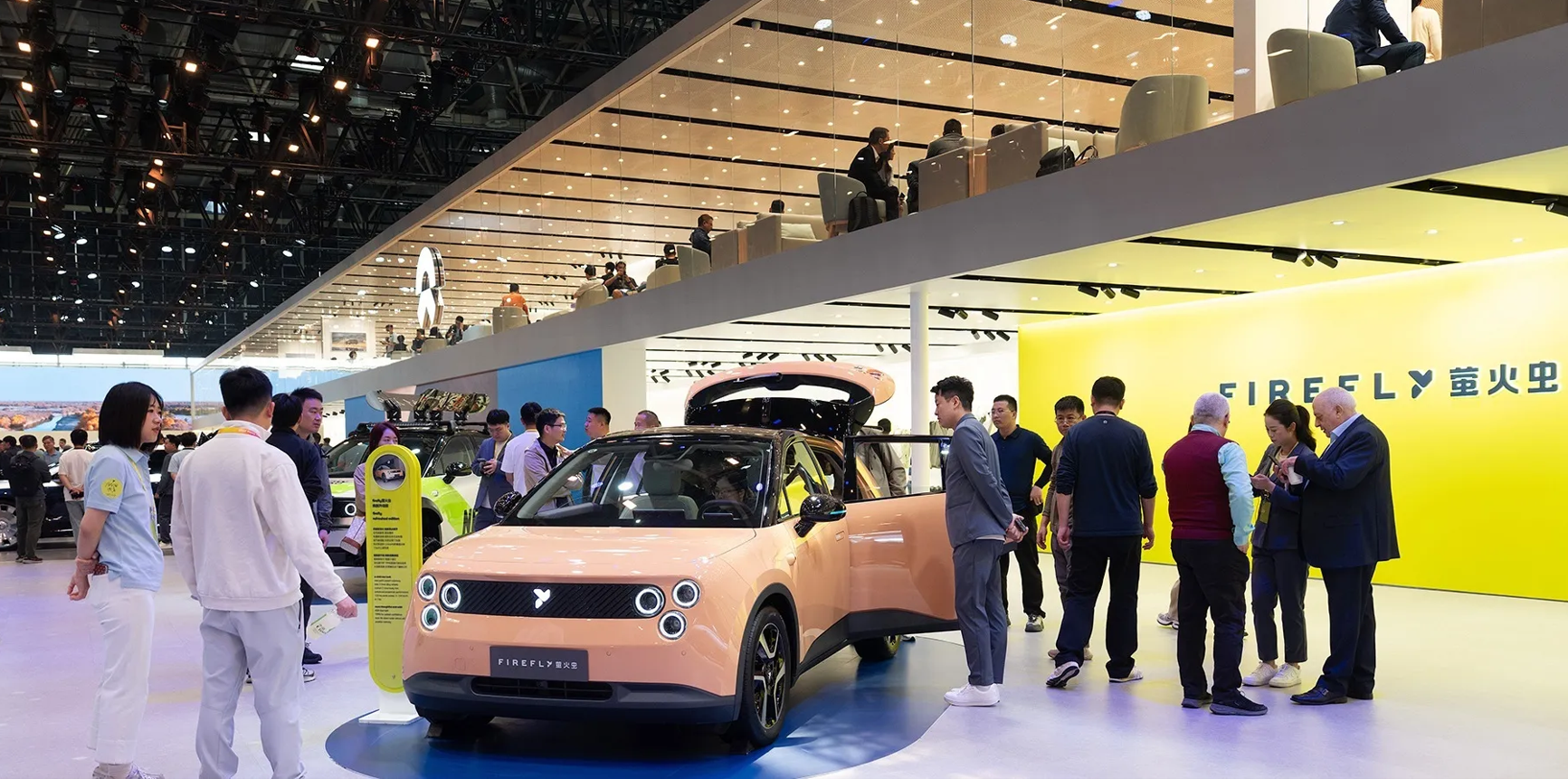
NIO Inc: 456,000–489,000 units

NIO Inc closed 2025 on a strong note.
The company delivered 326,000 vehicles in 2025, up 46.9% year-on-year and a record high.
Deliveries in the second half of the year reached 211,900 units, accounting for 65% of the annual total.
However, compared with the more than 440,000-unit target set at the start of 2025, NIO Inc achieved a completion rate of 74.1%, leaving a noticeable gap.
For 2026, NIO Inc has set a target of 40%–50% annual growth, implying deliveries of 456,000–489,000 vehicles.
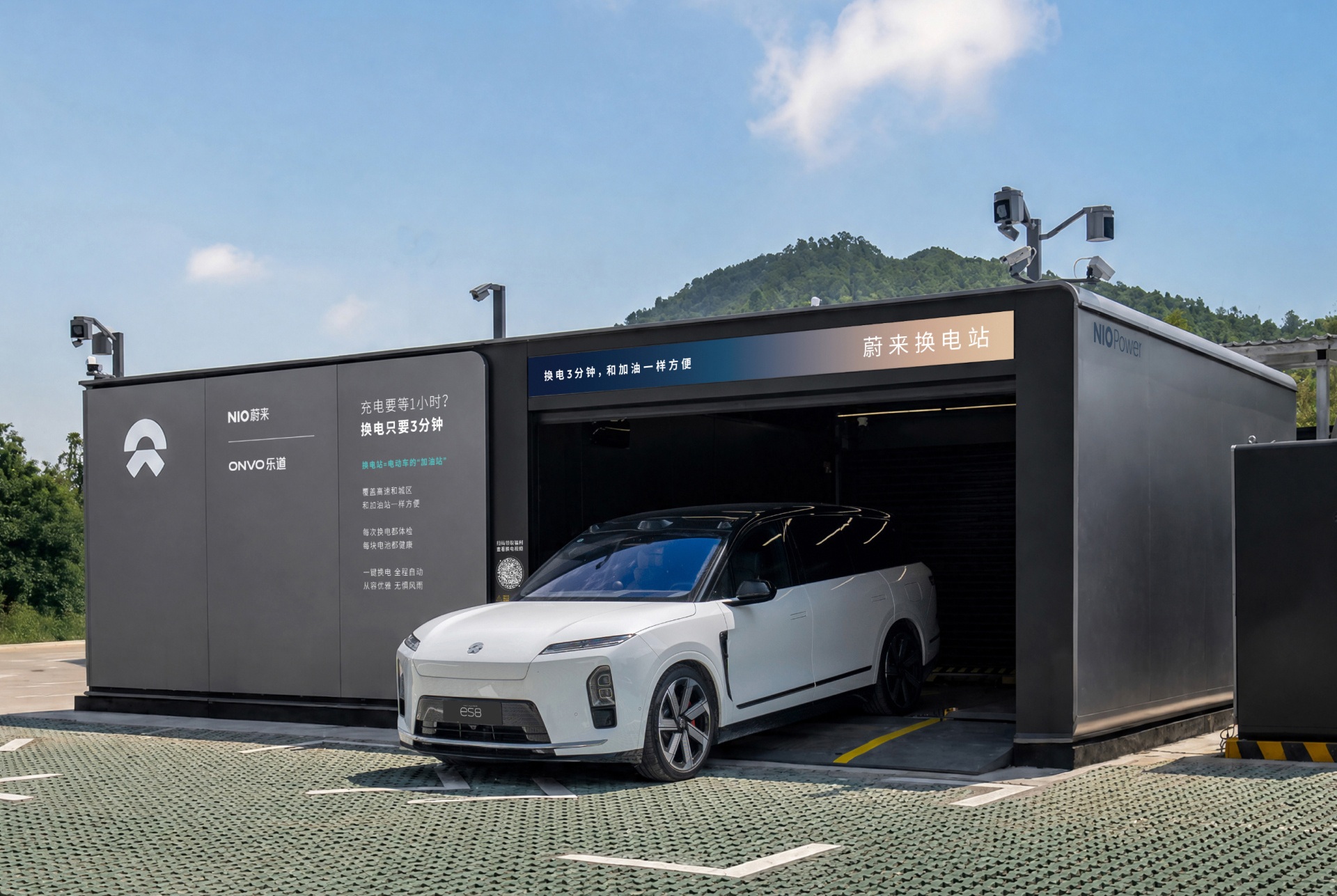
According to media briefings and internal meetings, the ONVO L90 and NIO ES8 will serve as core models in 2026.
Both large, premium models were launched or refreshed in the second half of 2025, with full-year sales of 43,000 and 47,000 units respectively, ranking third and fourth within the NIO lineup, close to the ET5T.
Meanwhile, NIO Inc plans to launch the ES9 in the second quarter, relaunch the ES7 in the third quarter, and introduce updated versions of the ONVO L80 and L90 within the year.
These models will be built on the NT3 platform, while the 5566 series, which has yet to receive confirmation, may not transition to NT3 until 2027.
At present, NIO’s 2026 strategy remains centered on high-positioned products.
Xpeng: 550,000–600,000 units

2026 will remain a major product year for Xpeng, accompanied by a higher sales target.
While Xpeng has not officially announced its 2026 goal, local media outlet 36Kr reported detailed plans on January 17.
Xpeng is targeting annual sales of 550,000–600,000 vehicles in 2026, representing growth of 28.1%–39.7% from its 2025 deliveries of 429,400 units.
This would require average monthly sales of 45,800–50,000 units.
SUVs will be a key focus this year.
Xpeng plans to launch the large six-seat SUV G01, the full-size flagship SUV G02, as well as the MONA mid-size SUV D02 and compact SUV D03.
On January 8, Xpeng completed updates for the G6, G7, G9 and P7+ and launched range-extended versions.
The M03, which sold 175,000 units in 2025 and accounted for nearly half of total deliveries, appeared in China’s MIIT filings in November, with an annual refresh expected later this year.
On the intelligent driving front, Xpeng’s second-generation VLA system is scheduled for rollout in March, while Robotaxi operations are expected to scale up within the year.
Combined with multiple new and range-extended models, Xpeng is positioning itself for renewed growth.
Li Auto: 550,000 units

According to 36Kr Auto, Li Auto has internally set a preliminary growth target of about 40% for 2026, translating to approximately 550,000 vehicles, up from around 410,000 units last year.
Notably, Li Auto delivered 500,000 vehicles in its best year, 2024. If the 550,000-unit target holds, the company would be aiming to reclaim its peak.
The key lies in the L-series.
The L-series, due for a major facelift this year, is expected to see the L9 equipped with a battery exceeding 70 kWh, delivering more than 500 km of pure-electric range, while the L6 is expected to use a 45 kWh battery.
The updated L9 is also expected to grow in size and feature Li Auto’s in-house M100 chip, the 8797 automotive chip, and a revised chassis.
Li Auto is effectively rebuilding the L-series. In contrast, its pure EV lineup remains limited, with just one pure-electric SUV reported, as the company refocuses on the range-extended market.
With L-series competitiveness stagnating, pure EV momentum still developing, and intelligent systems requiring long-term validation, Li Auto experienced a subdued 2025.
Whether it can regain momentum and mount a comeback in 2026 remains an open question.
Leapmotor: 1 million units

Leapmotor was among the earliest Chinese automakers to set a 2026 sales target.
At its third-quarter earnings call on November 17, 2025, Leapmotor announced a 2026 goal of 1 million vehicle sales, revenue at the RMB 100 billion ($14 billion) level, and net profit of RMB 5 billion ($700 million).
With 596,600 vehicles delivered in 2025, Leapmotor would need to grow deliveries by 67.6% to meet its 2026 target, implying average monthly sales of about 83,000 units. Its monthly peak in 2025 was 70,302 units, underscoring the challenge.
To support this goal, Leapmotor plans to launch four new models across its D and A series this year.
The D19, D99 and A10 have already been unveiled and are expected to reach the market in the first half.
The D19, the first model in the D series, is a range-extended six-seat SUV with a prelaunch price of RMB 250,000–300,000 ($35,000–$42,000), positioned as “premium product, non-premium pricing.”
The vehicle features a wheelbase exceeding 3.1 meters, dual 8797 chips, an 80.3 kWh range-extender battery, and an electrically operated hot-and-cold refrigerator.
Overseas, Leapmotor sold 60,000 vehicles in 2025 and plans to further expand in Europe in 2026, while exploring markets such as South Africa.
The company has acknowledged that overseas gross margins in 2026 are expected to be on par with domestic levels, indicating untapped potential.
Xiaomi: 550,000 units

In a New Year livestream on January 3, Xiaomi founder and CEO Lei Jun announced a 2026 delivery target of 550,000 vehicles, nearly double the target set at the start of 2025.
Over the past two years, Xiaomi has consistently exceeded expectations, delivering more than 136,900 vehicles in 2024 and over 410,000 in 2025.
In 2026, Xiaomi plans to expand into new segments with four new models, including a refreshed SU7 and executive version, as well as two range-extended SUVs: the full-size YU9 and a five-seat range-extended SUV.
The most closely watched update is the SU7 refresh, which will see upgrades across voltage architecture, range, motors, domain controllers, chassis and intelligent chips.
Whether pricing will remain unchanged or rise with added features remains a key point of debate.
On the production side, Xiaomi’s monthly capacity reached 50,000 units in December 2025, with a new target of 70,000 units per month.
While the 550,000-unit goal appears achievable, Lei Jun said he hopes to “exceed expectations again,” raising the question of whether Xiaomi could surpass 600,000 deliveries in 2026.
HIMA: 1–1.3 million units

HIMA is continuing its push toward annual sales of one million units or more.
According to a January 15 report by 36Kr, HIMA’s 2026 sales target stands at 1–1.3 million vehicles, up 67.8%–120.7% from its 2025 deliveries of 589,000 units.
Even at the low end, the target mirrors last year’s goal and underscores HIMA’s determination to cross the one-million threshold.
To support this, HIMA is expected to launch 17–19 new models in 2026.
This includes annual refreshes for the existing nine models across its five brands, plus 8–10 entirely new models.
In September 2025, 36Kr Auto reported potential upcoming launches.
These include the AITO M9 Master Edition and M6, the Luxeed R9 SUV and a V9 MPV, a rugged off-road model under Stelato, and a Shangjie sedan and SUV, with the sedan confirmed as the Z7.
HIMA set delivery records for three consecutive months from October to December 2025, with December deliveries reaching 89,611 units, up 32% year-on-year.
To achieve annual sales of one million units, average monthly deliveries would need to reach 83,300 units, a challenge amid the phase-out of purchase tax incentives and some local subsidies.
Whether HIMA can reach its million-unit goal while focusing on the mid-to-high-end market remains to be seen.
Geely: 3.45 million units

Geely was one of the few automakers, alongside Xiaomi, to raise its sales target during 2025.
On the first day of 2026, Geely announced via a Hong Kong Exchange filing a sales target of 3.45 million vehicles, including 2.22 million NEVs.
In 2025, Geely sold 3.02 million vehicles, up 39% year-on-year, with NEVs accounting for 1.69 million units. The Galaxy brand led growth with 1.24 million deliveries.
2026 marks a key execution year following Geely’s “One Geely” strategic restructuring.
Zeekr Technology Group achieved 575,000 sales in 2025, meeting 81% of its target. Lynk & Co sold 350,000 units with a 90% completion rate, while Zeekr sold 224,000 units, achieving 70%.
In 2026, Zeekr will refresh models such as the 001 and 007, and is expected to launch the Zeekr 8X in the first half, potentially driving a rebound.
Beyond Zeekr, updates to the Lynk & Co Z10, Z10 EM-P and 900, as well as the rumored Lynk & Co 800, are expected.
Galaxy will introduce new models including the Xingyao 7, pure-electric A7 and pure-electric Xingjian 7.
Whether Geely can sustain momentum in NEVs while achieving steady growth in its premium brands will be a key measure of its transformation.
Chery: 3.2 million units

At its January 13 media gathering, Chery announced a 2026 sales target of 3.2 million vehicles, up 14% from its 2025 total of 2.806 million units.
Chery’s sales structure remains distinctive among Chinese automakers.
Of its 2025 sales, NEVs accounted for 903,800 units, up 54.9% year-on-year.
Exports reached 1.344 million units, nearly half of total sales, marking Chery’s 23rd consecutive year as China’s top passenger vehicle exporter, with export growth of 17.4%.
2026 will be a product-intensive year for Chery, with plans to launch 17 new models spanning internal combustion, pure electric, hybrid and range-extended powertrains.
Despite a 512% surge in NEV exports in 2025, gasoline vehicles remain the backbone of Chery’s overseas sales.
Accordingly, Chery’s brands will maintain clear roles. Gasoline models such as the new Tiggo 8 and Arrizo 8L will be updated, while NEV offerings will include the Fulwin T9L and A9, as well as Exeed EX6, EX7 and ES7.
Balancing its gasoline base while rapidly boosting NEV competitiveness will be central to Chery’s 2026 challenge.
Changan: 3.3 million units

Despite achieving a 97.1% completion rate in 2025, Changan opted against an aggressive 2026 target.
According to Mingjing Pro, Changan announced internally that its 2026 sales target is 3.3 million vehicles, up 13.3% from its 2025 sales of 2.913 million units.
NEV sales are targeted at 1.4 million units, up 26.2% from 1.109 million in 2025.
Currently, only Avatr and Nevo have disclosed 2026 product plans.
Avatr, in partnership with Huawei Qiankun, plans to launch four new models.
The updated Avatr 12 appeared in January’s MIIT filings, and additional launches are expected, including a large six-seat SUV, Avatr’s first MPV, and an Avatr 06 wagon.
On the Nevo side, the Q06 mid-size SUV is expected to debut this year, while the A05 plug-in hybrid sedan may receive a mid-cycle update.
No clear new-model plans have yet emerged for Deepal.
GWM: 1.8 million units

In December 2025, Great Wall Motor (GWM) announced via the Shanghai Stock Exchange that it had lowered its 2026 sales target to no less than 1.8 million vehicles, from a previously planned minimum of 2.49 million units.
This represents roughly 36% growth from its 2025 sales of 1.3237 million units.
While many Chinese automakers are pushing NEV penetration toward 50% or higher, GWM’s NEV share remained flat at around 30% in both 2024 and 2025.
In 2021, GWM set an ambitious target of 4 million annual sales by 2025 with 60% NEV penetration.
In hindsight, actual results fell far short, partly reflecting slower-than-expected NEV development.
To address this, brands including Ora, Tank, Haval and Wey will adopt a “next-generation all-power intelligent super platform,” supporting both NEVs and internal combustion models.
As a result, Haval may launch its first pure-electric model in 2026, and the Tank 800 could adopt the same 3.0T V6 Hi4-T plug-in hybrid system as the Tank 700.
Wey’s six-seat SUV will use the new platform, and Ora will move away from its pure-electric-only positioning with two new models.
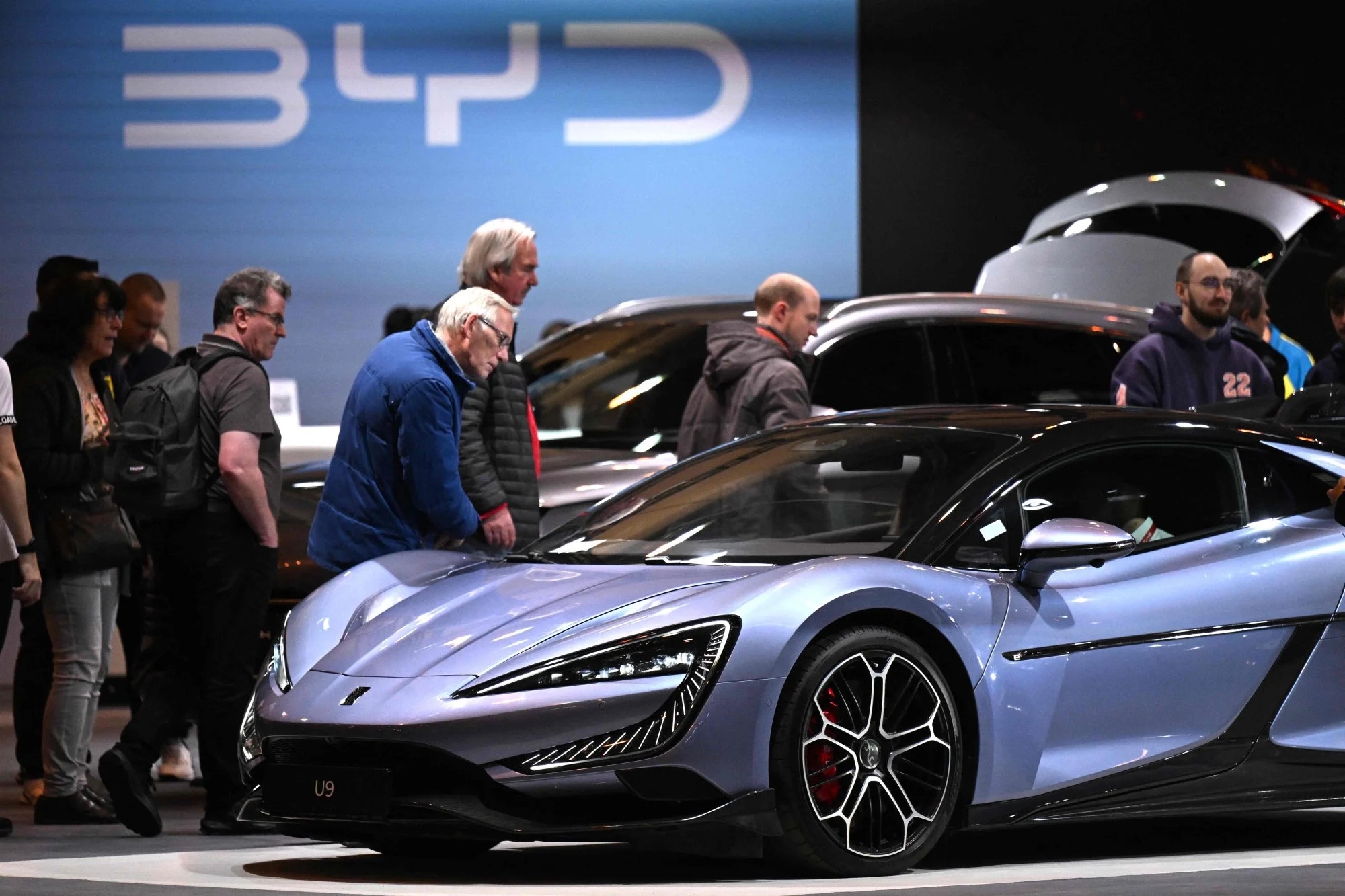
BYD: 1.5–1.6 million units (overseas)

So far, BYD has only set a clear overseas sales target of 1.5–1.6 million units.
This goal is underpinned by BYD’s expanding overseas manufacturing footprint.
Plants in Rayong, Thailand; Camaçari, Brazil; and Székesfehérvár, Hungary are already operational, while facilities in Dubai, Serbia and other locations are expected to come online within the year, laying the foundation for a second growth curve.
Although BYD has not disclosed an overall 2026 sales target, many institutions project total sales of 5–5.5 million units.
Even at that level, BYD would rank fifth globally based on 2025 sales, still trailing Hyundai-Kia’s 7.65 million units.
This gap underscores BYD’s ambitions overseas, while the company must continue to maintain healthy growth in China.
Domestically, BYD upgraded plug-in hybrid versions of the Qin family, Seal 05/06 and Song Pro in January, extending pure-electric range beyond 200 km.
Technologies previously reserved for higher-end models, such as the DiSus-C suspension, 800V high-voltage architecture and God’s Eye advanced driver assistance system, have moved down into sub-RMB 200,000 ($28,000) segments.
BYD is also expanding its premium lineup. Denza will launch the Z sports car, updated D9, and new Z9/Z9GT models.
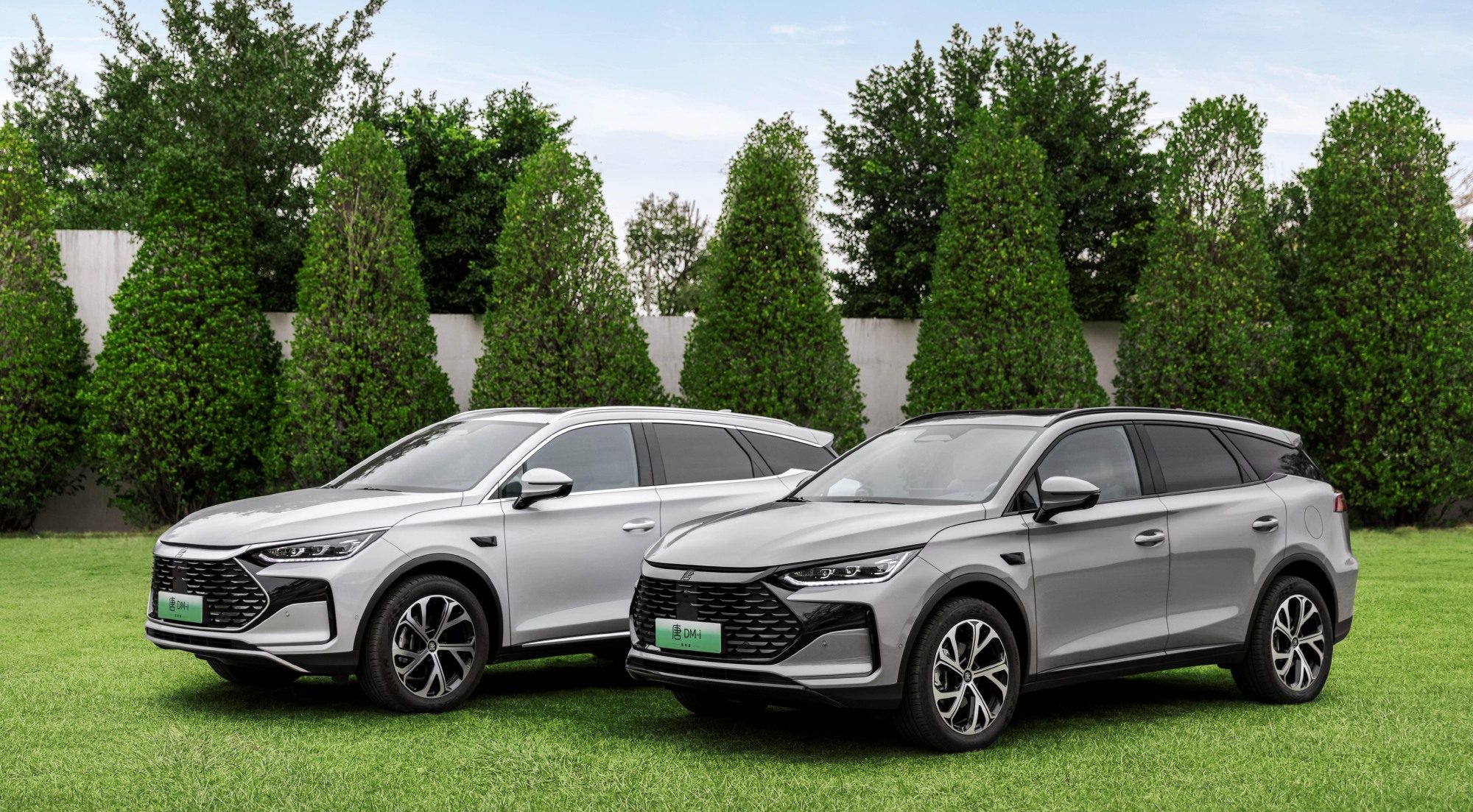
The Dynasty series will introduce the Han 9 and Tang 9, while Fangchengbao plans the Magnesium 9 sedan.
With rapid technological iteration and global expansion, BYD’s challenge will be sustaining high growth amid fierce competition from HIMA, Geely and others, following its 2025 sales of 4.6024 million units.
Discover more from ChinaEVHome
Subscribe to get the latest posts sent to your email.