- Honda and GAC extend GAC Honda joint venture to 2038 while keeping ownership unchanged.
- GAC Honda faces steep declines—June retail sales down 44.5% and first-half sales down 34.7% for Honda China.
- New push: three 2027 models including ICE, fifth-gen i‑MMD hybrid, and a China-built EV with Huawei/Momenta tech.
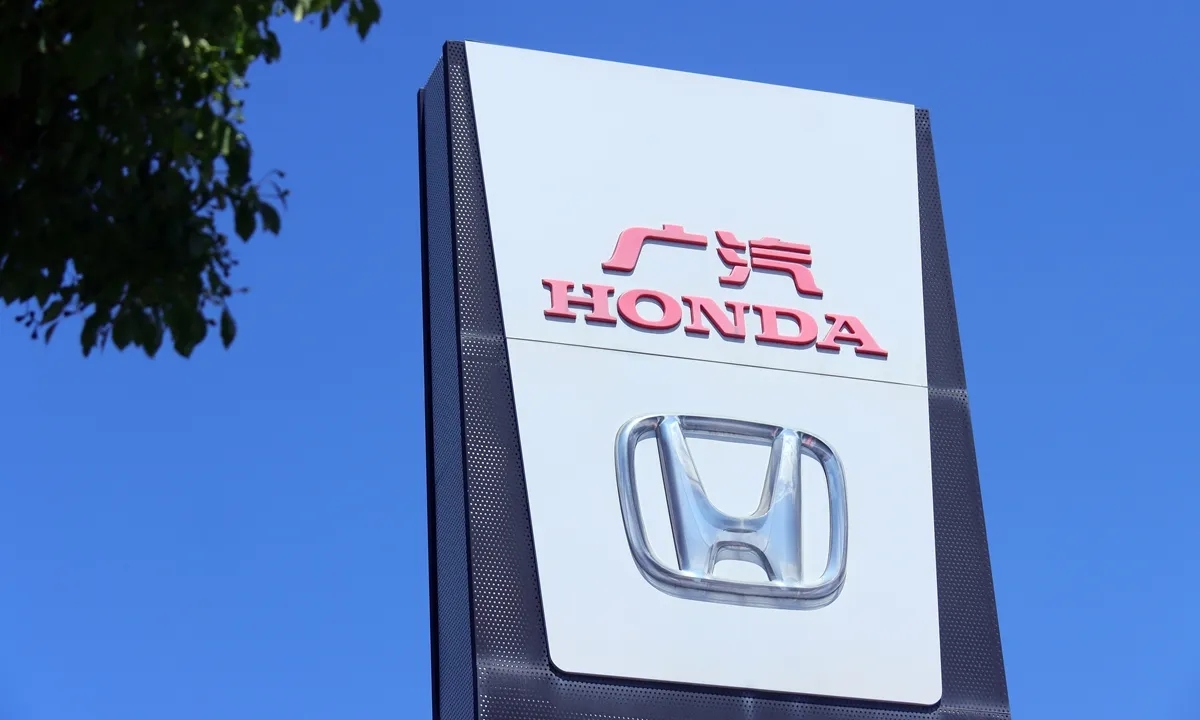
On July 20, Honda announced that it had signed a strategic renewal agreement with GAC Group, extending the joint venture term of GAC Honda Automobile Co., Ltd. through 2038 while maintaining the existing ownership structure.
The extension means the two companies will continue working together on GAC Honda’s product portfolio, technology roadmap and new energy vehicle transformation over the next decade and beyond.
Established in 1998, GAC Honda was Honda’s first vehicle manufacturing joint venture in China. Over nearly three decades, the company has sold more than 11 million vehicles.
The joint venture has introduced a range of key models, including the Accord, Fit, Odyssey, Avancier and Breeze, making it one of Honda’s most important businesses in China and a long-standing player in the country’s passenger vehicle market.

Looking back at GAC Honda’s development, early successes with models such as the Accord and Fit helped reshape competition among international joint-venture brands in China.
The subsequent launches of the Avancier, Crider and Breeze enabled GAC Honda to establish a full lineup across the sedan, SUV and MPV segments.
For many years, it was one of the few joint-venture automakers capable of competing head-to-head with Toyota’s FAW Toyota and GAC Toyota operations.
However, the rapid adoption of new energy vehicles has significantly changed the competitive landscape.

China’s NEV penetration rate has now exceeded 60%, with domestic automakers continuing to expand market share through battery electric vehicles, plug-in hybrids and intelligent driving technologies.
By comparison, GAC Honda’s portfolio remains heavily weighted toward internal combustion engine vehicles, while its hybrid and battery electric offerings have been relatively less competitive.
Sales of former best-selling models, including the Accord, Breeze, Fit and Vezel, have all declined to varying degrees.
Sales figures underscore the pressure. According to Honda China, June retail sales fell 44.5% year-on-year to 32,474 vehicles, while first-half sales dropped 34.7% to 205,818 units.
GAC Group’s production and sales report showed GAC Honda sold 14,099 vehicles in June, down 53.03% year-on-year.

First-half sales totaled 68,318 units, representing a 55.82% decline from a year earlier.
Against this backdrop, the renewed agreement represents a strategic reset for the next phase of the partnership.
Honda China said China remains the world’s largest automotive market, with competition in electrification and intelligent vehicles continuing to intensify.
Going forward, the two companies will leverage their respective strengths in technology, research and development, and industrial resources to accelerate GAC Honda’s new energy vehicle transition and improve product competitiveness.
In fact, during Beijing Auto Show 2026, GAC Honda Executive Vice General Manager Lin Zhibin revealed that the two sides intended to renew the joint venture agreement and outlined future product plans.

Under the plan, GAC Honda will launch three all-new models in 2027, covering internal combustion engine, hybrid and new energy vehicle segments.
The lineup will include the next-generation Accord, a new model equipped with Honda’s fifth-generation i-MMD hybrid system, and an independently developed new energy vehicle built on a China-specific EV platform.
On the intelligent vehicle front, the company is working with Huawei HarmonyOS and Momenta to enhance its intelligent cockpit and advanced driver assistance capabilities, while integrating more domestic suppliers into its future vehicle development program.
Discover more from ChinaEVHome
Subscribe to get the latest posts sent to your email.