- NIO Capital holds a 5.53% stake in Aulton after investing RMB400 million, making it Aulton’s largest external backer.
- Aulton pushes an open-platform chassis snap-fit swap network with 531 stations and 140,000 registered vehicles.
- Aulton’s IPO aims to fund expansion amid fierce competition from NIO and CATL’s allied, fast-growing swap ecosystems.
On July 19, Aulton New Energy filed its second listing application with the Hong Kong Stock Exchange.
This marks the company’s second attempt at a Hong Kong IPO, following its first filing in December 2025, which lapsed after six months.
Notably, NIO Capital appears prominently on its shareholder list – having invested a total of 400 million RMB (approx. US$59.1 million) across two rounds, and currently still holding a 5.53% stake, making it the largest external shareholder.
This capital connection has sparked considerable discussion – NIO, as the most steadfast promoter of battery-swapping in China, is both building its own swap stations while also investing in a company that could potentially compete with it.

This capital connection has sparked considerable discussion – NIO, as the most steadfast promoter of battery-swapping in China, is both building its own swap stations while also investing in a company that could potentially compete with it.
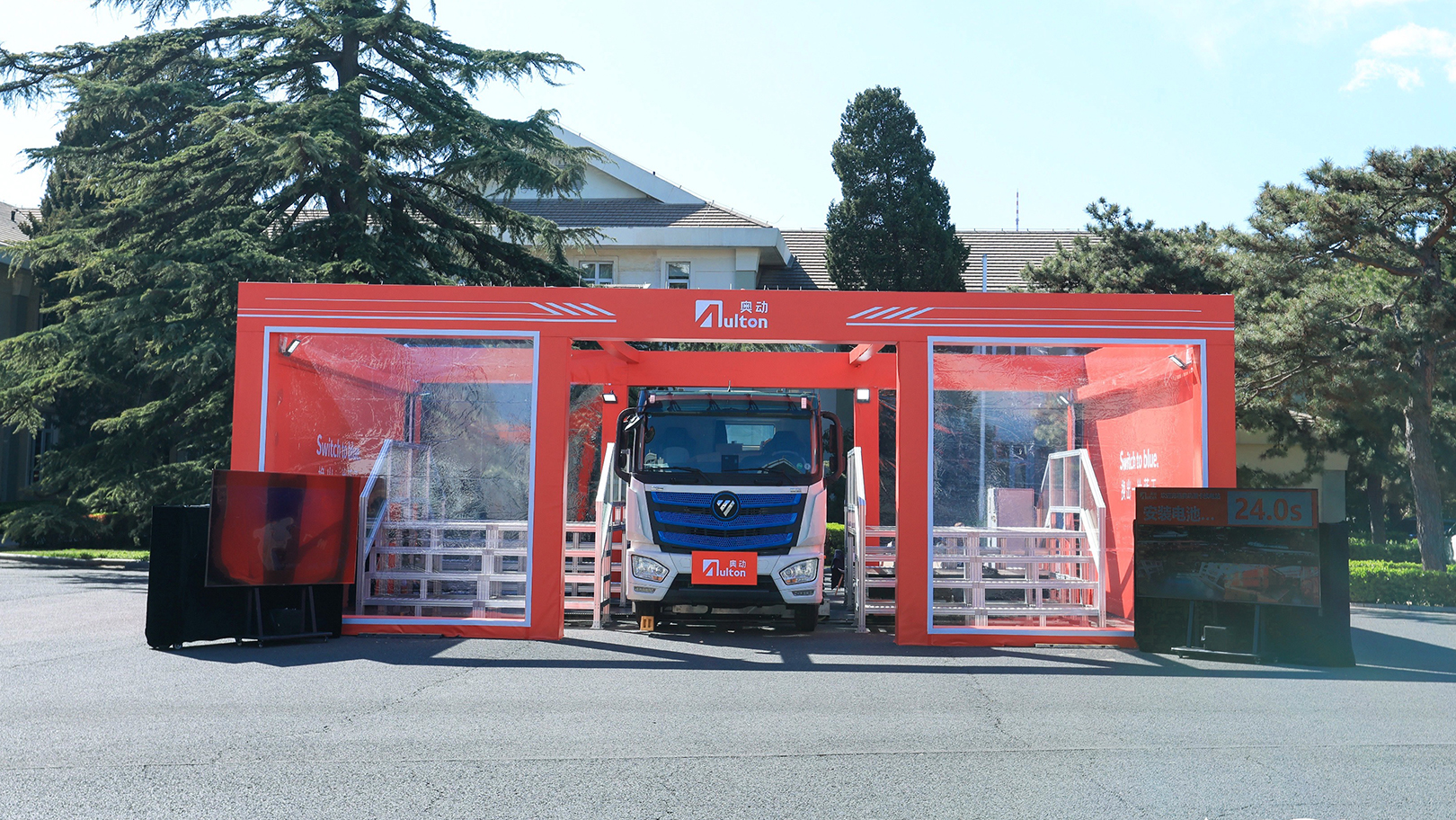
Aulton adopts a chassis snap-fit battery-swapping solution, where the vehicle is parked, the swapping equipment holds the battery from underneath, releases the snap-fit, lowers and removes the depleted battery, then lifts and locks a fully charged battery into place – a process similar to NIO’s swapping technology.
The difference, however, is that Aulton pursues a third-party open-platform approach: it does not manufacture cars, but instead connects different automakers and vehicle models to a unified swapping network.

As early as 2018, NIO Capital first invested 250 million RMB (approx. US$36.9 million) exclusively in the Pre-A round; a year later, it added another 150 million RMB (approx. US$22.2 million), bringing the total two-round investment to 400 million RMB (approx. US$59.1 million).
The timing of this investment is also quite telling.
In December 2017, NIO had already publicly demonstrated its first-generation swap station; in April 2018, NIO Capital invested in Aulton, and just over a month later, NIO’s first swap station went into operation in Shenzhen.
At that time, the battery-swapping model had yet to be validated by the market. This investment meant that while NIO was building its own swap stations, it was also hedging its bets through a capital stake in a third-party public swapping network – pursuing both paths simultaneously.
By 2026, NIO has become the highest-revenue player in the battery-swapping space, with swap station service revenue of approximately 3.1 billion RMB (approx. US$458.2 million) in 2025 – more than six times that of Aulton. The investee company has become a direct competitor to NIO in the swapping arena.

It is worth noting that Aulton’s challenges do not come from NIO alone – CATL is another formidable rival.
Since June 2023, CATL has been deploying heavy-truck battery-swapping solutions; in December 2024, it formally entered the passenger car battery-swapping market with its “Chocolate Swap” solution.
As of May 2026, CATL has built over 1,650 Chocolate Swap stations across 127 cities, with plans to expand to more than 3,000 stations by the end of 2026.
Adding to the pressure, NIO and CATL have also established a strategic partnership in battery-swapping – a powerful alliance that will further squeeze the room for other players attempting to enter the swapping space.

Since completing its last financing round in 2022, Aulton has gone four consecutive years without new public funding. This Hong Kong listing push is primarily aimed at expanding its swap station network, enhancing technological capabilities, and replenishing working capital.
As of April 30, 2026, Aulton New Energy’s smart platform had 531 swap stations in connected operation across 60 cities in China, with over 140,000 vehicles registered on the platform.
In terms of automaker partnerships, Aulton has collaborated with more than 16 major automakers, including FAW, Dongfeng, Chang’an, SAIC, BAIC, GAC, Dongfeng Nissan, and Hozon, with over 30 swap-enabled models jointly developed.
Discover more from ChinaEVHome
Subscribe to get the latest posts sent to your email.