- BYD filed six solid-state battery patents tackling interfaces, electrolytes, cathodes and electrode structures.
- BYD aims for small-batch all-solid-state vehicle installations in 2027 and broader deployment around 2030.
- Company pursues sulfide and composite sulfide-halide approaches amid industry-wide manufacturing and cost hurdles.
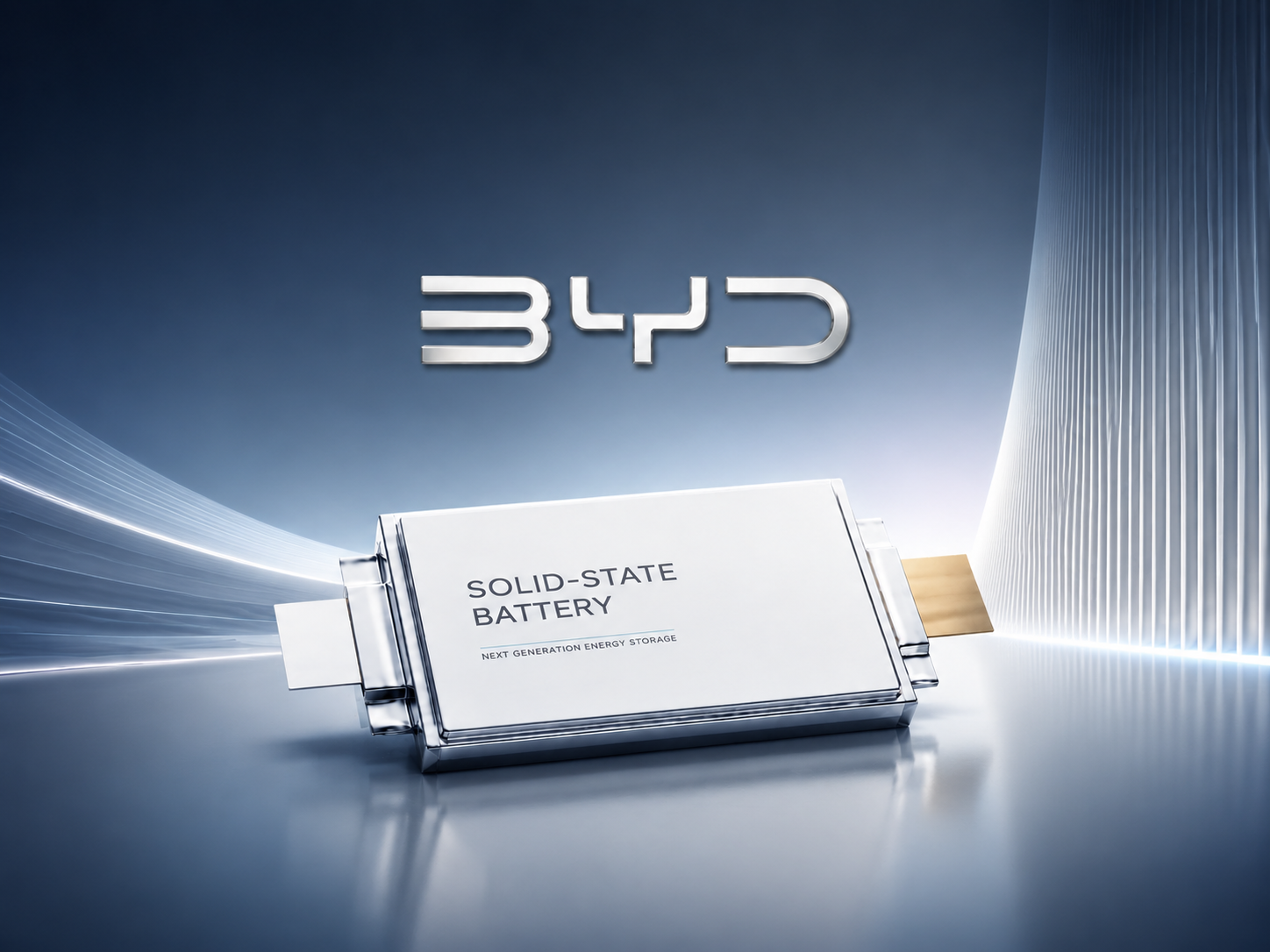
China’s National Intellectual Property Administration records show BYD recently disclosed six new patents covering solid-state battery structures, cathode materials, composite electrolytes and electrode designs.
The patents focus on major technical challenges facing solid-state battery commercialization, including solid-solid interface stability, electrolyte compatibility, electrode cycling performance and energy density improvements.

Three of the patents directly reference “solid-state batteries,” while the remaining three target material optimization and electrode structure improvements.
The patent disclosures came about five months after BYD started operations at its sulfide all-solid-state battery pilot production line in Shenzhen’s Pingshan district. The company is also advancing plans for a 20 GWh solid-state battery production line in Bishan, Chongqing.
BYD is focusing on sulfide-based solid-state batteries, while also exploring composite electrolyte solutions combining sulfide and halide materials. The company previously said sulfide solid-state batteries could improve battery lifespan, safety performance and fast-charging capability. BYD aims to achieve small-batch production in 2027.
Among the newly disclosed patents, one solid-state battery design proposes adding an ion-conducting layer to reduce direct contact between sulfide and halide electrolytes. The approach aims to cut interface side reactions, improving battery cycling performance.

Another cathode-related patent introduces different types of solid electrolytes to reduce stability issues caused by direct contact between cathode materials and sulfide electrolytes.
BYD is also optimizing composite cathodes, electrode sheet structures and solid electrolyte distribution to improve battery rate performance, cycle life and ion transport efficiency.
BYD has filed more than 1,200 solid-state battery-related patents to date. The company received 3,432 newly authorized patents in related fields in 2025.
Solid-state batteries are emerging as the next major battleground in the global power battery industry. However, large-scale commercialization remains challenging.
CATL Chairman Zeng Yuqun previously said that if battery technology maturity is measured on a scale from Level 1 to Level 9, solid-state batteries are currently around Level 4. Achieving million-unit vehicle installations before 2030 remains unlikely.

CATL believes the biggest hurdles for solid-state batteries are no longer basic scientific issues, but supply chain development, manufacturing consistency, cost control and long-term cycling reliability.
BYD also acknowledged that commercialization still requires solutions for solid-solid interface resistance, material costs and manufacturing processes. However, BYD has set a clearer commercialization timeline. The company plans to achieve small-batch demonstration vehicle installations of all-solid-state batteries in 2027, followed by broader applications around 2030.
The timeline is broadly aligned with CATL’s latest investor platform response. CATL said it continues to advance all-solid-state battery research and pilot validation, with plans to begin small-batch trial production in 2027.
Global solid-state battery shipments reached 8.0 GWh in 2025, up 51.9% year over year, according to the “White Paper on China Solid-State Battery Industry Development (2026)” released by EVTank and Yiwei Economic Research Institute.

However, most solid-state batteries currently achieving commercial shipments worldwide still rely on semi-solid or hybrid solid-liquid technologies. True all-solid-state batteries remain at the research and validation stage.
Discover more from ChinaEVHome
Subscribe to get the latest posts sent to your email.