- China’s retail top-10 passenger car list for August was entirely BEVs, reflecting accelerating displacement of ICEs as makers chase share across mass-market and entry-level segments.
- Geely’s Xingyuan led with 39,651 retail sales; Leapmotor A10 30,652; Tesla Model Y 29,260; NEV retail sales totaled 1.005 million units with 65.2% NEV penetration.
- Domestic brands and Tesla dominate the segment from RMB 60,000 (about $8,940) entry cars to RMB 300,000 (about $44,700) SUVs, but consolidation, classification quirks, supply and margin pressure could disrupt scaling.
All 10 of China’s best-selling passenger car models by retail sales in August were battery-electric vehicles (BEVs), with no ICE vehicles, hybrids or range-extended vehicles making the list, according to CPCA data cited by Dongchedi, one of China’s leading automotive platforms.
It was the second time this year that ICEs were completely absent from China’s domestic passenger car retail top 10, following a similar outcome in May.
The latest rankings show that the shift from ICE vehicles toward EVs is accelerating in China’s passenger car market.

In January, seven of the top 10 models were ICEs. That number fell to five in March and just one in April. In May, NEV models swept all 10 positions for the first time.
Two ICE models returned to the top 10 in June, followed by one in July. By August, however, ICE vehicles had once again been eliminated from the ranking.
The composition of the August ranking also highlights the widening reach of BEVs.
Domestic brands accounted for eight of the top 10 spots, with the remaining two held by Tesla.
The models ranged from entry-level cars priced in the RMB 60,000 ($8,940) range to SUVs priced around RMB 300,000 ($44,700), showing how broadly BEVs now compete across China’s passenger car market.
Geely’s Xingyuan (known as EX2 in overseas markets) ranked first with retail sales of 39,651 units.

The model also topped China’s overall vehicle sales rankings during the first half of the year, with nearly 250,000 units sold.
Leapmotor’s A10 and Tesla’s Model Y ranked second and third with sales of 30,652 and 29,260 units, respectively.
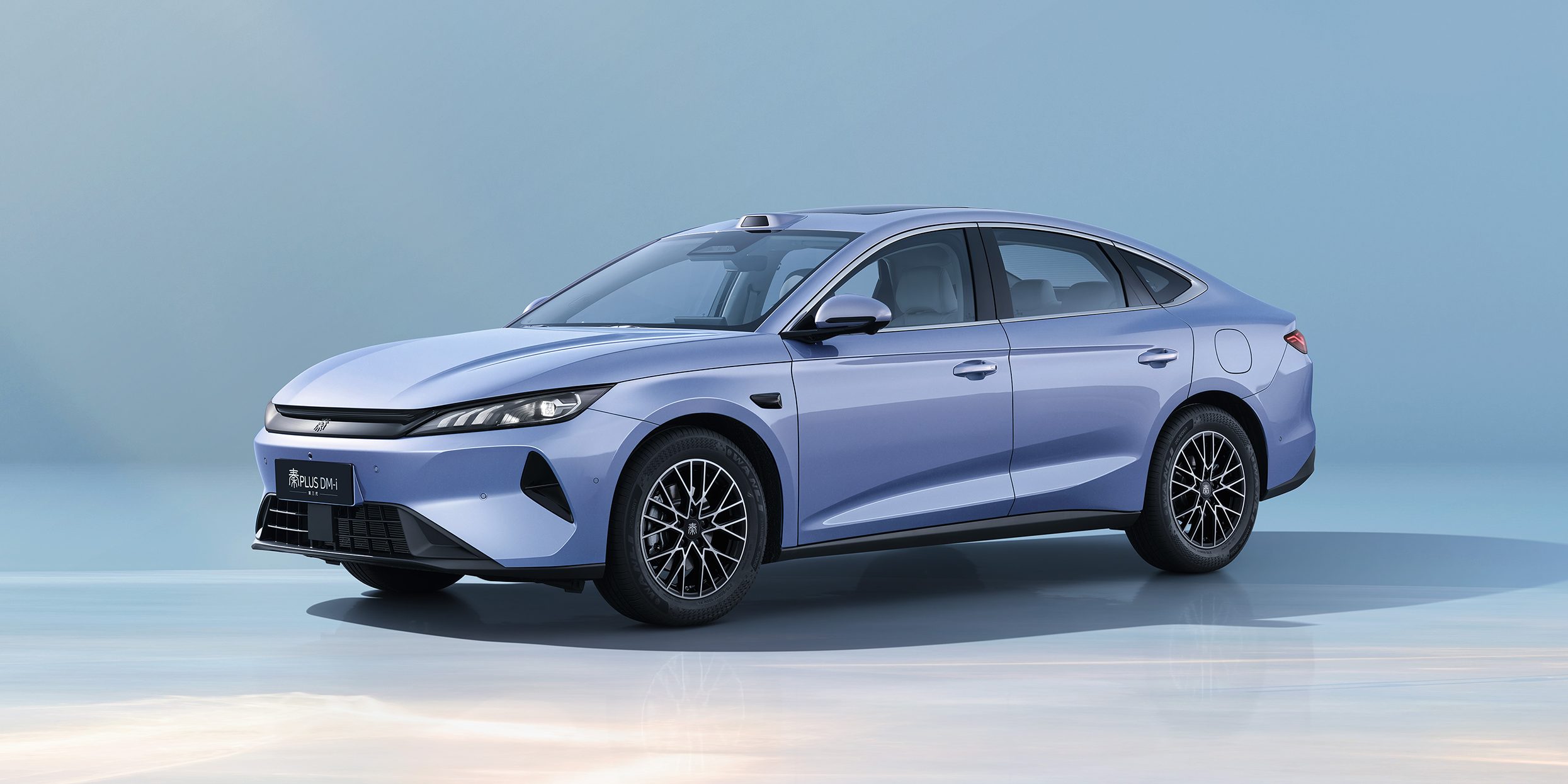
BYD’s Yuan UP (known as Atto 2 in overseas markets) and Tesla’s Model 3 followed with 22,958 and 20,787 units, respectively.
Changan’s Nevo Q05 ranked sixth with 17,349 units, followed by Li Auto’s i6 with 16,979 units, Xiaomi’s SU7 with 16,518 units, BYD’s Dolphin with 16,829 units and Wuling’s Bingo Pro with 14,695 units.
It is worth noting that rankings can vary depending on how sales are classified and consolidated.
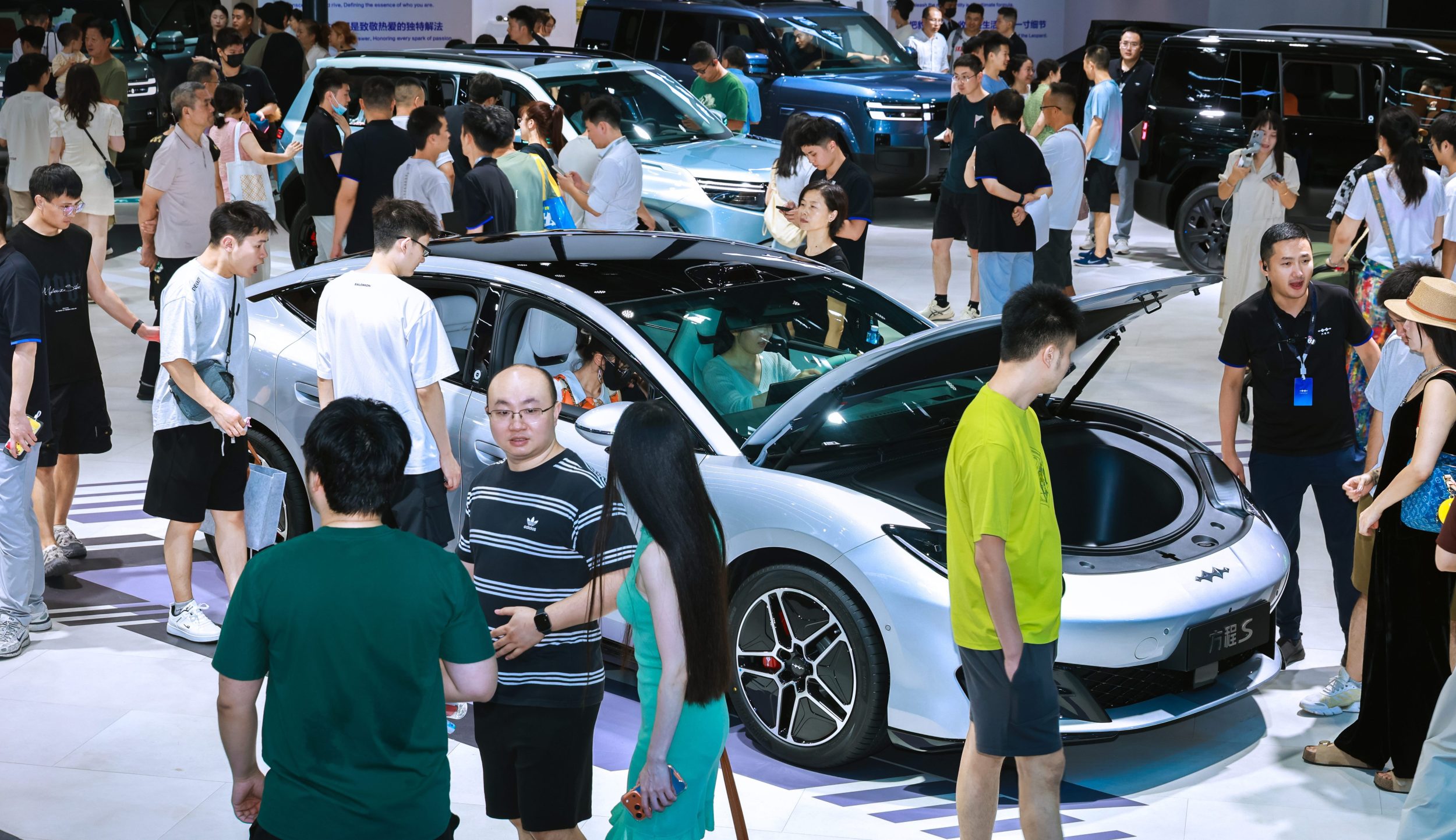
For example, Fangchengbao’s Ti 7 would have sold 23,471 units in August if its BEV and plug-in hybrid (PHEV) versions were combined, putting it in fourth place.

The BEV version accounted for 12,864 units and remained the main volume driver, while the PHEV version contributed 10,607 units.
The changes in the model rankings are consistent with the broader restructuring of China’s passenger car market.
Domestic passenger car retail sales totaled 1.541 million units in August, where NEV retail sales reached 1.005 million units, giving NEVs a record 65.2% penetration rate.
By comparison, conventional fuel-powered passenger car retail sales stood at about 540,000 units, down 40% year on year.
Despite the overall contraction in the passenger car market, NEVs continue to displace conventional fuel-powered vehicles.
The shift is particularly visible in the traditional A-segment and entry-level markets.
A large portion of demand historically served by gasoline-powered sedans is increasingly being absorbed by lower-priced BEVs as charging infrastructure and charging efficiency continue to improve.
Discover more from ChinaEVHome
Subscribe to get the latest posts sent to your email.