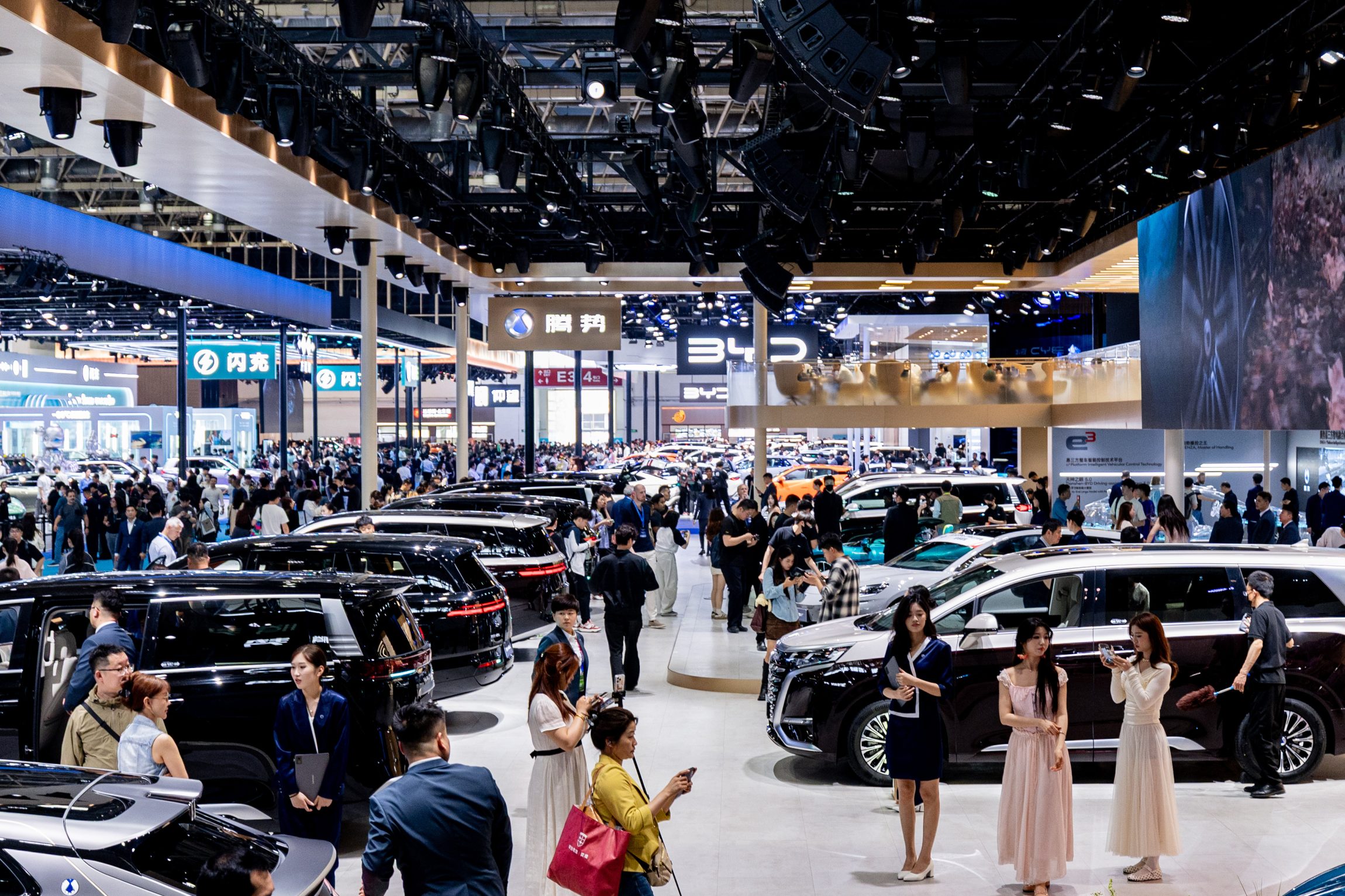
- China passenger vehicle retail plunged 23% year‑on‑year in August while wholesale fell 5%, reflecting intense price and channel pressure as buyers favor larger, higher‑margin SUVs over small sedans.
- Key volumes: BYD Seagull August retail 36.1K units and 227.3K YTD; Geely Xingyuan August 61K and 365.5K YTD; BYD Yuan UP August 64.2K; BYD Song 490.4K H1 sales.
- Competitive impact concentrates market share in SUVs and NEVs, squeezing legacy gasoline sedans and MPVs, with execution risks in inventory/retail channel mismatch, supply scaling and sustaining margins.
August 2026 segment-level data for China’s passenger vehicle market has been released, according to Cui Dongshu, secretary-general of the China Passenger Car Association (CPCA).
Overall, passenger vehicle retail sales fell 23% year over year in August, while wholesale sales declined 5%. Retail performance remained significantly weaker than wholesale.
Structurally, larger and higher-end A0-, B-, and C-class SUVs recorded strong wholesale growth, while traditional sedans and micro/small MPVs continued to lose demand. The divergence between wholesale and retail trends has also increased pressure on channel inventories.
The entry-level micro sedan market remained under pressure, with the A00-class sedan segment continuing to shrink. Market concentration among leading models has increased, while the segment undergoes a major reshuffle.

BYD Seagull ranked first in the segment with August sales of 36.1K units, up 6% year over year. Its cumulative sales reached 227.3K units this year, maintaining its market-leading position. Wuling Hongguang MINI EV sold 9K units, down 66% year over year, showing a sharp decline in market appeal. Bestune Pony and Leapmotor T03 ranked third and fourth with 4.3K units and 2.7K units, respectively, supported by overseas demand.
The A0-class sedan segment remained one of the few entry-level categories to maintain growth this year. Electrification has become mainstream in this price range, while the presence of internal combustion engine vehicles continues to weaken.
In August, Geely Xingyuan led the segment with 61K units sold, up 27% year over year. BYD Dolphin followed with 29.1K units, up 34%, while Wuling Bingo recorded 25.6K units, surging 212%. MG4 series reached 23.5K units, up 299%.
On a year-to-date basis, Geely Xingyuan recorded 365.5K units in sales, up 23% year over year, far ahead of BYD Dolphin at 169.7K units. MG4 series posted a 641% year-over-year increase, moving into third place in annual rankings.

SUVs remained the core growth driver of the passenger vehicle market, with high-end B- and C-class SUVs showing strong momentum on the wholesale side.
The A0-class SUV segment maintained solid demand, with most leading models achieving strong growth. BYD Yuan UP ranked first in August with 64.2K units, up 173% year over year. Geely Binyue followed with 33.5K units, up 87%, while Leapmotor A10 reached 32.2K units.
As the mainstream family SUV segment, A-class SUVs continue to face intense competition, with rapid product upgrades across both new and existing models. BYD Song remained the segment leader with 490.4K units sold in the first half of the year, although sales declined 16% year over year.

The B-class SUV segment continued to show strong growth momentum, led by new energy models that are increasingly squeezing traditional premium gasoline SUVs.
Tesla Model Y remained the segment leader, with cumulative 2026 sales reaching 415K units, far ahead of competitors.
BYD Fangchengbao Tai 7 and Li Auto i6 formed the leading group among domestic emerging brands, with sales of 160.8K units and 152.8K units, respectively. Xiaomi YU7 recorded 128.4K units, while NIO ES8 reached 99.9K units, with both new models delivering rapid growth.

By contrast, traditional premium SUVs such as AITO M9 and Mercedes-Benz GLC recorded year-over-year declines.
The sedan market showed clearer segmentation, with the A-class sedan segment facing broad pressure as most mainstream models posted declines.
In 2026 cumulative sales, BYD Seal 06 ranked first with 142K units, though sales fell 27% year over year. Geely Emgrand EC7 and Volkswagen Lavida followed with 122K units and 120K units, respectively, down 4% and 34%.

The B-class sedan segment continued to reflect the broader shift toward new energy vehicles, while joint-venture gasoline models remained under pressure.
Tesla Model 3 led the segment with cumulative first-half sales of 232.6K units. Xiaomi SU7 ranked second with 118.1K units, although sales declined 17% year over year due to a high comparison base.
The MPV market remained highly competitive, with its landscape undergoing rapid restructuring.

Wuling Xingguang ranked first in 2026 cumulative sales with 55.2K units, followed by Toyota Sienna at 53.7K units and Wey Gaoshan at 47.2K units.
Traditional mainstream MPVs such as Denza D9 and Buick GL8 saw significant year-over-year declines, as new energy MPVs continued to capture market share from conventional models.
Discover more from ChinaEVHome
Subscribe to get the latest posts sent to your email.
.jpg)

