- Geely will unveil a next-generation AI charging system alongside an updated Galaxy E5 on Sept. 23, signaling a move to chase faster charging and defend market share against rivals pushing ultra-fast tech.
- Updated Galaxy E5 shifts from 400V FWD to an all-domain 800V RWD platform, 245 kW peak motor, Aegis Short Blade batteries at 61.52 kWh and 70.01 kWh with CLTC ranges of 550 km and 635 km.
- Targets competitors like BYD’s flash-charging and premium EVs, but execution risks include proving long-term battery durability, rolling out compatible high-power infrastructure, and scaling production on schedule.
Geely has released a preview video announcing that its next-generation AI charging technology will be unveiled on Sept. 23.
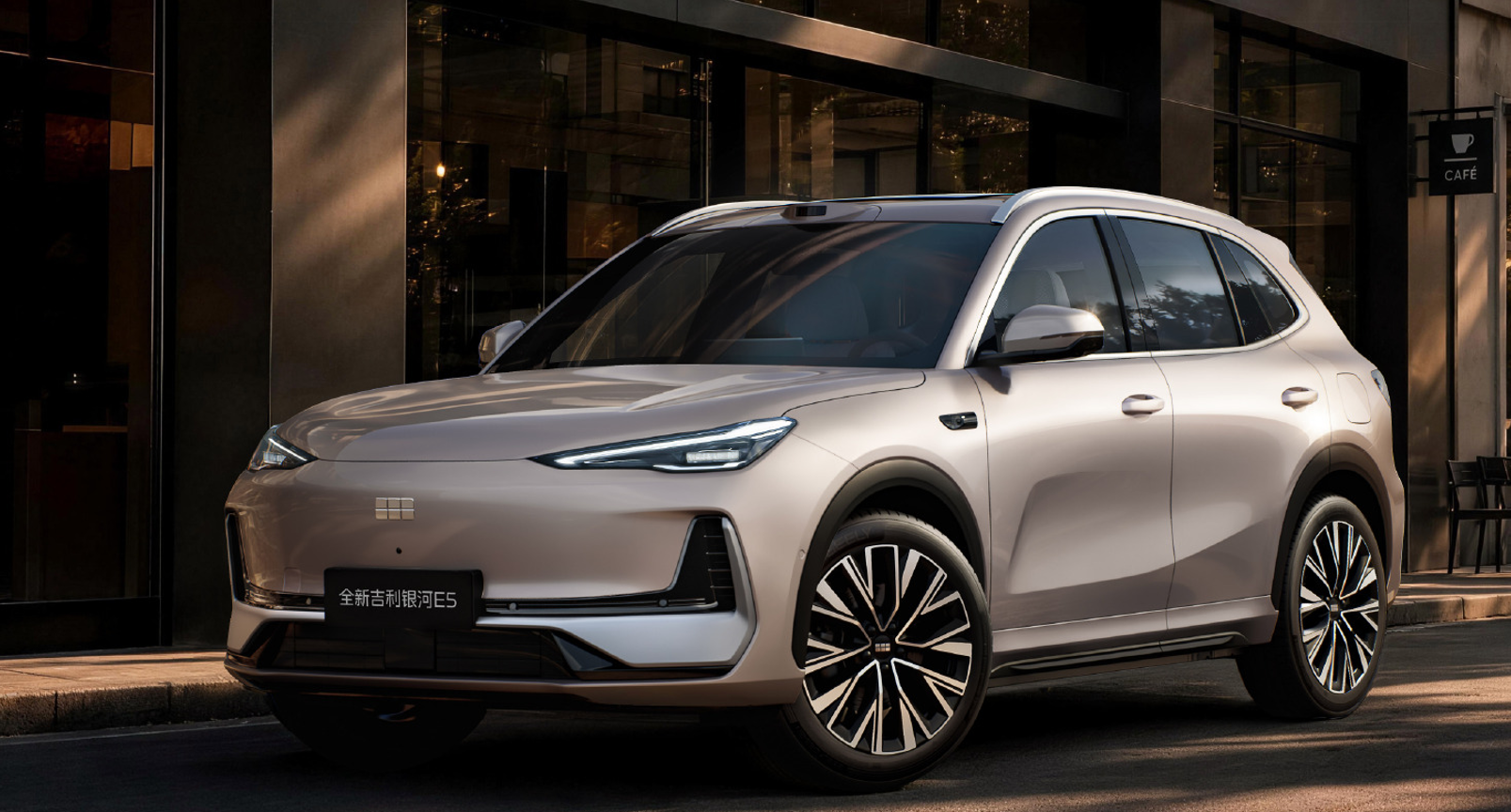
The updated Geely Galaxy E5 will be the first model to feature the technology and will make its official debut on the same day.
According to the company’s preview, the next-generation AI charging system can deliver peak power of up to 2.2 MW, with Geely touting “four-minute high-efficiency charging.”

The technical approach combines an AI large-model battery management system (BMS) with an all-domain 800V platform and 6C ultra-fast charging.
Geely says the system uses intelligent charging strategies tailored to each vehicle’s battery condition and charging requirements.
The company says the system enables “a customized strategy for every vehicle,” increasing charging speed while limiting battery degradation associated with fast charging, with the aim of balancing battery safety and service life.
As the first model to adopt the technology, the updated Galaxy E5 will receive changes beyond its charging system.
The front end gains an active grille and L-shaped trim, while the flush door handles are replaced by conventional mechanical handles.

The updated model measures 4,636 × 1,920 × 1,670 mm, with a wheelbase of 2,750 mm.
Compared with the current version, its body is 21 mm longer and 19 mm wider, while the wheelbase remains unchanged.
The powertrain platform also shifts from the current 400V front-wheel-drive setup to an all-domain 800V rear-wheel-drive architecture.
It features Geely’s Thunderbolt 16-in-1 intelligent electric drive, with a maximum motor output of 245 kW, up 85 kW from the current model.
The new Galaxy E5 adopts Geely’s next-generation Aegis Short Blade battery, available in 61.52 kWh and 70.01 kWh capacities, delivering CLTC-rated ranges of 550 km and 635 km, respectively.
The driver-assistance hardware has also been upgraded. A LiDAR unit is added to the roof, paired with Geely’s Qianli Haohan H5 system, while additional perception cameras are fitted to the front fenders and rear of the vehicle.

Notably, the current 400V front-wheel-drive Galaxy E5 will remain in production.
The old and updated versions will be sold alongside each other, with the former expected to continue serving the lower-priced segment.
The Galaxy E5 already has an established sales base. It sold 14,132 units in August 2026, up 23.11% from the previous month, bringing its cumulative sales for the first eight months to 75,965 units.
Meanwhile, this model (badged EX2 for overseas markets) has rolled out to more than 40 countries worldwide, including key markets such as the UK, Australia, Brazil and Germany.
Since BYD introduced its next-generation flash-charging technology earlier this year, ultra-fast charging has become a growing focus of competition among automakers.
Geely’s emphasis on “four-minute smart charging” appears aimed at addressing rising consumer and market attention to charging efficiency.
Meanwhile, China’s national charging-infrastructure plan calls for more than 40 million charging points and approximately 300,000 high-power charging facilities by 2030, with capacity to serve more than 110 million EVs.
Discover more from ChinaEVHome
Subscribe to get the latest posts sent to your email.