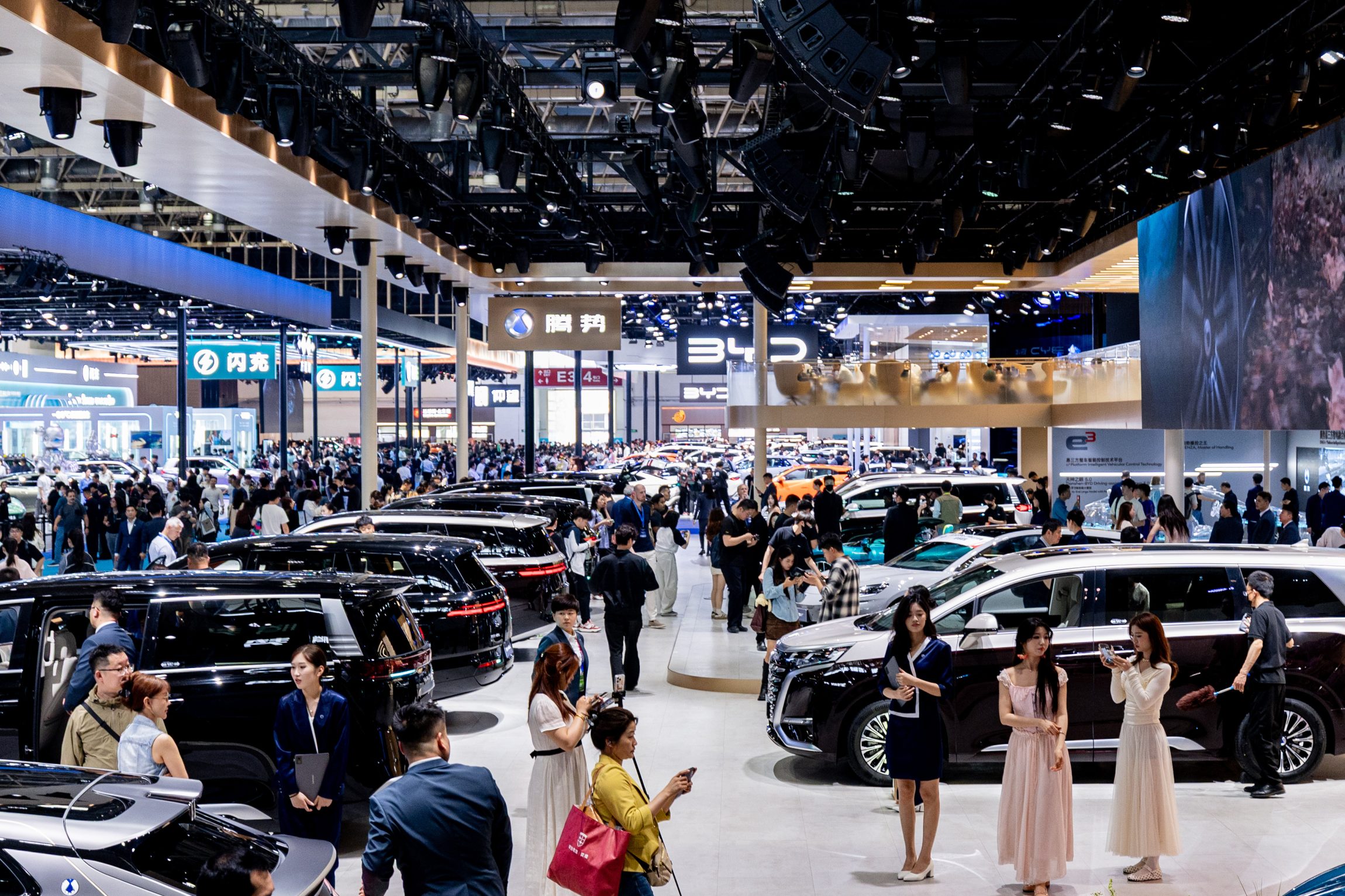
- China’s passenger-car retail sales fell 22% Sept.1–20, reflecting softer demand and dealers’ post-subsidy inventory adjustments as automakers chase share amid intense price and promotional pressure.
- NEV retail sales hit 596K units Sept.1–20 and 7.27M year-to-date, while NEV wholesales reached 740K in-period and 10.518M year-to-date, with NEV retail penetration at 67.9%.
- Sharp declines in gasoline vehicle output (330K, down 52% YoY) and hybrid production risks legacy brands’ volumes, while supply, promotional intensity and a high comparison base threaten execution.
Passenger-vehicle retail sales reached 878K units from Sept. 1–20, down 22% year over year but up 8% from the same period in August. For the year to date, passenger-vehicle retail sales totaled 12.593M units, down 21% YoY, according to data from the China Passenger Car Association (CPCA).
Wholesale sales also remained under pressure. Passenger-vehicle manufacturers sold 1.001M units during the period, down 19% YoY but up 21% from the previous month. Year-to-date wholesale sales reached 18.184M units, down 6% YoY.

Market momentum has gradually improved month over month in September, but year-over-year comparisons remain weak.
A higher base from last year has weighed on this year’s figures, as some regions saw a surge in vehicle purchases before subsidy programs expired, releasing concentrated demand ahead of the policy changes.
While the broader market continues to adjust, new energy vehicles (NEVs) remain a key source of support.
NEV passenger-car retail sales reached 596K units from Sept. 1–20, down 9% YoY but up 14% from the same period in August. Year-to-date NEV retail sales totaled 7.27M units, down 12% YoY.
The wholesale market showed stronger momentum. NEV passenger-car wholesale sales reached 740K units during the same period, up 8% YoY and 25% from the previous month. Year-to-date wholesale sales totaled 10.518M units, up 9% YoY.
As NEVs continue to expand their market share, penetration rates remain elevated. From Sept. 1–20, NEVs accounted for 67.9% of passenger-car retail sales and 73.9% of manufacturer wholesale sales.

Meanwhile, conventional gasoline-powered vehicles continued to face mounting pressure.
Production of conventional gasoline-powered light vehicles totaled 330K units during the first three weeks of September, down 52% YoY. Output of hybrid and plug-in hybrid models reached 265K units, down 23%.
The latest market trend shows that China’s auto market growth is increasingly driven by NEVs. Demand for traditional internal-combustion vehicles continues to shrink, while NEVs are shifting from a niche growth segment into a decisive force reshaping the overall market structure.
The CPCA expects the September market to benefit from the traditional peak-sales season, local consumption stimulus policies, automaker promotions and the continued ramp-up of recently launched models.
However, the high comparison base created by last year’s subsidy phase-out period means year-over-year recovery is likely to remain limited.
Discover more from ChinaEVHome
Subscribe to get the latest posts sent to your email.