- China added 614,000 charging connectors in October, bringing the total to 25.391 million, reflecting rapid network expansion driven by surging NEV adoption and private-install growth.
- Public infrastructure totaled 5.283 million connectors with 271 million kW rated power (about 51.37 kW per connector average), while private connectors hit 20.108 million with 171 million kVA contracted capacity.
- Direct competitors include NIO, BYD and Geely’s charging networks; execution risks center on scaling ultra-fast stations, grid capacity limits, and meeting BYD’s and others’ aggressive rollout timelines.
China’s total number of electric vehicle charging connectors reached 25.391 million as of the end of October, according to data released by the National Energy Administration on November 20.
Data from the National EV Charging Infrastructure Monitoring and Service Platform showed that the number of charging connectors nationwide had increased 36.2% year over year by the end of October.
In terms of new installations, China added 614,000 charging connectors in October alone, up 10.8% from September.
Private charging continued to account for the bulk of new installations.

A total of 538,000 private charging connectors were added during the month, representing 87.6% of the overall increase. Public charging infrastructure additions stood at 76,000 units.
By the end of October, China had 20.108 million private charging connectors, up 42.5% year over year.
The number of public charging connectors reached 5.283 million, an increase of 16.5%.
In terms of charging capacity, the total rated power of public charging infrastructure nationwide reached 271 million kW by the end of October.
This delivers an average rated output of approximately 51.37 kW per connector.
The total contracted electricity capacity for private charging installations stood at approximately 171 million kVA.

Beyond the number of charging points, charging capacity is another important indicator of infrastructure development.
The rapid expansion of charging infrastructure has been driven by the continued growth of China’s NEV market.
According to the China Passenger Car Association (CPCA), domestic retail sales of NEV passenger vehicles reached 1.109 million units in October.
The NEV retail penetration rate rising to 67.5% in that month, up 10.5 percentage points year over year.
Automakers are also stepping up investment in charging and battery-swapping infrastructure.

As of November 20, NIO had built 9,877 charging and battery-swap stations across China, including 5,603 charging stations and 32,761 charging connectors.
BYD is continuing to expand its Flash Charging network. As of October 20, it had put 12,165 stations into operation and plans to increase the network to 20,000 stations by the end of 2026.
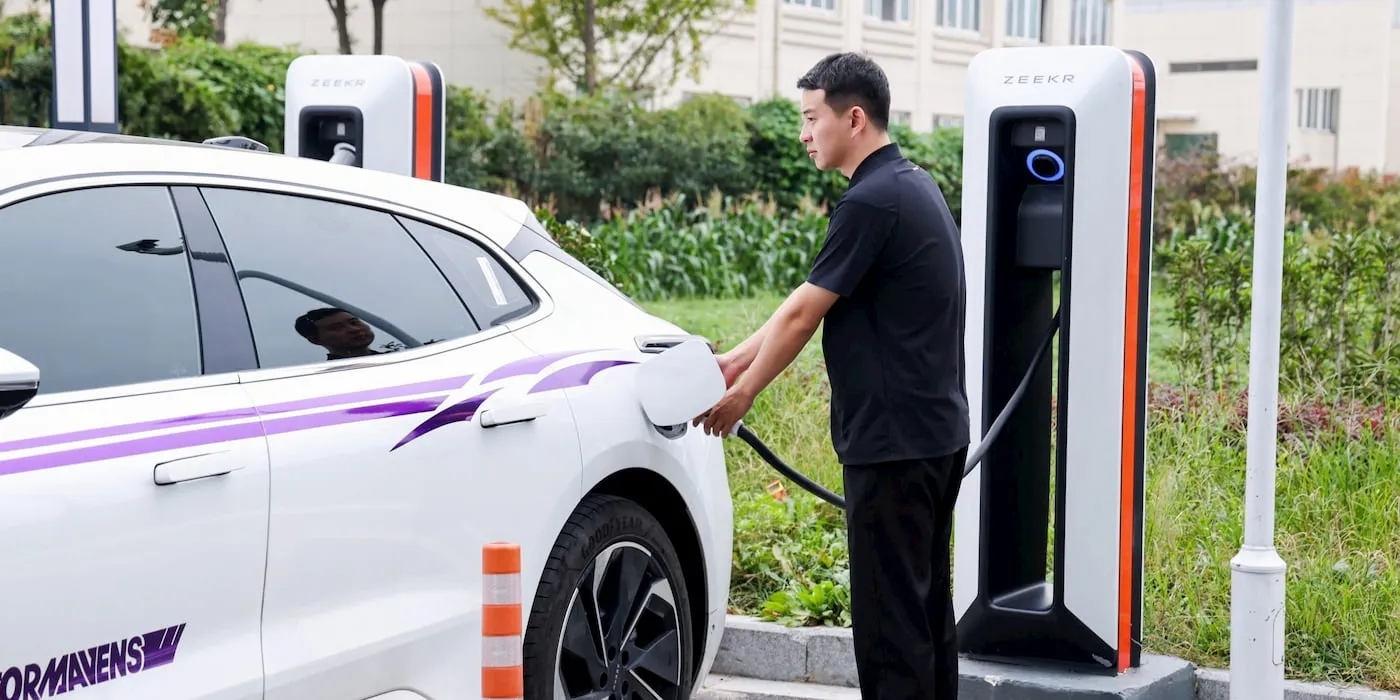
In September this year, Geely unveiled its new-generation AI energy replenishment technology, “Geely Smart Charging”, with a peak charging power of 2.2 megawatts per gun.
As of the end of October, Geely Smart Charging had built 3,003 charging stations with 13,800 charging connectors, including 1,766 ultra-fast charging stations.
Discover more from ChinaEVHome
Subscribe to get the latest posts sent to your email.