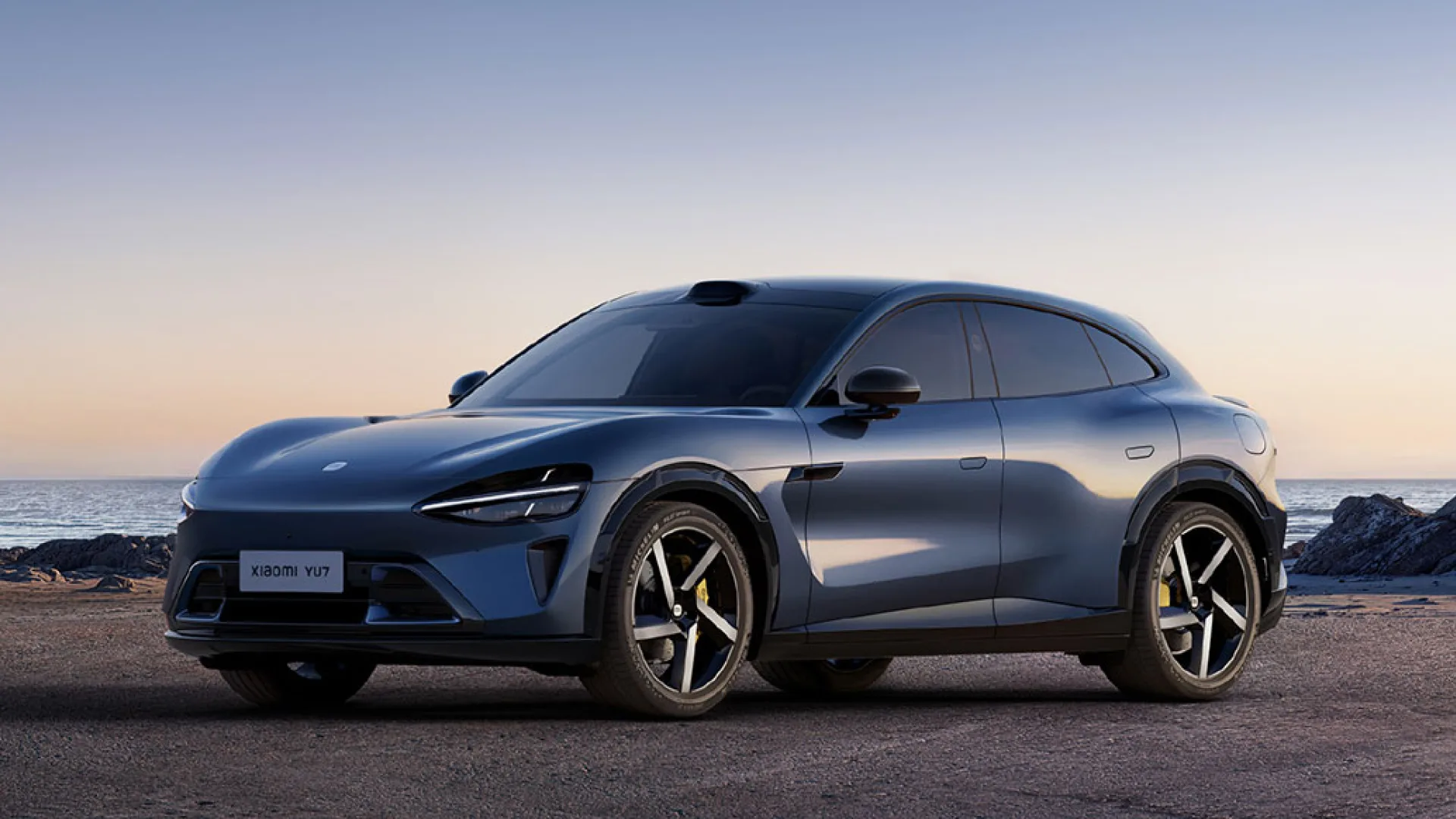
Xiaomi’s all-electric SUV, the YU7, is gradually unveiling itself.
The company has officially announced that the YU7 will launch at the end of June, with Xiaomi President Lu Weibing scheduled to host a livestream on June 18 to build momentum ahead of its debut.

Back in May, Xiaomi CEO Lei Jun had already shared a first look at the YU7 during the company’s major product event, revealing its design direction and several core specs — giving the public a broad understanding of the new model.
More recently, major Chinese automotive outlets — including EV Planet — have been invited to participate in dynamic test drives. Journalists on site noted that the YU7’s driving performance was surprisingly impressive, with some even saying it “doesn’t drive like an SUV.”

As details become increasingly transparent, third-party automotive sites have now leaked a full breakdown of YU7 configurations, revealing far more than Xiaomi’s official teasers. The new information dives into comfort features, option availability, and the distinctions across each trim level.
While a true value comparison will have to wait for pricing at launch, the current configuration sheet already helps paint a clear picture of the strengths and trade-offs of each trim.
Trim-Level Divide
From the leaked specs, it’s clear that the YU7 — while offering more across-the-board standard features than the SU7 — still reflects a clear trim hierarchy, with notable differences in both performance and comfort.

Powertrain:
- The Standard version uses a single motor with a peak output of 235kW (320 hp) and 528Nm of torque. It accelerates from 0 to 100 km/h in 5.88 seconds and is equipped with a 96.3kWh LFP battery supplied by FinDreams (BYD), with energy consumption rated at 13.3kWh/100km.
- The Pro version moves to a dual-motor AWD setup with 365kW (496 hp) of combined power and 690Nm torque, cutting the 0–100 time to 4.27 seconds. It retains the same 96.3kWh LFP battery but sees higher energy consumption at 14.4kWh/100km.
- The Max version delivers the highest performance with dual motors producing 508kW (690 hp) and 866Nm of torque, reaching 0–100 km/h in just 3.23 seconds. It uses a 101.7kWh NCM battery from CATL and consumes 14.7kWh/100km.
Although both the Pro and Max use dual-motor setups, the Max features more powerful motors (220kW front, 288kW rear) compared to the Pro (130kW front, 235kW rear), signaling a clear intent to maximize performance.

Range (Previously Announced):
- Standard: 830km
- Pro: 770km
- Max: 760km
Despite having the largest battery, the Max trim’s high performance yields the shortest driving range.
Comfort and Features:
From a luxury standpoint, the Max trim again stands apart. Features like an electrically adjustable steering wheel with welcome mode are exclusive to the Max; both Standard and Pro use manual steering columns and lack this “ceremonial” touch.

In-cabin entertainment also follows this hierarchy. Only the Max trim gets a 25-speaker system with Dolby Atmos, Sky Channel audio, and engine sound simulation. These features are optional on the Standard and Pro versions — and may be bundled with early-purchase perks during the launch phase.
Other feature gaps:
- Wireless charging: 80W (Max) vs 50W (Standard/Pro)
- Auto-dimming side mirrors: Max only
- Soft-close doors, zero-gravity seats, and ambient glass roof: Max only, not even available as options on lower trims
Chassis and Suspension:
The Pro trim does gain an edge over the Standard in suspension: both the Pro and Max feature dual-chamber air suspension. Still, all versions appear to come with CDC adaptive damping, making adjustable ride stiffness standard across the lineup.

Xiaomi’s decision to equip all YU7 variants with an 800V high-voltage platform, lidar, and NVIDIA’s Thor autonomous driving chip helps deliver a strong baseline driving experience across the lineup.
The Purchase Dilemma
When looking back at the SU7, each version had a clear positioning:
- SU7 Standard (CNY 215,900): Entry-level pricing, basic assisted driving, 400V platform
- SU7 Pro (CNY 245,900): Added lidar and full-scenario ADAS, longest range, still 400V
- SU7 Max (CNY 259,900+): Fully loaded with 800V, best performance, includes emotional extras like the active spoiler, but less cost-effective above CNY 300,000
In that case, the differentiation was driven by platform voltage and assisted driving levels.
With the YU7, Xiaomi has moved to standardize both 800V and high-level ADAS across all trims. As a result, the Standard trim becomes much more attractive, while the Max trim retains its edge through performance and comfort. The Pro, however, faces an awkward middle ground.
Compared to the Standard, the Pro does offer better performance and air suspension — but at the potential cost of 30,000 to 40,000 yuan more (based on SU7 pricing). It also loses range and doesn’t gain any comfort extras.

Compared to the Max, the Pro loses across the board — in range, performance, and premium features. Unless the Pro is at least 30,000 yuan cheaper than the Max, many buyers may just opt for the top trim directly.
That said, some yet-to-be-revealed features — like the “Skyline Screen” or deployable rear spoiler shown in earlier teasers — could also sway decisions depending on their trim availability.
At the very least, this wide spread in configuration gives Xiaomi’s upcoming launch event added suspense. The key question remains: Can Xiaomi price the three trims in a way that makes each of them competitive?
Discover more from ChinaEVHome
Subscribe to get the latest posts sent to your email.

[…] Lei Jun, CEO of Xiaomi Group, announced via Weibo that Xiaomi Auto’s first SUV model, the YU7, will officially debut at 19:00 on June 26 (this […]