BBA (Mercedes-Benz, BMW and Audi) partners with Chinese tech firms to regain ground in EV smart driving, blending local software with global core technology.
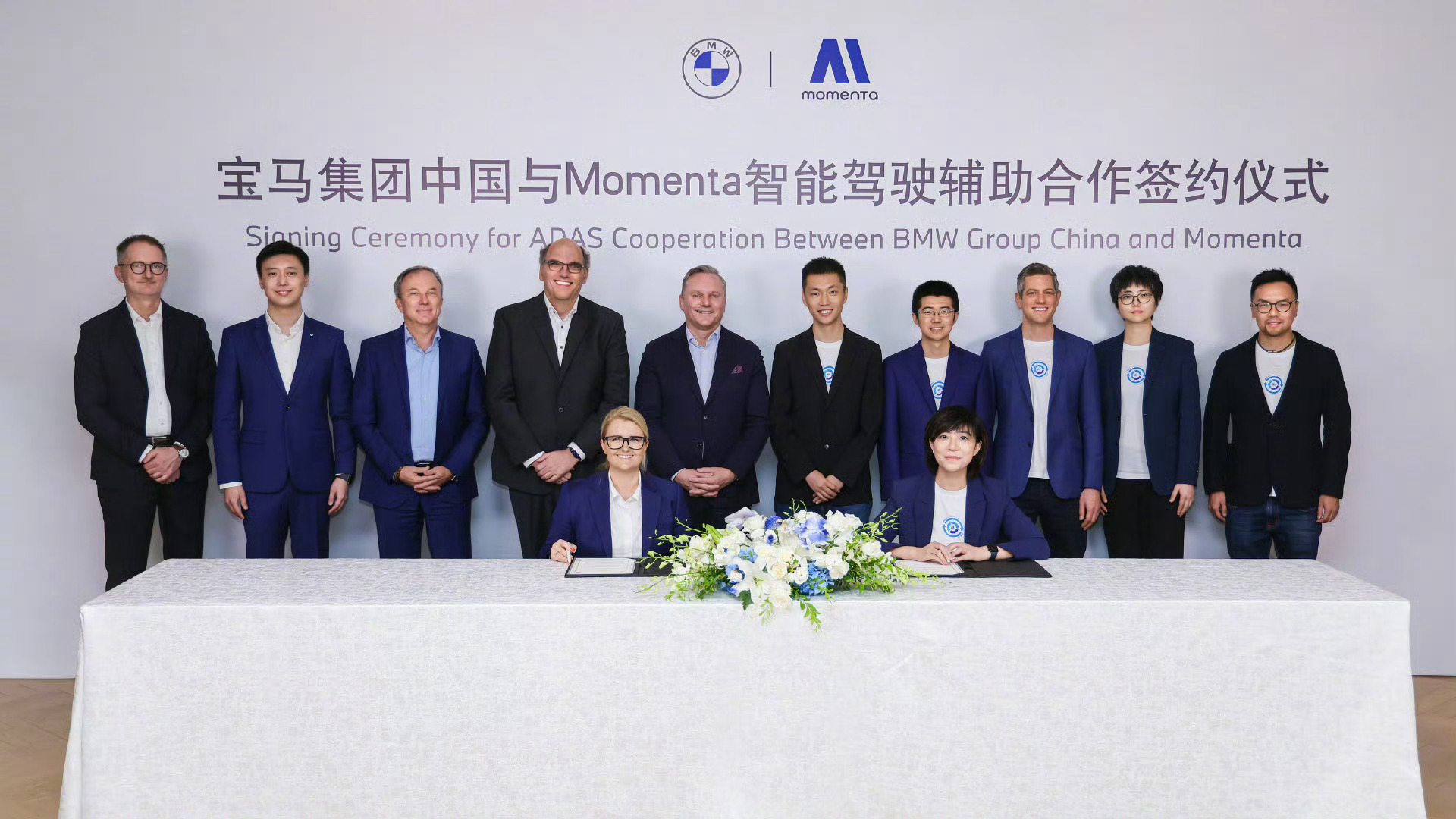
On the morning of July 15, BMW announced a partnership with Chinese autonomous driving company Momenta.
According to the announcement, the two companies will jointly develop AI large-model-based assisted driving software, expected to launch as early as 2026 in BMW’s Neue Klasse electric vehicle series.

Some view this news as unsurprising.
After all, Mercedes-Benz, Audi, and other European and Japanese carmakers had already formed deep partnerships with Chinese auto and tech companies.
But others see it as a stopgap—a temporary strategy by legacy automakers like BBA (Mercedes-Benz, BMW and Audi) to adapt to competition, driven by the broader “JV 2.0” transformation.
Though BBA is adjusting to evolving consumer demand and a shifting market landscape, these changes are strategic adaptations rather than shifts in core engineering philosophies.
The real question: Can such a stopgap turn the tide for BBA in China’s fiercely competitive EV market? And what does this mean for China’s domestic EV players?
To answer that, we must trace BBA’s approach to assisted driving technology.
Pioneers of Assisted Driving
BBA was among the earliest brands to recognize the value of assisted driving.
In the late 20th century, Mitsubishi introduced the PDC system, an early form of assisted driving. However, due to technological limitations, it couldn’t become an industry standard or be widely promoted.
German automakers in Europe were quick to sense the potential of assisted driving systems. As the luxury car feature race approached a bottleneck, assisted driving technology entered BBA’s premium vehicles for the first time as a “stopgap” feature.
Standard Equipment on Luxury Cars
In 1998, the Mercedes-Benz S-Class globally debuted a semi-ACC function with automatic braking called “Distronic.” In 2006, Mercedes introduced the “Distronic Plus” system, enabling full-speed adaptive cruise.

Audi introduced ACC slightly later, launching it in 2003 on the Audi A8 built on the D3 platform. BMW introduced ACC in 2005, with its E65/E66 7 Series and E60 5 Series models.
As we can see, ACC — now considered a basic function — served a similar role to today’s “high-level smart driving” back in the early 2000s, acting as a premium feature in luxury cars.
Sales data confirm the success of these luxury D-segment cars equipped with intelligent features.
The Mercedes-Benz W220 S-Class sold 480,000 units globally, the BMW E65/66 7 Series sold about 350,000 units, and the Audi A8 (built on the D3 platform) reached 80,000 units in global sales. These three models ranked as the top three D-segment cars of their era.
Moreover, early media reviews of ACC were quite favorable.
Even the “Distronic” system on the W220 S-Class was praised by outlets like AutoCar and Motor Trend as a “key milestone in luxury car intelligence.”
However, due to its nature as a “stopgap,” ACC remained an auxiliary capability — a bonus feature — fundamentally different from today’s Chinese new energy vehicle approach, where assisted driving is a core selling point.
BBA did not explore the upper limits of ACC extensively. While Chinese EV makers developed a range of L2-based features like “high-speed NOA” and “urban NOA,” BBA’s assisted driving tech remained at the ACC stage.
In other words, Mercedes-Benz’s basic assisted driving in 2025 is fundamentally no different from the 2006 “Distronic Plus.”
Yet from another perspective, BBA has also taken a radical approach to assisted driving.
When the mainstream approach in both the Chinese market and globally is to focus on L2-level assisted driving research, the BBA group instead aims to leap directly into true “autonomous driving” — L3.
Preferring L3 Over L2
Audi began developing L3-level autonomous driving as early as 2009 and launched the “Audi Piloted Driving” model in 2012.

By 2017, Audi aimed to mass-produce L3 autonomous driving on the fourth-generation Audi A8, using a sensor fusion system (4-line LiDAR, millimeter-wave radar, and cameras), claiming it could handle automated driving in traffic jams below 60 km/h.
Unfortunately, due to legal restrictions and potential safety concerns, Audi had to abandon the L3 project after investing over €1 billion, shifting focus to parallel development of L2 and L4 systems.
In contrast, Mercedes and BMW had a smoother path in L3 R&D.
In 2013, Mercedes completed public road testing for its L3 prototype and obtained L3 certification in Germany in 2021, announcing plans to mass-produce L3 features in select countries and regions.
In 2024, Mercedes upgraded its L3 driving project from a speed limit of 60 km/h to 95 km/h and plans to begin deliveries in Germany in early 2025 and in the U.S. in the second half of 2025.

BMW’s L3 technology also passed Germany’s regulatory verification and is ready for market.
BMW started its L3 development later, in 2018, and gained German certification in 2023.
Notably, Mercedes and BMW are among the first foreign automakers to obtain L3 road test permits in China. In the near future, they are expected to compete with Chinese carmakers using L3 as a key differentiator.
Looking back, BBA’s underlying logic for betting on L3 was still that of a stopgap: to quickly build a competitive edge through product differentiation.
But this time, BBA may have misjudged the situation.
“If You Can’t Beat Them, Join Them”
L3 autonomous driving is indeed promising. Huawei’s Richard Yu has publicly called for the early rollout of L3-related laws and regulations to make L3 a reality.
But his comments also highlight the problem — L3’s biggest current obstacle is the lack of clear regulations globally.
Even in Germany, where L3 legislation exists, vehicles are heavily restricted — only allowed on highways and currently limited to 96 km/h.
Moreover, the high cost of L3 feature packages prevents widespread adoption. For instance, BMW’s L3 package “Personal Pilot” costs €6,000 (about ¥50,000).
All these factors mean L3 will remain a niche feature for now and won’t meaningfully boost sales. For assisted driving to be a selling point, it must be accessible and cost-effective for consumers.
Undoubtedly, advanced L2 is the optimal choice.
But BBA didn’t realize this until around 2022. And because of misjudgments in the autonomous driving strategy, they missed the critical growth period in China.
Missing Out on China
In April 2021, ahead of the Auto Shanghai, the Mercedes EQS, based on the EVA platform, debuted in China.
At its launch, Mercedes touted the car’s “intelligence,” highlighting its “MBUX Hyperscreen” and “advanced” assisted driving features such as navigation assistance, lane keeping, and adaptive cruise control.

The Mercedes EQS is a microcosm of BBA’s approach to assisted driving in its new energy vehicles.
Between 2018 and 2022, BBA’s first wave of new energy vehicles — such as the BMW iX and the Volkswagen ID series — all used Mobileye’s EyeQ4 chip platform for assisted driving, primarily enabling adaptive cruise and single-lane lane keeping.
Mercedes’ EVA-platform-based vehicles (e.g., EQE, EQS) saw significant improvements over “fuel-to-electric” conversions using the MEA platform — including support for turn signal-activated lane changes.
Objectively, BBA’s assisted driving capabilities during this five-year period weren’t outdated — they were mainstream.
At the same time, most domestic Chinese brands still focused on fuel vehicles. Chery, Geely, Changan, and Great Wall were on the rise, but hadn’t yet overtaken joint ventures.
During this period, Tesla had the most buzz in assisted driving, but its FSD was, at that point, nothing more than a “futures product” — the market had almost no understanding of what “assisted driving” really was.
But post-2022, China’s EV market began widely adopting “highway NOA” and “urban NOA,” fundamentally changing the game.

With rapid advances in the internet and computing industries — coupled with a maturing EV supply chain — intelligent technologies like assisted driving quickly proved their value and began reshaping the competitive landscape.
Most directly, BBA’s EVs faced tremendous challenges in China.
Take BMW as an example — the only BBA brand to publicly disclose its China EV sales. In 2024, BMW sold 714,500 vehicles in China, but only 15% were new energy vehicles — around 107,000 units.
By contrast, China’s new energy market topped 12 million units in 2024, with EV penetration consistently exceeding 50%.
The pace of market change gave foreign brands like BBA little time to respond.
According to 36Kr Auto, after an internal inspection of the Chinese market in 2024, BMW executives concluded: “The previous model where Germany led R&D and China handled localization is no longer fast enough to keep up with Chinese brands.”
Embracing China
The most direct way to catch up is to collaborate with China’s leading technology suppliers to ensure product experience.
So far, BMW and Mercedes have teamed up with Momenta, while Audi works with both Huawei and Momenta — likely the best partnerships available under current market conditions.
Huawei’s ADS system, needless to say, is one of the most recognized smart driving systems in China.
Models equipped with Huawei ADS, such as the AITO M8 and M9, have each surpassed 20,000 monthly units in China’s RMB 350,000–500,000 ($49,000–$70,000) high-end segment — proof of strong market recognition.
Momenta also enjoys a solid reputation. Before BMW and Mercedes announced their partnerships, it had already secured deals with GM Buick, Dongfeng Nissan, and GAC Toyota.
More importantly, Momenta’s smart driving software has been validated in the market. The Nissan N7 and Toyota bZ3X, both equipped with Momenta software, have each sold over 10,000 units with positive consumer feedback.

And BBA’s “make-up lessons” don’t stop at assisted driving.
In March 2025, BMW announced deep integration with Huawei’s HarmonyOS ecosystem — supporting digital car keys, Huawei HiCar, and more. For AI large models, BMW partnered with Alibaba to bring a customized version of “Qwen” into vehicles.
Mercedes, meanwhile, incorporated local AI models into its in-house cockpit system and has formed partnerships with Tencent and ByteDance. Audi’s cockpit partner is Huawei.
In short, BBA’s embrace of Chinese tech is comprehensive — covering not only assisted driving but also smart cockpits and other key areas.
However, it’s important to note that BBA’s upcoming new energy models will still retain self-developed core EV technologies such as batteries, motors, and electronic controllers.
This suggests that BBA knows smart tech is its weak spot — one that stopgap strategies can help address — but that core powertrain capabilities remain its strength. In real competition, core competence will still determine the outcome.
There is both compromise and conviction in this strategy. And because of this, the upcoming “second round” between BBA and Chinese EV makers will be highly anticipated.
Back to the Same Starting Line
Rewinding to September 2023 at the Munich Motor Show, Mercedes-Benz’s all-electric CLA concept and BMW’s Neue Klasse concept were the main highlights of the exhibition. It was at this very event that the two century-old automakers announced their entrance into a new phase of the electric era.
BMW Group CEO Oliver Zipse expressed strong confidence, describing the arrival of the Neue Klasse models as “BMW rewriting a new book about the automobile, rather than simply adding a new chapter.”

Looking back now—especially in light of the recent news of BMW partnering with Momenta—it’s clear that Zipse wasn’t exaggerating.
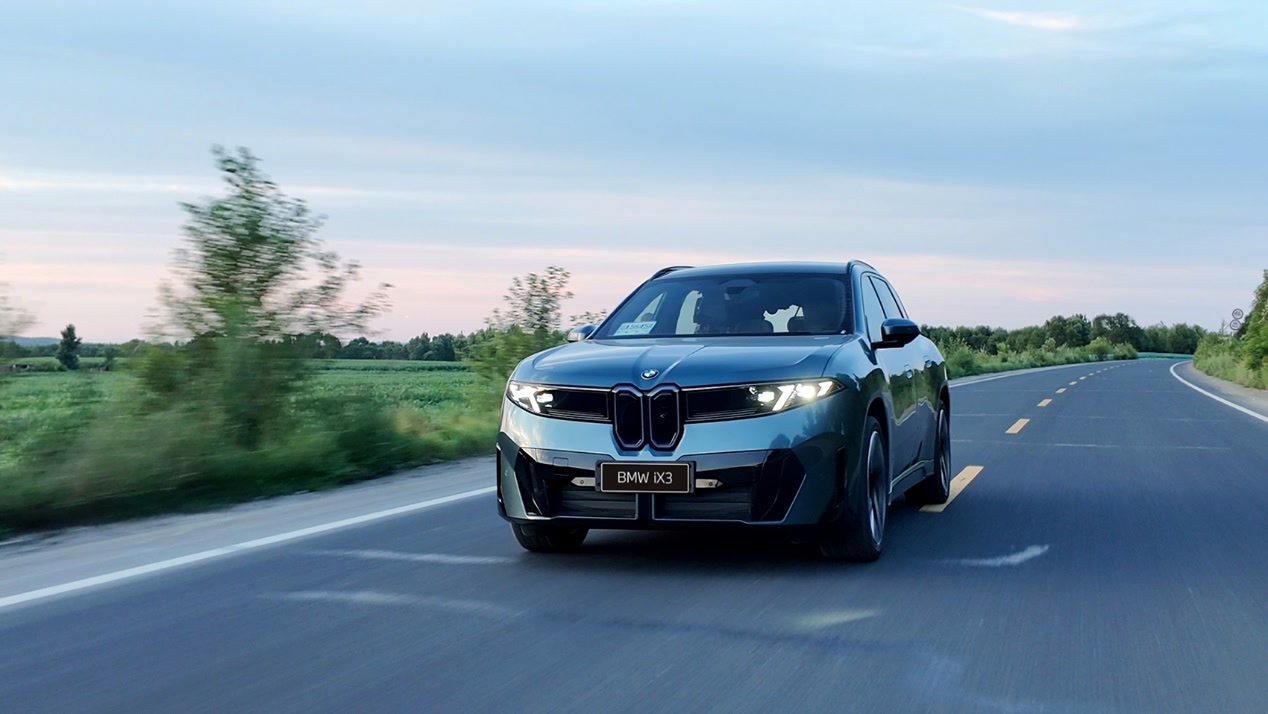
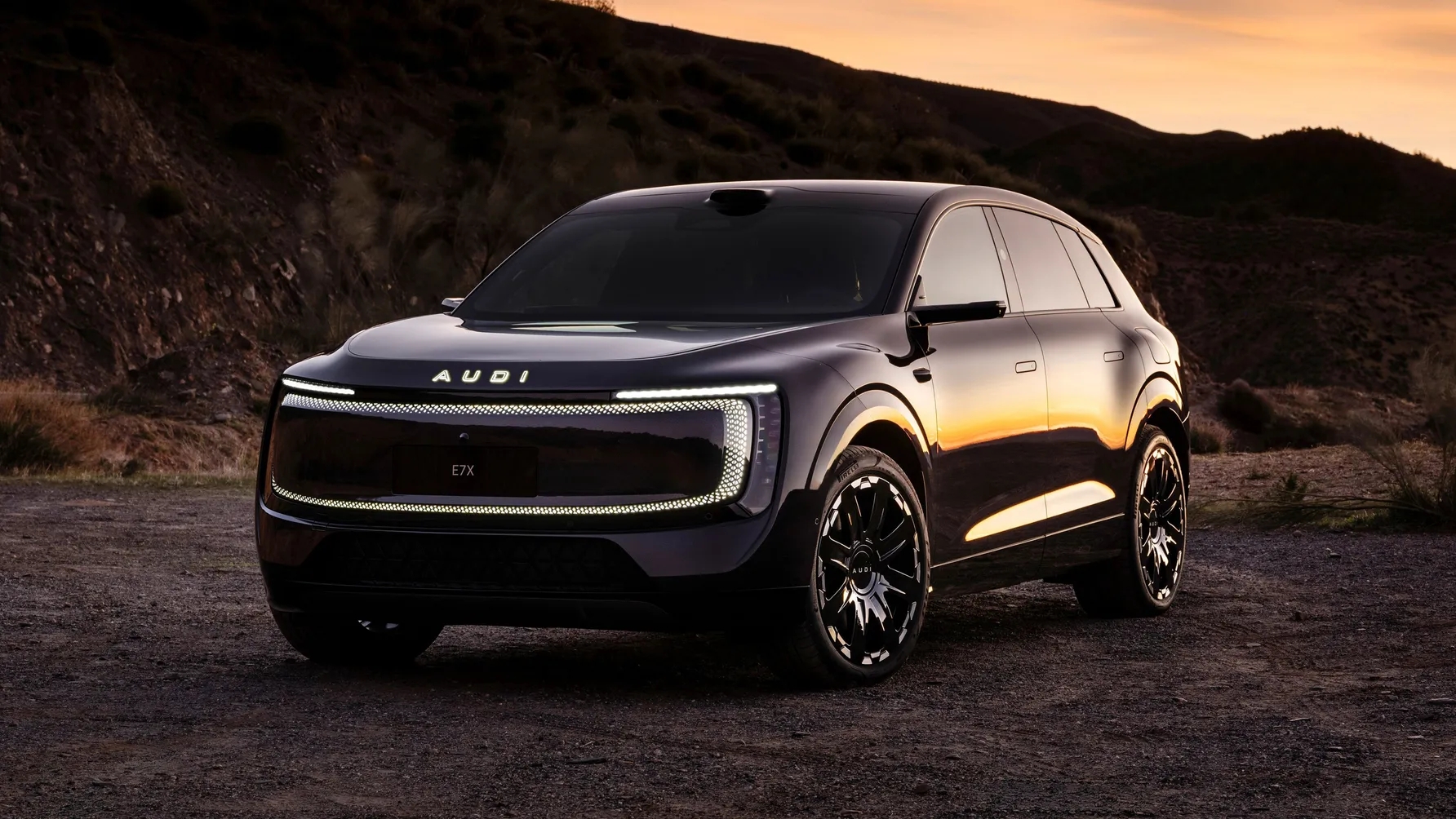
In terms of fundamental capabilities, whether it’s BMW’s Neue Klasse i3 and iX3, Mercedes’ electric CLA, or Audi’s new e-tron lineup, all these models are keeping pace with the 800V architecture trend, and are showing highly competitive energy efficiency.
As for the long-criticized shortcomings in intelligence systems, the trust placed in Chinese tech companies means that their mass-production models are highly likely to reach the same level as Chinese EV startups.
If “smartization” is part of the starting line in China’s NEV competition, then by adopting certain “stopgap measures,” BBA has finally managed to stand side-by-side with Chinese competitors on an equal footing—securing a “fair duel.”
Only such a “fair duel” can truly settle some ongoing debates: like whether “a century of car-making experience” still counts in the new energy era, or whether “joint-venture automakers still possess any real competitive advantage” in the NEV market.
For BBA and other joint ventures, this marks a golden opportunity to shed their image as “inferior electric car makers”—and possibly the last one. If their sales continue to disappoint, there may be no coming back for them in China’s NEV sector.
But Chinese NEV makers also face immense pressure.
From the repeated use of “stopgap measures,” we can see that BBA is not, as commonly believed, too large to pivot or too arrogant to change. Instead, they are broadly willing to listen to the market and humble themselves to form partnerships.
When a “giant enterprise” can show the agility of a startup, that becomes a truly intimidating force for competitors.
What’s more, BBA’s deep roots in the Chinese market remain unshaken.
If you filter vehicle sales by models priced above RMB 300,000 ($42,000), you’ll see a telling pattern. In the sedan category, taking June as an example, among the top five best-sellers, four are traditional BBA fuel-powered models (Audi A6L, BMW 3 Series, Mercedes-Benz C-Class, BMW 5 Series), with only Tesla’s Model 3 topping the list.

In the SUV category, apart from the impressive performance of AITO (ranked second and third behind Tesla’s Model Y), the fourth and fifth places still belong to BBA’s core products—the Audi Q5L and Mercedes-Benz GLC.

Although NEVs increasingly resemble consumer electronics, they are still fundamentally big-ticket durable goods.
This nature means that consumers continue to value brand reputation, product quality, and driving experience—all of which remain core strengths of BBA and other joint-venture brands.
The poor sales performance of BBA’s earlier NEV offerings was primarily due to genuine product weaknesses that exceeded most consumers’ tolerance thresholds.
But just imagine—if those “weaknesses” are now addressed—what kind of impact will that have on China’s new wave of automakers?
The market data will provide us with the clearest answer.
Discover more from ChinaEVHome
Subscribe to get the latest posts sent to your email.