The upgraded AITO M7 introduces fresh styling, bigger size, improved suspension, and smarter features to stay competitive in China’s SUV market.
Yesterday morning, AITO officially released renderings of the new M7, signaling the start of an information-heavy promotional phase.
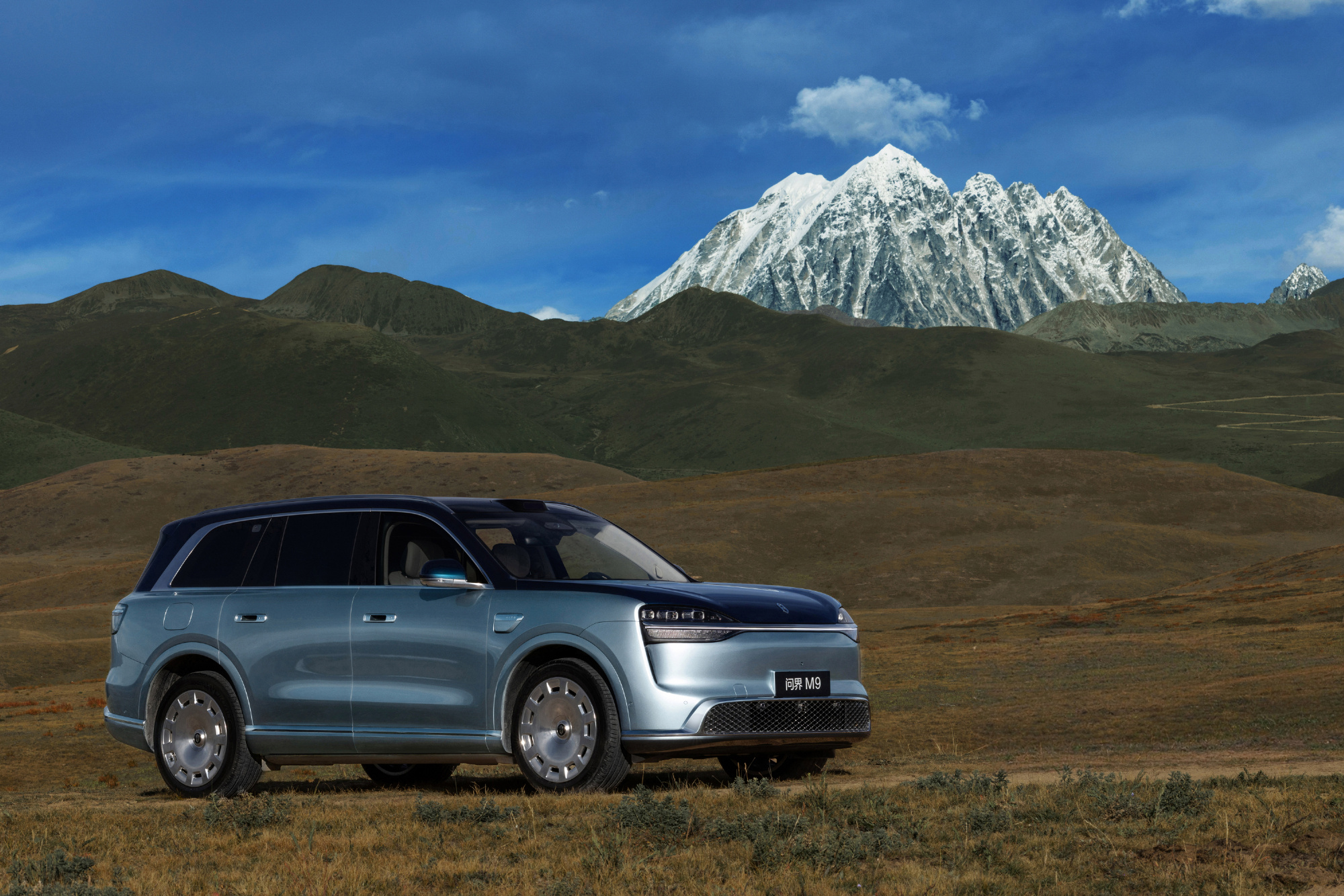
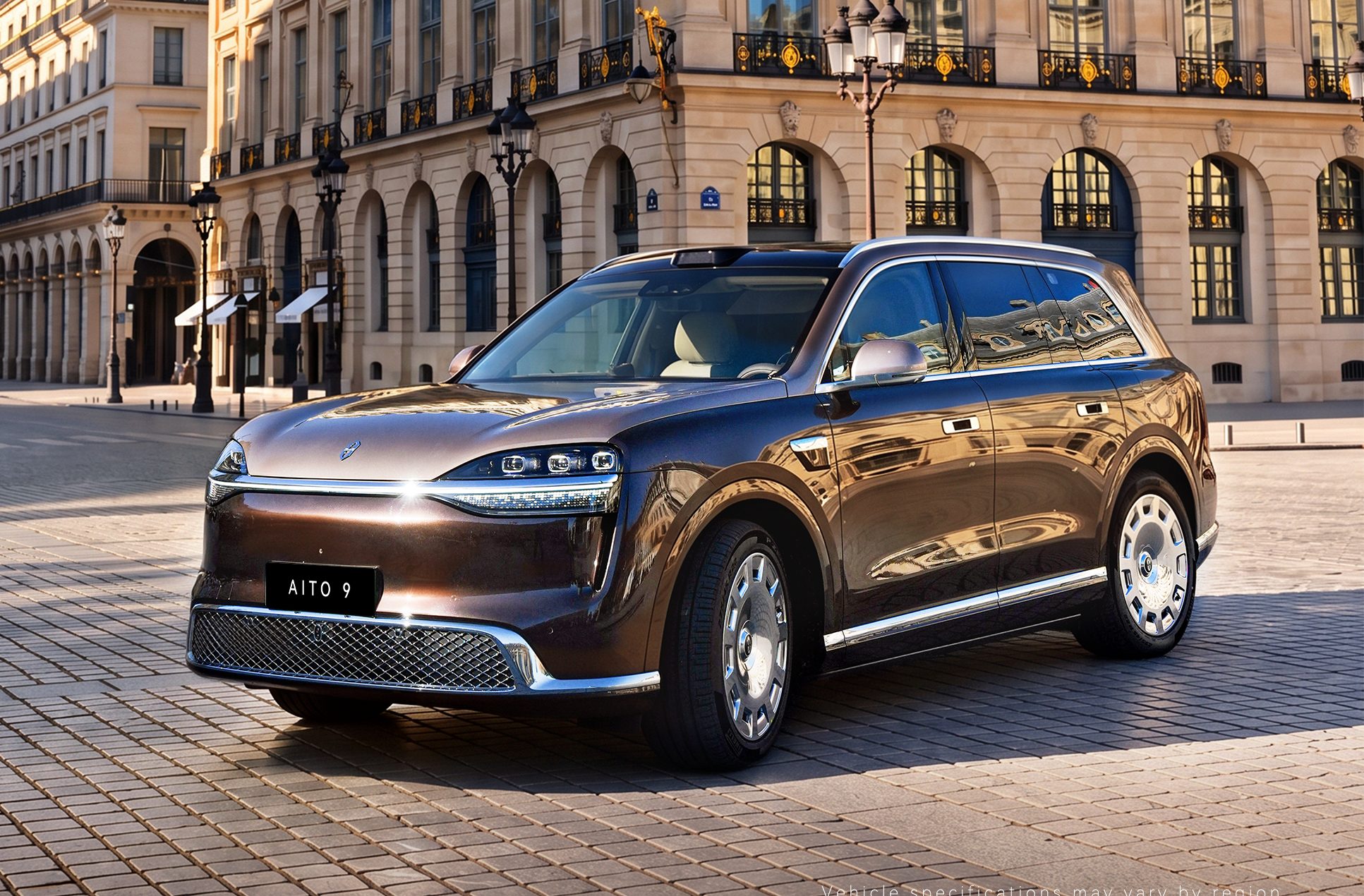
For AITO, the M7 is its landmark model—the first to generate massive traction. In just 25 days from September 12 to October 6, 2023, it accumulated 50,000 firm orders, prompting Richard Yu to exclaim in his WeChat Moment, “It’s a miracle creation!” and “Resurrecting the brand was no easy feat!”—his excitement was palpable.

Even with newer AITO models launching in 2025, the existing M7 still holds steady at 4,000–5,000 monthly sales, placing it mid-tier among SUVs priced around RMB 250,000 ($35,000).
Many prospective buyers are waiting to see what upgrades 2025’s refreshed M7 will bring. With fierce new competitors entering the market—such as Xiaomi YU7, Li Auto i6, Voyah FREE+, and Li Auto L6/L7—2025 promises to be a battleground.
Less than two months remain before the expected September debut, and new M7 renderings provide clues.
Now let’s take a look.
Looks Familiar—but More Than a Facelift
As soon as renderings dropped, the M7’s design overhaul became the most discussed feature. One netizen commented, “It finally looks decent—so many times better than the old version.”
Unlike previous versions, the new M7 adopts a thoroughly modern EV aesthetic, moving further away from gasoline‑era design.
Its front fascia borrows M8 design cues but replaces the current light strip grille with a fully sealed front panel, and headlights more closely resemble those of the M8.
A new smaller light strip above the main DRL may house the intelligent driving “small blue light” indicator.

The side profile retains M8-style semi-hidden door handles and 21‑inch wheel design.
The rear continues the dual across‑taillight layout but with softened inner-turning angles for less visual weight.

Under growing demand for large SUVs, the new M7 is expected to increase in size.
The current model measures 5020/1945/1760 mm with a 2820 mm wheelbase; the new version may reach approximately 5100 mm in length and a 3000 mm wheelbase, making it closer to the Li Auto L8 and offering significant cabin improvements—especially in three‑row legroom, optional zero‑gravity seats, and cargo capacity.
Interior upgrades are anticipated as well, including AR‑HUD, enhanced seat materials/design, and a more youthful, sporty ambiance.
Smarter and Sharper to Drive
Among user complaints about the M7, ride and handling rank high.
The new M7 may adopt the M8 platform, featuring a front dual‑wishbone aluminum suspension (up from MacPherson), and a rear five‑link setup (up from multi‑link). Standard models retain continuously variable damping; higher trims could offer single‑chamber air suspension and re‑tuned chassis—all aimed at improving stability and comfort.

On July 20, during a user Q&A on the HIMA app, AITO’s product director revealed the new M7 range‑extended version will use a 53 kWh battery, likely offering 300 km or more CLTC range.
Richard Yu also confirmed both pure‑EV and range‑extended versions, with an 800 V architecture. Under competitive pressure, the pure‑EV model may come with a ~100 kWh battery and 700 km+ range.
As key shortcomings are addressed, AITO’s strength in smart cabin and intelligent features may become the deciding factor.
In the latest renderings of the new M7, the protrusion of the roof-mounted LiDAR has been reduced. Previously, the vehicle was spotted without a roof LiDAR module, leading to speculation that the new model might feature Huawei’s in-cabin LiDAR system mounted behind the windshield. However, this has yet to be confirmed.

The top trims may feature Huawei ADS4.0, while mid‑lower trims may remain with ADS3.0. HarmonyOS Cockpit 5.0, first seen in Voyah FREE+, is also likely to arrive in the new M7.
New Rivals, New Challenges
When the M7 was introduced in late 2023, its success was attributed to its strong value and smart features in the mid‑premium segment.
At the time, the main competitors of the AITO M7 in the market were Tesla’s all-electric Model Y and the range-extended Li Auto L7. The subsequent launch of the Li Auto L6 further expanded the list of rivals.
Back then, the competition was primarily a head-to-head between AITO and Li Auto. By 2025, however, new challengers such as the Voyah FREE+, ONVO L90, Li Auto i6, and Xiaomi YU7 have entered the fray.

It’s unlikely the new M7 will be discounted; it may even see a price increase.
The current model starts at RMB 249,800 ($34,972) up to RMB 329,800 ($46,172). With upgrades, the new version may start around RMB 269,800 ($37,772), keeping top trims below M8’s RMB 359,800 ($50,372).
This positions it within the pricing of YU7, L90, and Li Auto i6/L6/L7.
YU7 and the M7 target different buyer profiles: YU7 appeals to young drivers who prioritize performance, while the M7 targets families valuing space and intelligent features.
The competition between the two may, in essence, be a clash of user demands. The Xiaomi YU7 is better positioned to appeal to younger drivers who enjoy a dynamic, hands-on driving experience, while the new AITO M7 is aimed at younger consumers who prioritize cabin space and a certain level of intelligent features.
Although both models may appear on the same consumer shortlist, their sharply contrasting styles will likely prompt buyers to make a quick decision between the two.
What’s even more intense, however, is the competition between the new M7 and models like the ONVO L90, Li Auto i6, and the Li Auto L6 and L7.

In China’s crowded market of spacious family SUVs, the previous success of the AITO M7 in the RMB 250,000 ($35,000) segment largely stemmed from its combination of larger dimensions, superior intelligent features, and Huawei’s backing.
Although the last factor remains hard to replicate, strong product strength can still shift the landscape—and today’s Chinese new energy SUV market already offers many alternatives that boast even bigger sizes at more affordable prices.
Take the ONVO L90 for example: a vehicle over 5.2 meters long, with a presale price of RMB 279,900 ($39,200), and even offering a battery-rental option that brings the starting price below RMB 200,000 ($28,000).
Another competitor, the Lynk & Co 900, also stretches beyond 5.2 meters in length and starts at RMB 289,900 ($40,600), giving space-conscious consumers another compelling option.
In comparison, Li Auto’s i6 and L6 may not have the upper hand in terms of size, but the comfort offered by Li Auto vehicles, including the i6, continues to resonate with buyers. Li Auto has also made notable strides in intelligent features, especially in assisted driving, which is increasingly shaping consumer perceptions.
Meanwhile, the Voyah FREE+, another competitor to the AITO M7, comes equipped with Huawei’s ADS 4.0 and HarmonyOS Smart Cockpit 5.0, all while priced between RMB 219,900 and RMB 249,900 ($30,800–$35,000). Even its high-end AWD Sport Edition remains modestly priced at RMB 279,900 ($39,200), potentially appealing to a segment of consumers.

In China’s fiercely competitive auto market, successful formulas are quickly studied, replicated, and put into practice—just as we saw with the Li Auto L9 and the AITO M7. But now that the battlefield is more crowded than ever, does the new M7 have any surprises left up its sleeve?
Discover more from ChinaEVHome
Subscribe to get the latest posts sent to your email.