Li Auto launches i8 EV at ¥321,800 ($45,052), pushing high-end market with VLA driver AI, three-row design, and ultra-fast charging.
After a month of hype, Li Auto’s i8 was finally launched tonight.
Priced at ¥321,800 / ¥349,800 / ¥369,800 ($45,052 / $48,972 / $51,772), the i8 follows Li Auto’s familiar SKU strategy—Pro, Max, Ultra—marking a full entry into the ¥300,000 ($42,000)-level pure electric segment. First-time Li Auto owners are offered an additional ¥10,000 ($1,400) discount upon repurchase.
Here are the main differences between the three configurations:


Among five available colors, two require an additional ¥8,000 ($1,120), and upgrading to 21-inch wheels—without changing the CLTC range—costs ¥10,000 ($1,400).

Yet, in classic Li Auto fashion, the i8 enters a highly scrutinized price bracket: pure electric SUVs starting above ¥300,000 ($42,000)—a territory representing “true high-end EVs.”
At ¥321,800 ($45,052), the starting price of the i8 matches that of the newly refreshed L8 EREV.
This “same price for EV and EREV” strategy is a bold gamble for Li Auto. Can it succeed? Let’s review last night’s launch event.
What does $45,052 get you?
With dynamic and static content of the i8 already revealed, the only remaining suspense was price.
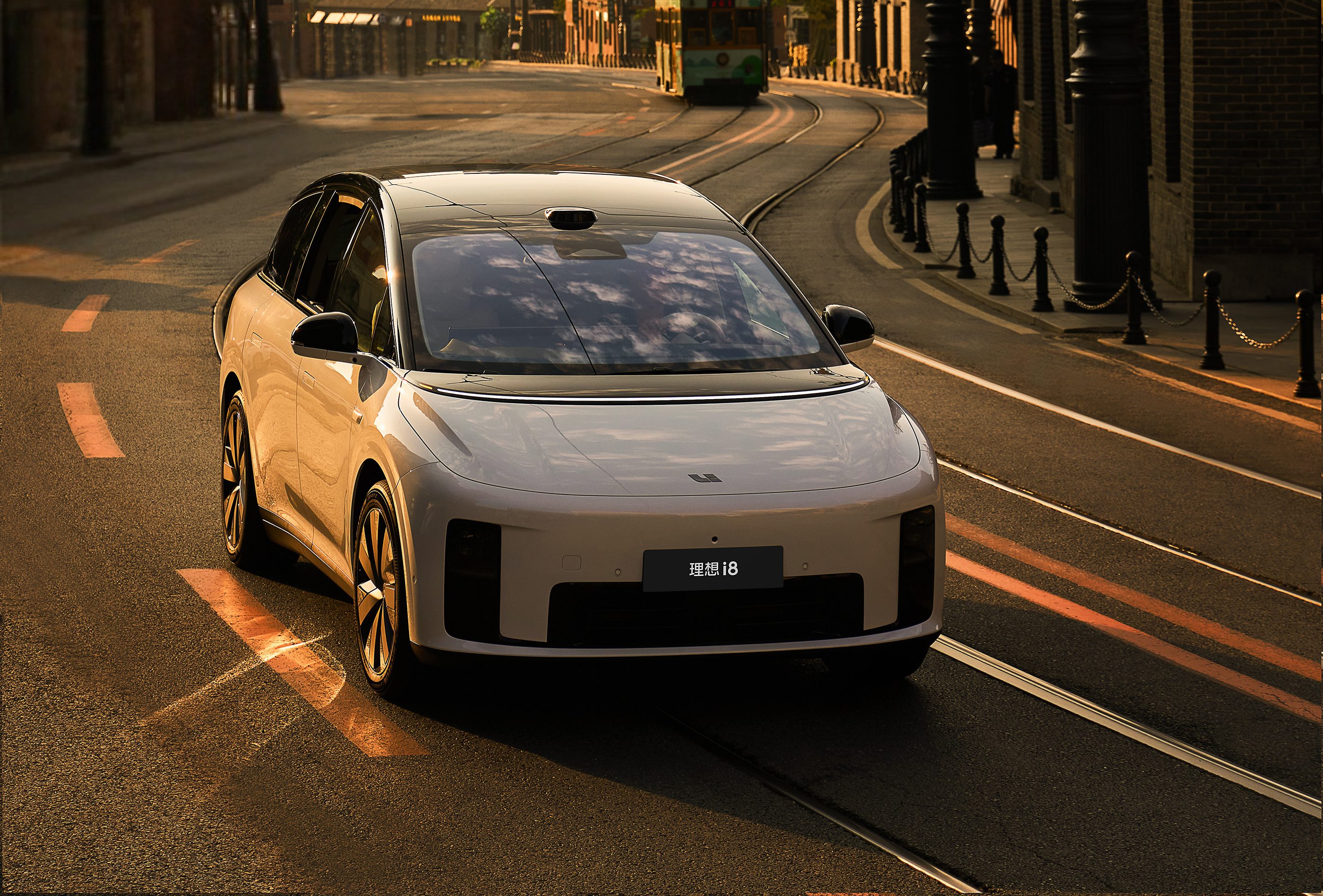
As a 5.1-meter, three-row luxury electric SUV, ¥321,800 ($45,052) is not an unreasonable starting price. With 670km of CLTC range, 5C ultra-fast charging, and dual-motor as standard, it aligns with 2025’s competitive trends.

On top of this, Li Auto has significantly refined the familiar design style and EV powertrain details seen in its previous models.
So while it still feels familiar, the user experience is fully upgraded to reflect its pure electric identity.
The core experience—“silence” you can’t touch.
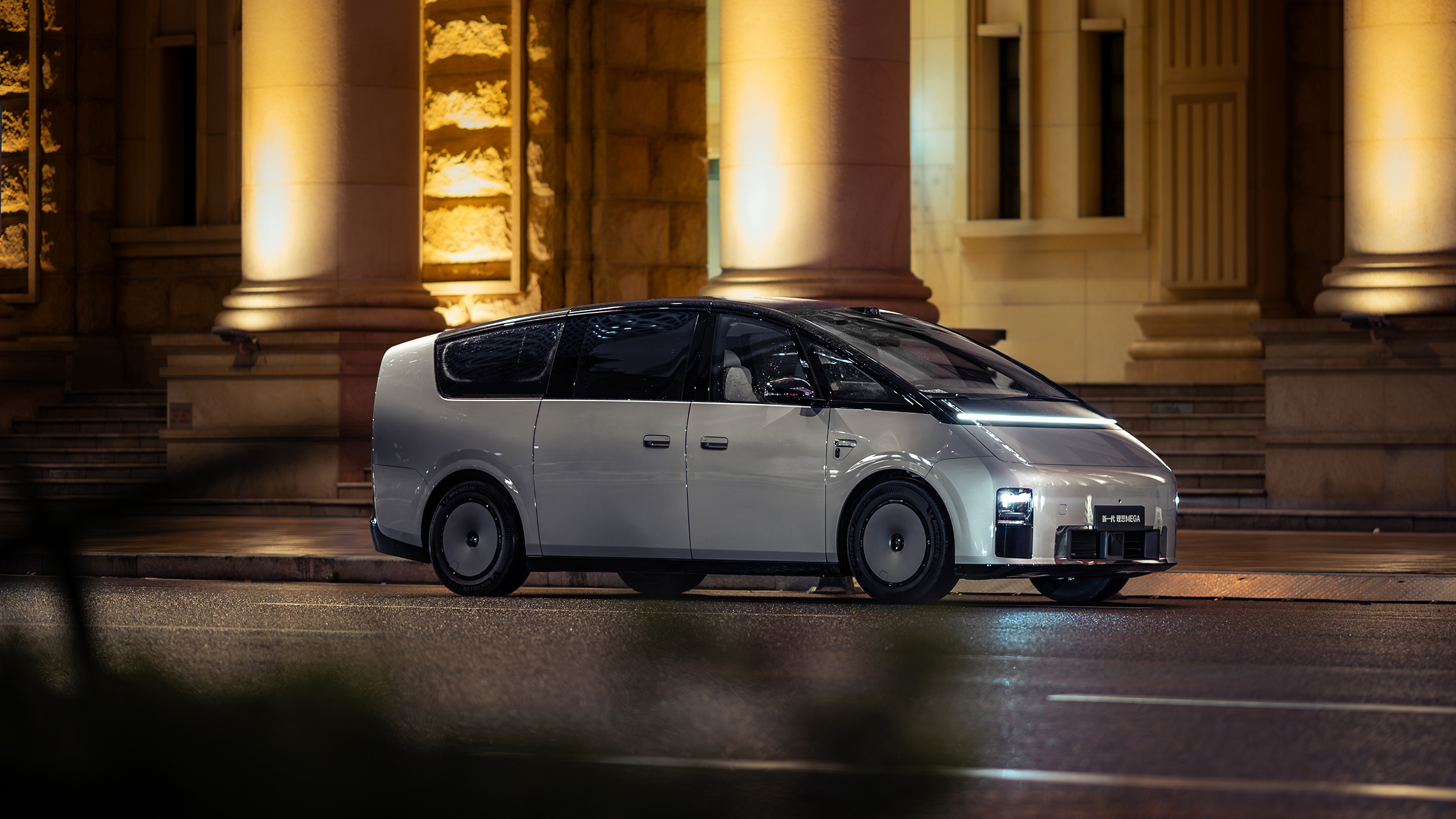
The i8 continues the MEGA’s remarkable quietness.
CEO Li Xiang stated that the i8 uses self-developed ultra-silent motors, along with in-house developed silicon carbide chips and power modules.

With a drag coefficient of 0.218, the i8 matches MEGA’s NVH levels despite being priced at ¥300,000 (c)—an “inherited experience” in Li Auto terms.

This tranquility enhances the perception of cabin space and seat comfort.
Reportedly, the i8’s third row is more spacious than the second row of a Tesla Model Y, and it offers the largest trunk among all six-seater SUVs.

Naturally, Li Auto’s signature “fridge, TV, and sofa” formula continues here—with the addition of an upgraded table, available as an optional feature.

Luxury means specs you can see—not just feel.
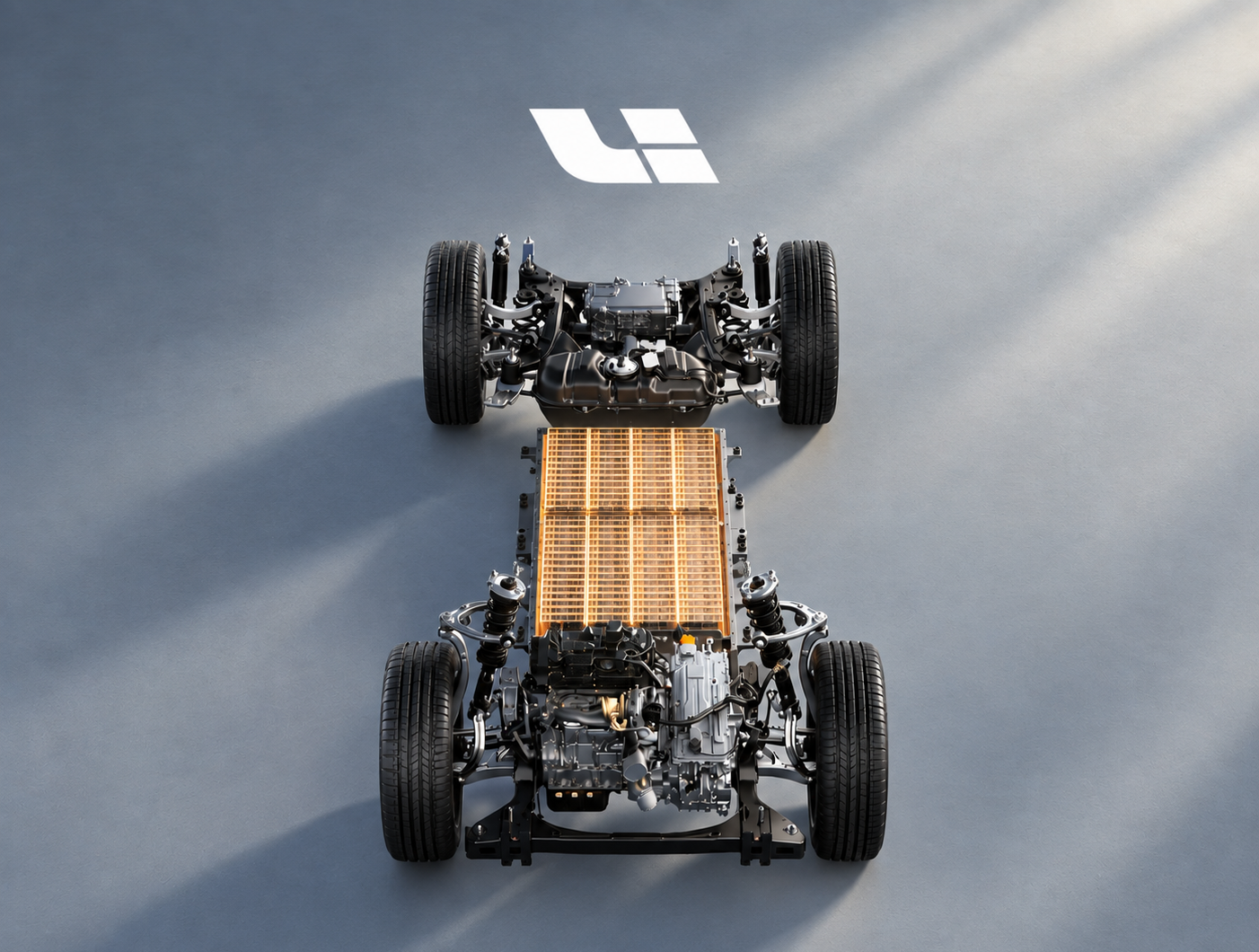
The i8 inherits MEGA’s 5C fast charging, using 90.1kWh or 97.8kWh batteries. Paired with a 400kW dual-motor system, it achieves 670km or 720km CLTC range.

With 0–100km/h acceleration in 4.5 seconds, the i8 isn’t a speedster but reaches performance car levels. A slower acceleration (like MEGA’s 5 seconds) could’ve extended range.

In the ¥300,000+ ($42,000+) bracket, only Xiaomi’s YU7 Max—with a 101.7kWh battery—surpasses the i8 in specs. However, the i8 offers a unique three-row layout.
Tonight, Li Xiang also announced the establishment of Li Auto’s 3,000th supercharging station—marking “the largest ultra-fast charging network.”

This includes 1,000 highway and 2,000 urban supercharging stations.
The i8 enjoys all premium EV charging privileges, such as charge reservations, power priority, and automatic parking fee deduction.
High-end EVs also demand top-tier safety.

Weighing nearly 2.6 tons, the i8 offers above-average safety through its thick battery pack—claimed to exceed competitors in its price range.

It also passed China Automotive Engineering Research Institute (CAERI)’s “super crash test,” simulating truck collisions.
Equipped with 28 anti-pinch motors and chemically safe seat materials, it emphasizes luxury-grade passive safety.

For active safety, all trims come standard with LiDAR and AES automatic emergency steering, matching MEGA’s intelligent safety features.
The i8 is a “very ideal” EV—not just a Li Auto, but a pure electric Li Auto. It maintains strong competitiveness in the high-end pure electric SUV segment.
However, challenges remain—especially regarding price.
No previous model in the ¥300,000 ($42,000) pure electric SUV segment has been a blockbuster—not even before Xiaomi’s YU7.
Tesla’s Model Y starts at ¥263,500 ($36,890), and Xiaomi’s YU7 at just ¥253,500 ($35,490).
With a base price above ¥300,000 ($42,000), true high-end electric SUVs face a tough road.
Beyond three rows, ultra-fast charging, and luxury, Li Auto must offer i8 buyers more compelling reasons.
VLA: Li Auto’s Smart Tech Breakthrough
Like its materials, cabin, and handling, the i8’s assisted driving system is in line with the MEGA.
In today’s intelligent era, “same-platform” is no longer a slur—it can be a branding asset.
With its “Thor” AD generation, Li Auto aims to become an “embodied intelligence company,” using smart technology to stand out.
Tonight, one-third of the launch was devoted to the i8’s advanced driving features—namely the VLA “Driver Foundation Model.”

According to VP Lang Xianpeng, VLA stands for Vision + Language + Action—a full-cycle reasoning model.
Where older models like VLM rely on modular thinking, VLA mimics human decision-making in a unified process.
It can even remember human drivers’ preferences, such as preferred speed and routes (e.g. highway vs. urban).
Of course, it also supports parking sign recognition, first introduced in the refreshed L Series.

VLA is a major 2025 trend. Li Auto attributes its early lead to advantages in: data, algorithms, compute, and engineering.
With 1.36 million units sold, Li Auto has an expansive data lake: “Good sales bring good data.”
Their algorithm was among the first to use human-feedback-based reinforcement learning.
They also simulate scenarios using generative “world models,” e.g., turning sunny-day data into snow or rain scenarios.
Simulated testing reduces costs: from 40 million kilometers’ worth of real-world driving, they’ve reduced per-km cost to ¥0.50 ($0.07).
Thor’s base compute is 700TOPS. But according to Li Xiang’s post, Li Auto can push more power from Thor.
Why? It’s about precision in computation—lower precision means faster speed.
Unlike older NVIDIA Orin/Xavier chips, Thor (built on Blackwell architecture) supports low-precision int4/FP4, int8/FP8 computation.
This means a single Thor chip can now achieve 1000TOPS (FP8) or 2000TOPS (FP4) of quantized computer.

This announcement may trigger another industry arms race: “When will we hit 2000TOPS?”
VLA is also compatible with both Thor and Orin platforms.
Li Auto revealed for the first time that VLA uses 4B parameters—double VLM’s 2B—and offers 4.7x improvement in inference performance.
Lastly, Lang confirmed that owners of AD Max (Orin X platform) will receive VLA upgrades starting August.
This suggests that current VLA versions don’t yet fully differentiate between Thor and Orin performance.
Li Xiang concluded by stating the i8 marks a new chapter for Li Auto.
It’s the brand’s first entry into the high-end EV market—a battlefield that differs significantly from EREV.
While MEGA succeeded through a dramatic comeback, Li Auto now hopes for a swift breakthrough.
The i8’s pricing signals strong intent—but will the market follow?
Discover more from ChinaEVHome
Subscribe to get the latest posts sent to your email.