IM Motors launches “super range extender” amid industry debate: transition tech breakthrough or final attempt to delay pure EV dominance?
Among the three mainstream powertrains in today’s automotive market, range extension may be the most unpredictable in terms of its future.
Some believe it will ultimately be replaced by pure electric vehicles (EVs). Others argue it will serve luxury segments long-term. There are also those who see it as a transitional technology, appealing to late adopters and technological laggards.
Virtually every executive in the new energy vehicle (NEV) space has their own distinct interpretation of the future of range-extender technology.
In the meantime, to address the key issues of short electric range, slow charging, and poor user experience in low-battery mode, brands deploying range-extended solutions continue to introduce various strategies to resolve these pain points.
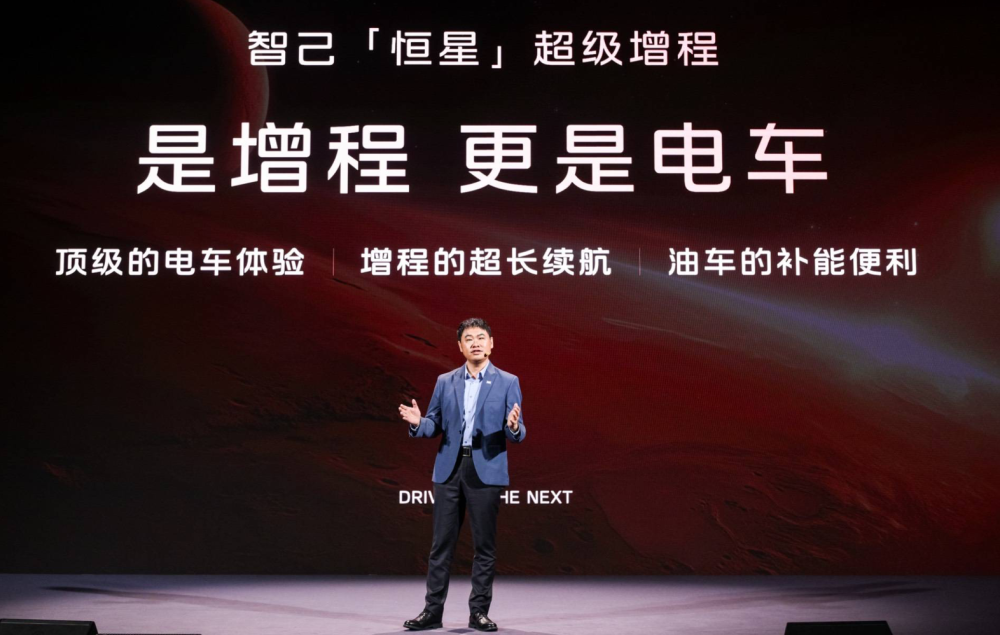
Just last Friday (August 1), IM Motors launched its new “Stellar” Super Range Extender system.
Equipped with a 66 kWh battery, capable of over 450 km of pure electric range, and enabling 310 km recharge in just 15 minutes, this solution, according to IM Motors CTO and Head of the Intelligent Research Institute, Xiang Jiao, is intended to give users “the ultimate electric driving and smart experience while completely eliminating range anxiety—indeed, all anxiety.”

What is IM Motors’ perspective on range-extending technology? How does the broader automotive industry view it differently?
Not a Compromise, But a Restructure

IM Motors’ interpretation of range-extending technology may serve as a critical footnote in the evolution of this segment.
Compared to traditional range extenders, the Stellar system embodies one fundamental upgrade: a total rejection of the “cut to fit” approach.
This phrase, implicitly and explicitly, echoed throughout the exclusive interview following the launch.
One of the biggest pain points for REEV users is small battery capacity. These users—hoping to reduce costs while enjoying enhanced driving experience—often face the burden of frequent, time-consuming charging. A significant portion of them lack access to home charging.
As Xiang Jiao pointed out in the interview, “Among mainstream mid- to large-sized extended-range SUVs, about 15% to 30% of users have no home charger, and 49% to 50% complain that pure EV range is too short.” For users without home charging, monthly charging can reach 15 sessions, and it becomes worse during winter.
These users without home chargers are precisely the “bullseye target” for IM Motors’ Stellar Super Range Extender.
IM’s solution is straightforward and aggressive: install the industry’s largest battery—a 66 kWh Super Xiaoyao MAX, custom-made by CATL.

This solution delivers CLTC pure electric range exceeding 450 km and, under 800V ultra-fast charging, allows for 310 km replenishment in 15 minutes. For users without home charging, this significantly reduces time spent queuing and waiting—equivalent, as IM Motors claims, to “saving 12 days of vacation annually.”
Additionally, IM states that this technology enables a comprehensive energy consumption rate of 2.07L per 100 km, further lowering operational costs.
While the “12 days of vacation saved” may be slightly exaggerated, the combination of a large battery and ultra-fast charging does deliver tangible improvements in range and convenience. What follows is addressing the usual REEV issues of loud engine noise and sluggish performance in low-battery mode.
Thanks to IM’s self-developed ERNC active noise cancellation technology, the engine’s noise differential under various working conditions is less than 0.5 dB. According to Xiang, this was achieved through meticulous fine-tuning by the team, targeting an “imperceptible” experience.
More importantly, Xiang revealed that the technology is not only patented by IM but is also being licensed to other brands, reflecting its long-term viability.

Rather than merely being a “big power bank,” IM defines its solution as a “new species”—an EV with an integrated ultra-charger.
As Xiang put it, the Stellar Super Range Extender is not designed to take market share from EVs, but instead targets the remaining 50% still using fuel vehicles.
Yet, whether this remaining market can truly be won over by “super range extension” remains an open question.
A Battle of Technologies
The second half of 2025 could be another highlight period for extended-range technologies.
In the months ahead, alongside IM’s Stellar system, we’ll also see first-time range extender models from XPeng, Zeekr, and other emerging EV makers.
This inflection point not only rekindles the debate over “pure electric vs. range extended”, but also brings the future market position of extended-range vehicles back into the spotlight.
At recent product launches and interviews, many auto executives shared their views.
Let’s first focus on the market outlook for extended-range vehicles.
On July 10, Zhu Jiangming, Founder, Chairman, and CEO of Leapmotor, commented in an interview after the C11 launch that range extenders will become a favorite in the mid-to-high-end vehicle market.
Consumers in this bracket are willing to pay more for models that offer longer range, better charging, and more comfortable driving. Zhu believes this will become a key differentiator between vehicle tiers going forward.
Success stories like the AITO M9 and Li Auto L9 serve as compelling evidence of this trend.

Not only IM’s Stellar, but also MAEXTRO S800 with a 65 kWh battery pack, and the forthcoming range-extender models from XPeng and Zeekr—all positioned toward premium segments—align with Zhu’s assessment.
“Super range extender” technology, as exemplified by IM, seems to be forming a new industry consensus.
However, amidst this unified narrative, there remains one dissenting voice.
On August 1, at the launch of the ONVO L90, NIO CEO William Li reiterated his stance on range extenders: “REEVs and PHEVs are selling well, and these transitional technologies serve a purpose at certain times. NIO has never denied that. But the industry knows—pure EVs are the final answer.”
Though Li’s tone was more tempered than in the past, the underlying belief remains: “The future of range extenders is pure electric, and the future of pure electric is battery swapping.”
Leaving aside his personal commitment to battery swapping, even the idea that “range extenders’ future is pure electric” is shared by others.
Many consumers point out that REEVs are plagued by fuel degradation issues due to infrequent use, and that maintaining both a fuel and electric system adds complexity and cost.
Moreover, extended-range vehicles are trending toward larger batteries and smaller fuel tanks, which arguably supports this shift.

While the outcome of the technology battle remains uncertain, one thing is clear: pure electric and range-extended vehicles are increasingly learning from each other—compensating for weaknesses and approaching each other’s strengths.
Meanwhile, the market share of traditional fuel vehicles may continue to shrink as these technologies evolve.
In the end, what matters most is: as a consumer, which technology path will you choose?
Discover more from ChinaEVHome
Subscribe to get the latest posts sent to your email.