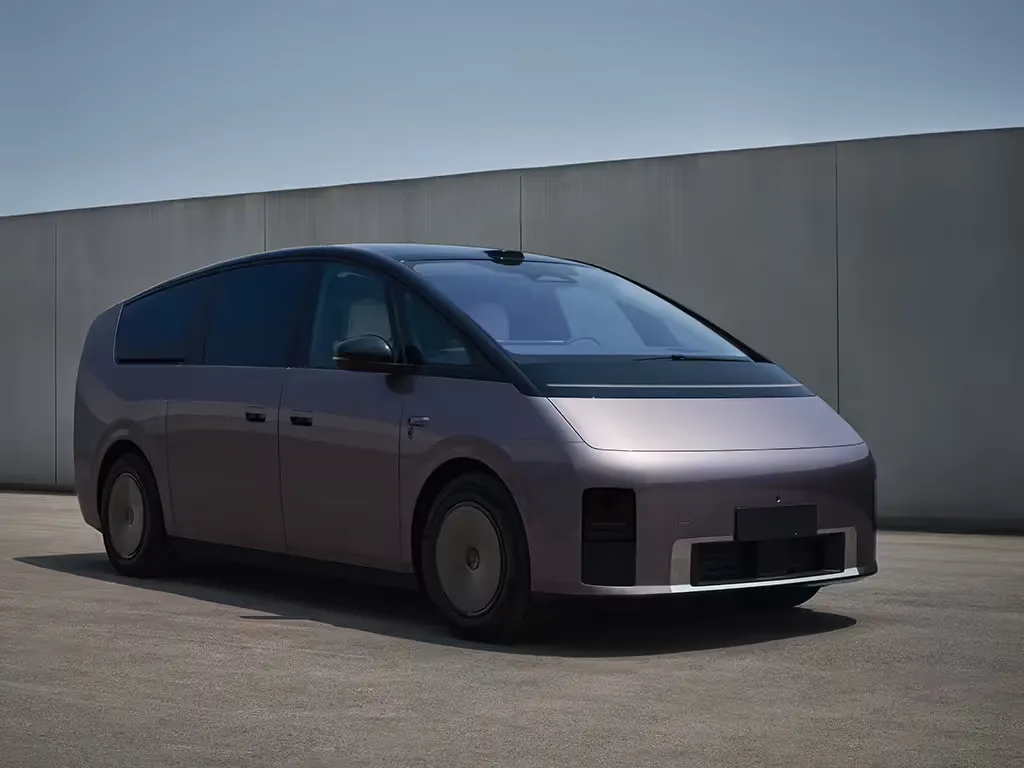
The monthly sales volume of the STELATO S9 sedan reached 1,800 units in August. As the STELATO S9T makes its debut positioning itself as a luxury touring car, can it further boost STELATO’s sales performance?
The pricing of the S9T comes as quite a pleasant surprise: the extended – range (EREV) version is priced at RMB 309,800 – 349,800 ($43,598 – $49,216), while the all – electric (BEV) version ranges from RMB 329,800 to RMB 369,800 ($46,302 – $52,230). Additionally, exclusive launch benefits worth RMB 60,000 ($8,442) are offered for the initial release.

Given that the S9T is a large luxury vehicle with dimensions of 5160x2005x1492mm (length x width x height), STELATO has made every effort to maintain comprehensive configurations while enhancing its competitiveness in the fiercely contested market.

On the other hand, mid-to-large luxury station wagons from the “BBA” (BMW, Mercedes-Benz, Audi) trio have never been locally produced in the Chinese market, and imported models offer relatively low cost-effectiveness. This creates an opportunity for the S9T to meet the “want-it-all” demands of station wagon enthusiasts in China.
Compared with the NIO ET5T and Denza Z9GT, what advantages does the STELATO S9T actually have? And can its pricing of RMB 309,800 – 369,800( $43,500 – $52,000)drive STELATO to achieve a real sales breakthrough?
Below is a brief recap of the highlights from tonight’s two-hour launch event.
Harmony Intelligent Mobility-Style Luxury
As a “Series 9” model, the S9T naturally comes with premium luxury configurations; as a Harmony Intelligent Mobility vehicle, it is also equipped with an abundance of Huawei-enabled intelligent features focused on comfort and safety.
In fact, in terms of several key functions, the S9T has essentially become STELATO’s current brand flagship.
First, a quick mention of its exterior—most people are already quite familiar with it. Notably, the S9T offers free limited-time selection of all launch colors.


Moving to the interior, consistent with the M9 and S9, the S9T is fully upholstered in Nappa leather.

Zero-gravity seats for the front passenger are standard across all trims, with a maximum recline angle of 125 degrees.

While the rear seats do not feature zero-gravity functionality, they are equipped with 37-degree adjustable backrests, ventilation, heating, 10-point massage, and 50mm electrically adjustable leg rests.

The seats themselves are padded with 20mm high-resilience foam, and 100% of the main contact areas throughout the vehicle are covered with foam for enhanced comfort.

After ensuring a comfortable ride, the focus shifts to audio-visual experience.


The S9T is fitted with Huawei Yuezhang·Excellence Series audio—second only to the one in the Zunjie S800—featuring 25 speakers with a total output power of 2080W. Its audio performance is directly benchmarked against the “Little Burmester” system in the Mercedes-Maybach S480.

In terms of displays, the S9T aligns with the flagship direction of Harmony Intelligent Mobility models this year, upgrading the central control screen to a 16.1-inch 3K display.

Furthermore, since the S9T has a factory width of 2005mm, its electronic exterior mirrors are a key highlighted feature. The mirrors also incorporate underlying image brightening technology, significantly improving visibility on rainy days and at night.

The rear cabin not only includes the projection screen—a must-have for “Series 9” Harmony Intelligent Mobility models—but also adds a new 6.58-inch Maglink magnetic control screen, the same as that in the M9.

Counting the million-pixel projection headlights, the S9T claims to have “more than ten screens” in total.

Additionally, the S9T supports air gesture recognition for remote control of app switching across multiple screens.
Intelligence is the cornerstone of Harmony Intelligent Mobility. Beyond the Harmony OS cockpit, the newly upgraded ADS 4 (Advanced Driving System 4) is another core competitive advantage of the S9T.


Currently, the S9T’s advanced driving assistance functions are relatively consistent with other high-end Harmony models, and it also supports the all-dimensional collision prevention feature newly added to ADS 4.

Richard Yu (Huawei’s executive) stated that the resolution of ADS 4’s road condition spatial model is 100 times higher than that of traditional solutions in the industry.

This time, not only the front passenger screen can provide warnings for “door-opening collisions” (accidents caused by sudden door opening), but the rear projection system can also serve as a safeguard against such risks.

Benchmarking Porsche Shooting Brakes
After highlighting the unique features of Harmony Intelligent Mobility, the next topic—inevitable for all luxury vehicles—is performance benchmarking.
Porsche’s Turismo series stands as the benchmark for premium station wagons. Therefore, during the launch event, Richard Yu directly compared the core performance data of the S9T with Porsche’s shooting brake models.
The STELATO S9T offers two power options: extended-range and all-electric. Among them, the all-electric Ultra version is equipped with a dual-motor four-wheel-drive system, achieving a 0-100km/h acceleration time of 3.95 seconds—faster than both the Porsche Taycan and Panamera Shooting Brake models.

Of course, such speed exceeds the needs of most drivers. Richard Yu even bluntly stated: “Acceleration times under 3 seconds and driving for drifting all day are unnecessary driving behaviors; we should return to practical daily driving needs.”

For example, in terms of agility, the S9T achieved an official moose test speed of 83.3km/h, claiming to be faster than the Panamera’s maximum moose test speed.
Throughout the launch event, the S9T’s core performance messaging focused on “stability” and “passability”—attributes that align with the primary usage scenarios of a luxury station wagon.

For instance, the S9T comes standard with air suspension, which allows ground clearance adjustment between 113mm and 163mm, with a total of five adjustable levels.

Naturally, the all-new continuously variable damping shock absorbers are also standard across all trims.


The electronic and electrical architecture is another key selling point of high-end Harmony Intelligent Mobility models.

The motion sickness mitigation system has also been further enhanced, improving comfort during acceleration, braking, and cornering.
On the other hand, leveraging its larger body size, the S9T naturally offers more interior space than the Panamera and Taycan Shooting Brake models.
For example, the S9T’s trunk volume reaches 729 liters, and when the rear seats are folded down, this expands to an impressive 1,677 liters.

Can It Compete at RMB 309,800?
Finally, let’s summarize the S9T as a whole.
The only potential drawback of the S9T, in terms of product specs, is that the extended-range version does not offer a four-wheel-drive option.
With its X and Y-axis dimensions firmly placing it in the “large vehicle” category, the Z-axis space (interior height) and the various standard chassis configurations may have hindered the development of an extended-range four-wheel-drive variant.

Looking at the configurations in detail, the extended-range version of the S9T is available with two battery pack options: 37.6kWh and 53.4kWh, providing an all-electric range of 251km and 354km respectively, with corresponding prices of RMB 309,800 and RMB 349,800.

The all-electric version comes standard with a 100kWh battery, offering only two drivetrain options: rear-wheel drive and four-wheel drive. The rear-wheel-drive version delivers a combined CLTC range of 801km, while the four-wheel-drive Ultra version still achieves a range of 701km.

Clearly, STELATO does not want the S9T to repeat the “lukewarm” sales performance of the S9 sedan shortly after its launch. Thus, it immediately offered benefits such as free selection of exclusive colors, complimentary zero-gravity seats, and free Huawei Yuezhang audio—among a series of launch-exclusive perks.
From the final pricing perspective, getting a large new energy luxury station wagon with D-segment dimensions for RMB 309,800 is a remarkable value. In the era of gasoline vehicles, this price would only be enough to buy a discounted pre-facelift Audi A6 Avant.
It can be said that when competing against the NIO ET5T and Denza Z9GT, the STELATO S9T has demonstrated sufficient sincerity.

To solidify STELATO’s positioning as a luxury brand, Zhang Jianyong, Chairman of BAIC Group, stated tonight that BAIC has upgraded its cooperation with Harmony Intelligent Mobility to form a “BAIC + Huawei Full-Scale Technology Ecosystem” strategic partnership.

Over the next three years, BAIC will invest RMB 20 billion in special funds for the STELATO brand, declaring an “All in STELATO” commitment.

Customized support will be provided for STELATO across the supply chain, production lines, and sales channels.

However, from a market scale perspective, the NIO ET5T maintains monthly sales of around 4,500 units thanks to its battery-as-a-service (BaaS) advantage, while the Denza Z9GT achieves approximately 1,000 monthly sales. The new energy station wagon market in China has not yet been fully validated.
The STELATO S9 sedan recorded monthly sales of 1,800 units in August. Now, with the S9T entering the market as a luxury station wagon, can it drive STELATO’s sales to new heights?
Deliveries of the S9T will start on September 21st, and we will get the answer from the October sales rankings.
(End)
Discover more from ChinaEVHome
Subscribe to get the latest posts sent to your email.