How do the newly revamped AITO M7 and the Shangjie H5—the first model of the Huawei-SAIC joint brand—perform in the competitive RMB 250,000 ($35,000) and RMB 150,000 ($21,000) segments?
Amid the wind and rain brought by Typhoon Ragasa, Huawei-backed Harmony Intelligent Mobility Alliance (HIMA) launched two of its most anticipated new vehicles.
The all-new AITO M7 is priced between RMB 279,800 and 379,800 ($39,300–$53,400), with its entry-level price RMB 10,000 ($1,400) higher than the previous generation, while the top trim is RMB 50,000 ($7,000) higher.


The Shangjie H5, debuting as the first model under the Shangjie brand, is priced from RMB 159,800 to 199,800 ($22,400–$28,100), with a starting price of RMB 10,000 ($1,400) lower than its pre-sale figure of RMB 169,800 ($23,800).

During pre-sales, the AITO M7 secured 230,000 preliminary reservations, while the Shangjie H5 garnered 160,000. Within just one hour of launch, firm orders for the AITO M7 and Shangjie H5 surpassed 30,000 and 10,000 units, respectively.
One is HIMA’s flagship “signature” model, backed by heavy investment and continuous iteration; the other, supported by SAIC Motor and HIMA, enters the market with expectations of being a “mature-born” contender.
How do the redesigned AITO M7 and the all-new Shangjie H5 measure up in the competitive RMB 250,000 ($35,100) and RMB 150,000 ($21,100) SUV segments? And can they help HIMA expand its volume base?
Let’s take a closer look.
AITO M7: A Step Beyond Itself
In China’s extended-range SUV segment, long dominated by Li Auto and AITO, the entry of rivals such as Lynk & Co 900 and Galaxy M9 has reshaped the market this year, offering consumers broader choices while intensifying competition.
Since its debut in July 2022, the AITO M7 has been the “signature piece” of HIMA, with each generation pushing for noticeable changes—especially in its exterior styling.
The newly launched AITO M7 continues that trend.
Previously criticized for retaining styling cues reminiscent of the internal-combustion era, the latest redesign of the M7 has made clear advances, establishing a more distinctive generational identity compared to its predecessors.
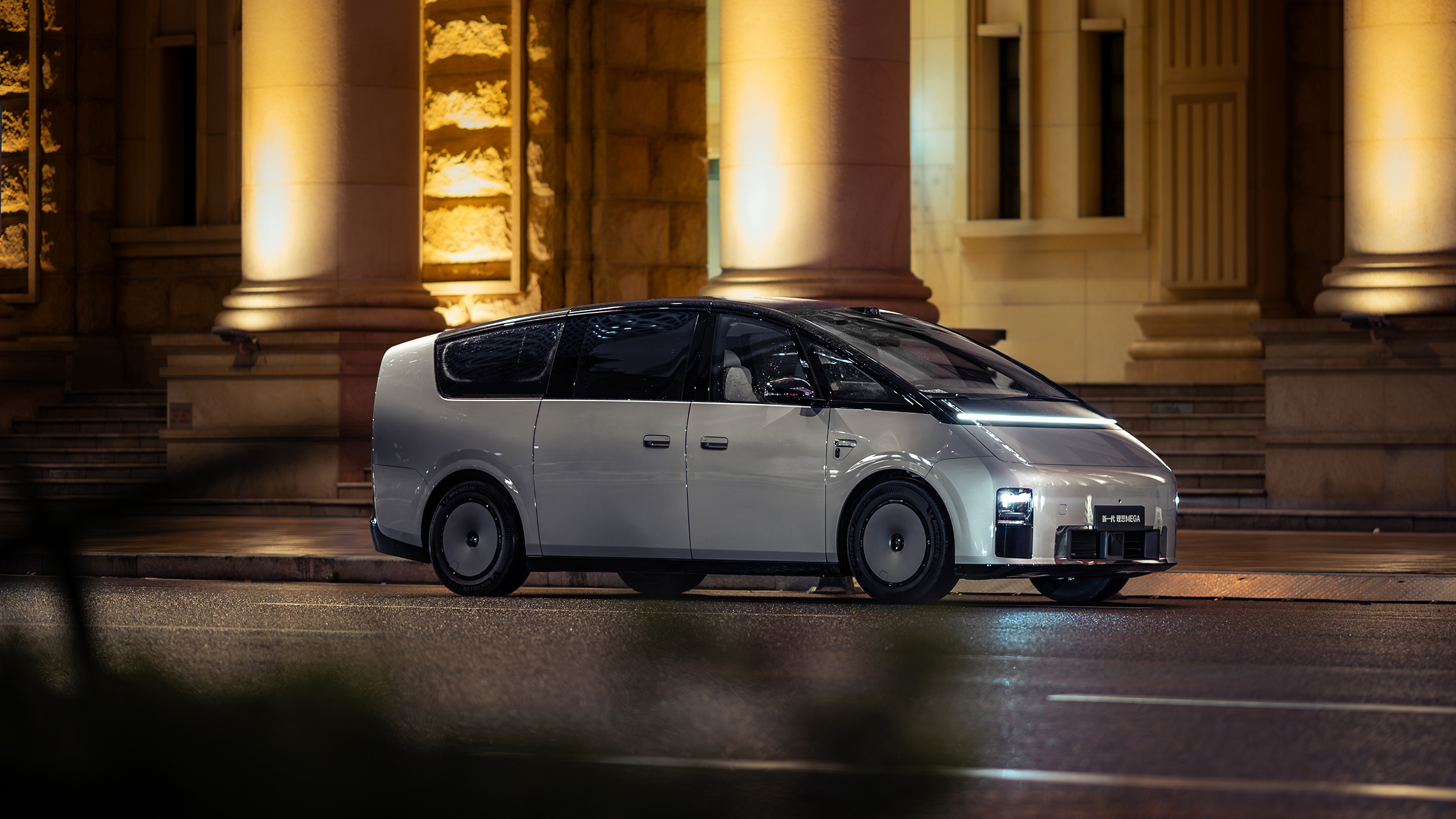
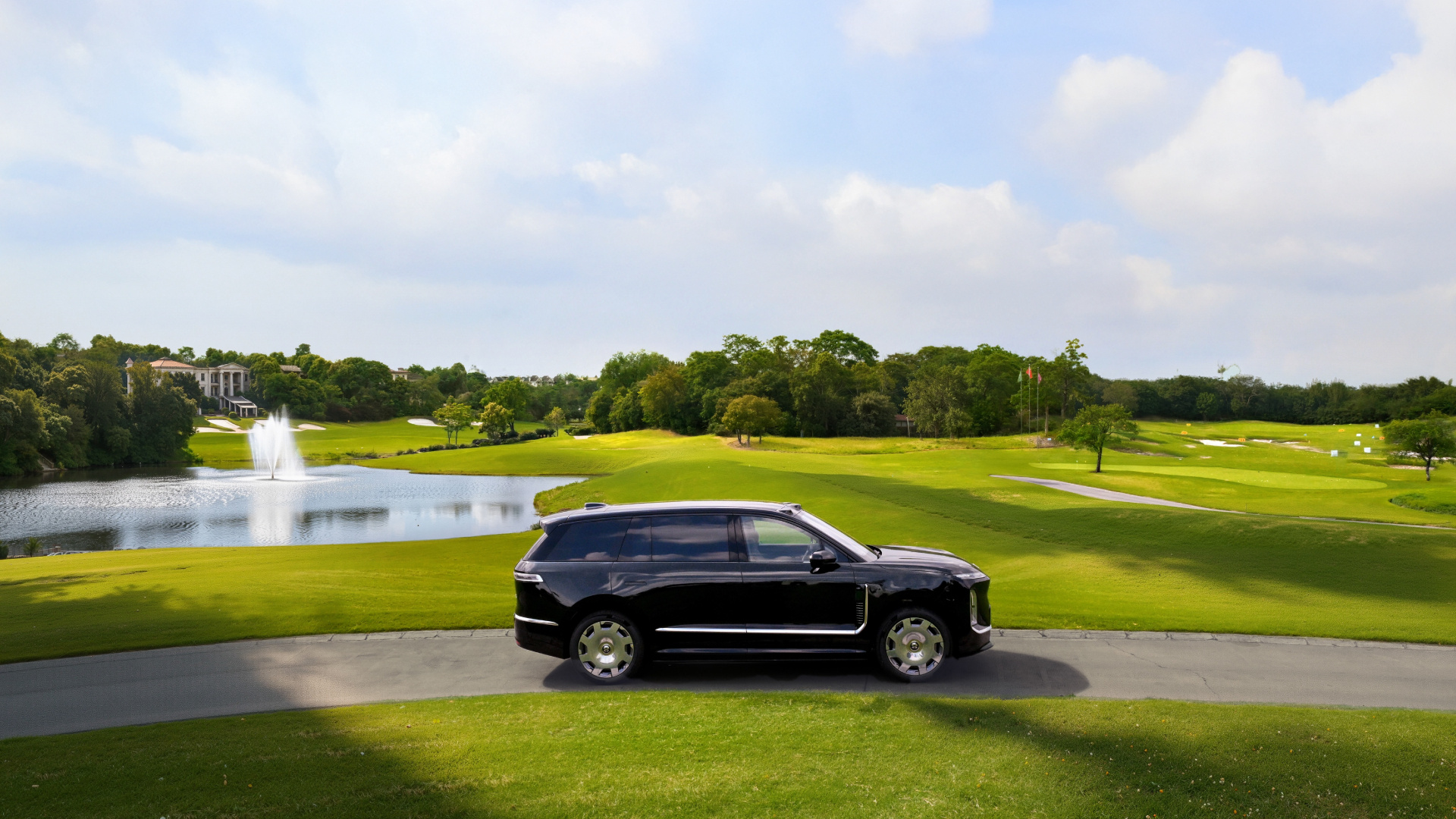
In a year when large five-seat and six-seat extended-range SUVs are flooding the market, the new AITO M7 stands out with larger dimensions.
The previous model measured 5,020/1,945/1,760 mm (L/W/H) with a 2,820 mm wheelbase. The new model extends to 5,080/1,999/1,780 mm with a 3,030 mm wheelbase.

The new exterior adopts the family design language of the AITO M8/M9, with star-ring dual-wing headlights providing differentiation within the lineup.
But design upgrades are only the appetizer. For the AITO M7, whose mission has shifted from “survival” in 2023 to “winning” in 2025, the core lies in elevating cabin comfort and driver-assistance reliability.
To achieve good cockpit comfort, the first step is to work on the seats.
With the support of the full-vehicle Shuyun seats, “zero-gravity seats” and “quasi-zero-gravity seats” are almost available throughout the vehicle.
The driver’s zero-gravity seat of the all-new AITO M7 has a 120° double pressure angle and a 350mm four-way seamless leg rest, and can be automatically adjusted in conjunction with the steering wheel.
The co-driver’s quasi-zero-gravity seat can adjust the seat back by 70° and has functions such as a leg rest, seat ventilation/heating/massage.

The zero-gravity seats in the second row of the new car also have a 120° double zero-pressure angle, and the maximum reclining angle of the seats is 150°, which is comparable to the experience of the driver’s zero-gravity seat.
In terms of space, the trunk volume of the all-new AITO M7 is 850 L for the five-seat version and 312 L for the six-seat version, and both versions have a 145L front trunk.
In terms of storage space, the all-electric six-seat version of the all-new AITO M7 has 46 storage spaces in the whole vehicle, which may be the version with the most storage spaces among the 12 versions.
With the further evolution of the full-performance Tuling chassis, except for the extended-range Pro+ five-seat four-wheel drive version priced at RMB 279,800 ($39,300) and the extended-range Pro+ six-seat four-wheel drive version priced at RMB 299,800 ($42,107), all other models are equipped with front double wishbone + rear five-link + double-chamber closed air suspension as standard, providing a more stable driving and riding experience.

Even though the minimum battery capacity of the extended-range version of the new car has been reduced from 38.5 kWh to 37 kWh, its minimum comprehensive range has been increased from 1250km to 1350 km.
With the maximum battery capacity increased to 53.4kWh, the maximum range of the new car has reached 1625km.
Perhaps affected by the fact that new-force brands such as NIO and Li Auto have launched competitive all-electric SUV products, the all-new AITO M7 has reintroduced the all-electric version.
Adopting Huawei’s Giant Whale 800V high-voltage battery platform, the battery pack capacity of the all-new AITO M7 is 100kWh. The CLTC range of the long-range/four-wheel drive/Ultra versions is 710/650/635 km respectively.

Cooperating with Huawei DriveONE high-voltage silicon carbide seven-in-one electric drive, the maximum output power of the motor for the single-motor version is 227 kW, and that for the dual-motor version is 387kW. The maximum torque is 320N·m and 597N·m respectively.
As the core capability of HIMA, the all-new AITO M7 is equipped with a 10.25-inch LCD instrument panel + 16.1-inch central control screen + 10.25-inch co-driver screen as standard.
The 26-inch W-HUD and 68-inch AR-HUD are standard on different models. At the same time, except for the Ultra version, the 17.3-inch rear entertainment screen is an option for all other versions.
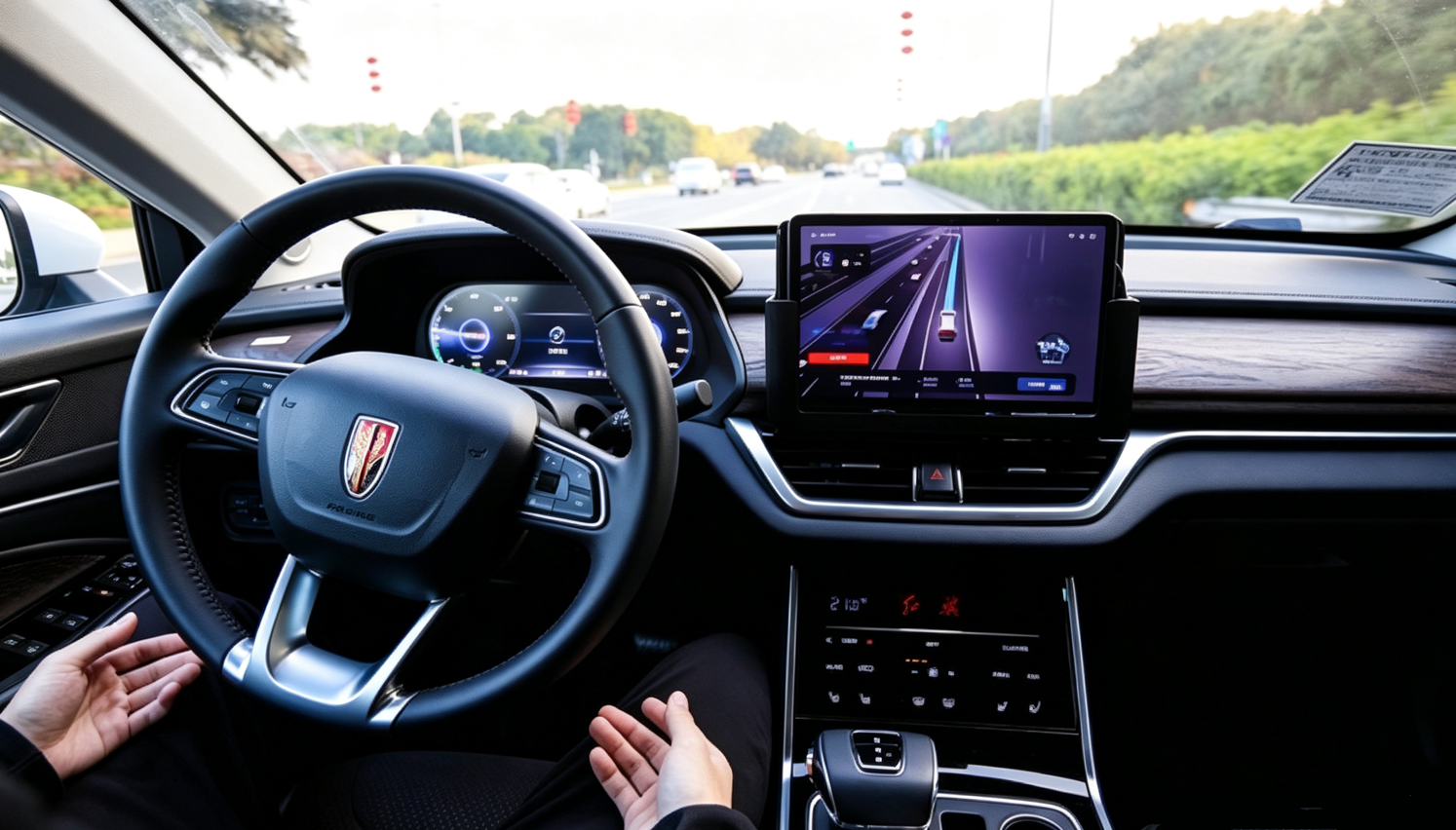
In terms of assisted driving, except for the two versions below RMB 300,000 ($42,000) which are equipped with an in-cabin laser vision radar with a detection distance of 115 m, all other versions are equipped with 1 192-line laser radar + 1 high-precision solid-state laser radar.
This means that the two versions below RMB 300,000 ($42,000) are equipped with the ADS 4 enhanced version of the assisted driving system, and the other versions are the ADS 4 advanced version. The latter may be closer to the full-performance version of ADS 4, with stronger capabilities, and its eAES effective range is 130km/h.
In addition, the all-new AITO M7 also has semi-hidden door handles with triple safety redundancy, 24-hour intelligent fresh air, and welcome pedals with a width increased by 10mm.
The improvement in intelligence, comfort, power and other aspects may be one of the reasons for the significant price increase of the all-new AITO M7.
Shangjie H5: Targeting the Mass Market
HIMA has reserved the highlight of ADS4 for the Shangjie H5 tonight.
According to Jia Jianxu, President of SAIC Group, among the 160,000 small orders received by the Shangjie H5 during the pre-sale period, 75% chose the mid-to-high-end Max version.

The price range of the Shangjie H5 is RMB 159,800 – 199,800 ($22,400–28,000). Among them, the all-electric Max and all-electric long-range Max versions are priced between RMB 185,800 and 199,800 ($26,000–28,000), and the extended-range Max version is priced at RMB 179,800 ($25,200). These three versions are equipped with Huawei ADS4 advanced version as standard.
As many people guessed, the biggest competitive advantage of the Shangjie H5 lies in the intelligent capabilities empowered by Huawei.
In Richard Yu’s words, the three Max versions of the Shangjie H5 have the unique end-to-end navigation assistance, driver incapacitation assistance in the same class, and leading parking assistance capabilities in the same class.
In fact, to put it simply and directly, the Shangjie H5 Max version starting from RMB 185,800 ($26,100) even surpasses the low-configuration version of the AITO M7 in terms of assisted driving hardware capabilities. The former is equipped with the ADS4 advanced version, while the latter is equipped with the ADS4 enhanced version.
This also gives young people who pursue Huawei ADS more reasons to buy the Shangjie H5.
In addition, it has an active welcome mode, optional welcome ground lights, Huawei Star Flash car key, and a Harmony cockpit with a 10.25-inch instrument screen + 15.6-inch central control screen, which meets people’s expectations for the intelligence of the Shangjie H5.
In terms of basic capabilities, the all-electric version of the Shangjie H5 is equipped with 64.6kWh and 80 kWh batteries respectively, and the CLTC pure electric range can reach 655 km. The extended-range version is equipped with a 32.6 kWh battery, and the comprehensive range can reach 1360 km.

Like many SUVs that pursue large space nowadays, the Shangjie H5 also has a remarkable performance in terms of passenger space.
The Shangjie H5 has a second-row legroom of 1020mm, a second-row headroom of 1023mm, and the area of the middle cushion in the second row reaches 1415㎡. Its target competitor is the Audi Q5L with an official starting price of RMB 349,800 ($49,100).
The competitive edge of the Shangjie H5 is not only the intelligent empowerment of Huawei, but also the strength of SAIC Group cannot be ignored.
As early as mid-August, SAIC announced that the number of dealers applying to join its channel had exceeded 1,500, including 4S stores of luxury brands in the application list.
Moreover, backed by SAIC Group, it means that the Shangjie H5 has reliable quality control, a mature supply chain system and competitive cost control capabilities from the very beginning, helping it gain a firm foothold in the market quickly.
As a brand of HIMA targeting the mid-to-low-end market, the Shangjie H5 is well-prepared for its first battle.
HIMA’s Ambition: From Niche to Scale
Behind the simultaneous launch of these two volume-focused models is the establishment of the systematic strategic blueprint of HIMA.
The all-new AITO M7 targets the market above RMB 270,000 ($37,900), and further establishes the brand and technical height of HIMA with its balanced and outstanding comprehensive experience.
The Shangjie H5, on the other hand, enters the mainstream RMB 150,000 ($21,000) market, and stirs up the RMB 150,000 ($21,000) new energy SUV market with the “top-tier strengths” of HIMA and SAIC Group – intelligence, supply chain and manufacturing experience, so as to expand the user base.
So far, HIMA has basically launched competitive products in the mainstream price range of RMB 150,000-1,000,000 ($21,000-$140,400). The task of the RMB 250,000 ($35,100)-level market below the all-new AITO M7 may be undertaken by the rumored AITO M6.
Whether it is the all-new AITO M7 or the Shangjie H5, in the current fierce competition in China’s new energy SUV market, their task of driving sales in their respective price segments is not easy – they have all entered the two most competitive SUV markets.

The all-new AITO M7 now has to face not only its old rivals Li Auto L7/8, but also the aggressive ONVO L90, Lynk & Co 900, Deepal S09 and other models.
Although these competitors targeted the higher-positioned AITO M9 when they were launched, their prices actually overlap more with the all-new AITO M7.
Moreover, the size of these competitors is generally more than 5.1 meters, and their space performance is more outstanding than that of the all-new AITO M7. For example, the LeDao L90 has a 240L front trunk, and the Lynk & Co 900 has a maximum expandable trunk volume of 1070L.
These larger-sized competitors may shake the choice of some potential users of the all-new AITO M7.
At the same time, the significant space advantage of the ONVO L90 and NIO’s years of efforts in the charging and swapping network will become advantages to attract the customer group of the all-electric version of the all-new AITO M7.
For the Lynk & Co 900, the well-recognized SPA architecture of Volvo and the 2.0T plug-in hybrid power also have obvious competitive points for consumers who pursue driving control and have certain off-road needs.
The third-row space of the Deepal S09 is average and its brand awareness needs to be improved, but with a lower price, it is equipped with air suspension + CDC, Harmony cockpit and Huawei ADS 4 advanced version. It is a relatively practical choice for users who consider cost-effectiveness.
The intelligent advantages empowered by Huawei, as well as the evolution of the Tuling chassis and comfort function configurations of the all-new AITO M7, will be tested by users’ needs.
Compared with the all-new AITO M7, the Shangjie H5 may have more obvious advantages.

For consumers who pay attention to the intelligent experience, the assisted driving hardware of the Max version of the Shangjie H5 is almost the top choice in the same price range, and the endorsement of Huawei also makes its extended-range version provide convenience for long-distance travel.
However, all versions of the Shangjie H5 adopt a 400V voltage platform, which makes the 13.4 kWh per 100km power consumption of its all-electric version less than that of the Xpeng G6 (12.8 kWh per 100 km). Moreover, the minimum range of the Xpeng G6 is 625km, which is only slightly less than the 655 km of the all-electric Max long-range version of the Shangjie H5.
The Leapmotor C11, which starts at RMB 149,800 ($21,000), has a unified CLTC range of 640 km for its all-electric version under the premise that its starting price is lower than that of the Shangjie H5. It can be seen that the range is one of the shortcomings of the all-electric version of the Shangjie H5.
The 400V architecture also limits the charging speed of this model. Although the Shangjie H5 has not given the charging time of the all-electric version, under the 800V architecture of the Leapmotor C16 and Xpeng G6, the performance of the latter two is expected to be better.
In addition, in terms of suspension selection, the Leapmotor C11 and Xpeng G6 are both equipped with front double wishbone + rear five-link suspension, while the Shangjie H5 is equipped with front MacPherson + rear five-link suspension, which may be inferior to the other two products in terms of driving control.
Challenges still exist. However, when the Shangjie H5 gradually gets on the right track and the moat of the HIMA ecosystem is established, we may see it become an indispensable giant in China’s intelligent automobile industry.
Discover more from ChinaEVHome
Subscribe to get the latest posts sent to your email.