Black PR has long disrupted the market, harming brands like Li Auto and NIO, and the industry is calling for accelerated rectification to create a clean environment.
The “Clean-up of the Automotive Industry” is Gaining Momentum.
On October 17th, two major automotive brands—NIO and Xiaomi—successively responded proactively to the special campaign launched by six government departments including the Ministry of Industry and Information Technology (MIIT) to crack down on online trolls and malicious public relations (black PR). Both brands released updates on their latest progress.
Among them, the official WeChat account of NIO’s Legal Department stated that it has taken action against the long-term infringing behaviors of two accounts, “BeliveDB” and “Roadside News Agency,” which have been smearing and attacking the brand and its users.

As for Xiaomi, which stands at the peak of public attention, the company has been mired in numerous public opinion controversies over the past two years. Even its car owners have become targets of attacks by black PR and online trolls.
Today, Wang Hua from Xiaomi announced the latest progress of the “Information Collection for Special Assistance to Xiaomi Car Owners Victimized by Online Attacks”:
As of 24:00 on October 15th, a total of 6,032 people had participated, with 480 providing relevant evidence. Among these, 338 people received guidance on preserving evidence; 301 people were issued lawyer’s letters; and 245 people received litigation support.

In addition to building technological moats and refining products, Chinese automotive brands also have to fend off attacks from black PR and online trolls.
Li Bin, CEO of NIO, once revealed in a communication meeting that the monthly budget for trolls smearing NIO is approximately “30 to 50 million yuan ($4.21 to $7.02 million, based on $1 = RMB 7.12),” leaving the company feeling “powerless.”
Clearly, the emergence of online trolls and black PR is no longer a “harmless trivial matter” for the automotive industry. The joint campaign launched by six departments including the MIIT to rectify online chaos and resist online trolls and black PR indicates that the automotive industry is in urgent need of a “clean-up” initiative.
A Long History of Controversies
In fact, this is not the first time Chinese automotive brands have been targeted by black PR and online trolls. These “organized” and “planned” collective attacks have more or less directly impacted the market’s perception of brands and products.
On March 1st, 2024, Li Auto took its first step in exploring the high-end pure electric vehicle market with the MEGA, claiming it would become the “top-selling model above 500,000 yuan ($70,225, based on $1 = RMB 7.12).”

However, its groundbreaking low-drag design failed to set a new design trend; instead, it was maliciously misinterpreted by netizens.
Relevant spoof images spread “virally” on social platforms, triggering a series of negative effects.
These spoof pictures have to some extent affected the perception of MEGA among ordinary consumer groups. It is reported that a certain offline sales terminal has received feedback where customers directly asked questions like “Will driving this car be inappropriate**”.
In July this year, when Li Xiang, CEO of Li Auto, spoke about the MEGA controversy again, he mentioned that the MEGA encountered the “largest smearing incident in automotive history” shortly after its launch.
When the company’s second pure electric model, the i8, was released, it also faced a flood of negative news. Li Xiang bluntly stated, “Each incident was manipulated by a different automotive brand and executed by professional troll agencies.”
Furthermore, in the past two months, a large number of negative reviews and misleading content targeting Li Auto owners have appeared on online platforms, causing troubles for Li Auto users.

Li Auto also responded through the official account of its Legal Department, stating that there was an “unseen malicious force” behind these incidents and that it had dealt with a large number of “troll accounts.”
As a leading new energy vehicle brand in terms of sales in China, Li Auto has been mired in numerous controversies and disputes in recent years. The manipulation by trolls and black PR has even directly affected Li Auto’s brand strategy, demonstrating the significant impact of such malicious practices.

NIO also recently encountered what could be described as “the most severe crisis before dawn.”
On October 16th, reports emerged that NIO was accused by GIC, Singapore’s sovereign wealth fund, of allegedly using affiliated companies to inflate its performance and mislead investors—in simple terms, a “short-selling” claim.
Subsequently, a NIO executive stated, “This is a follow-up to the short-selling by Grizzly a few years ago, but we are not sure why someone is hyping this up recently.”

Nevertheless, this incident still triggered fluctuations in NIO’s stock price. As of the closing on October 16th, NIO’s Hong Kong-listed shares closed at 49.28 Hong Kong dollars ($6.29, based on $1 ≈ HKD 7.83, with the RMB exchange rate as a reference), a decrease of 8.99%.
After the controversy subsided, market confidence recovered. On October 17th, NIO’s Hong Kong shares opened with a strong rebound and closed at 50.45 Hong Kong dollars ($6.44, based on $1 ≈ HKD 7.83), with a total market value of 124.3 billion Hong Kong dollars ($15.88 billion, based on $1 ≈ HKD 7.83).

According to Yang Bo from @NIO, some sales personnel from other brands allegedly took advantage of this controversy to create anxiety among users in an attempt to convert them into their own customers, showing clear intent.

From the NIO executive’s remarks, it can be inferred that an invisible “malicious force” dug up this “long-buried history” to create negative impacts on the brand and weaken external confidence in NIO.
As for Xiaomi, since it entered the automotive sector, it has been under constant public opinion pressure.
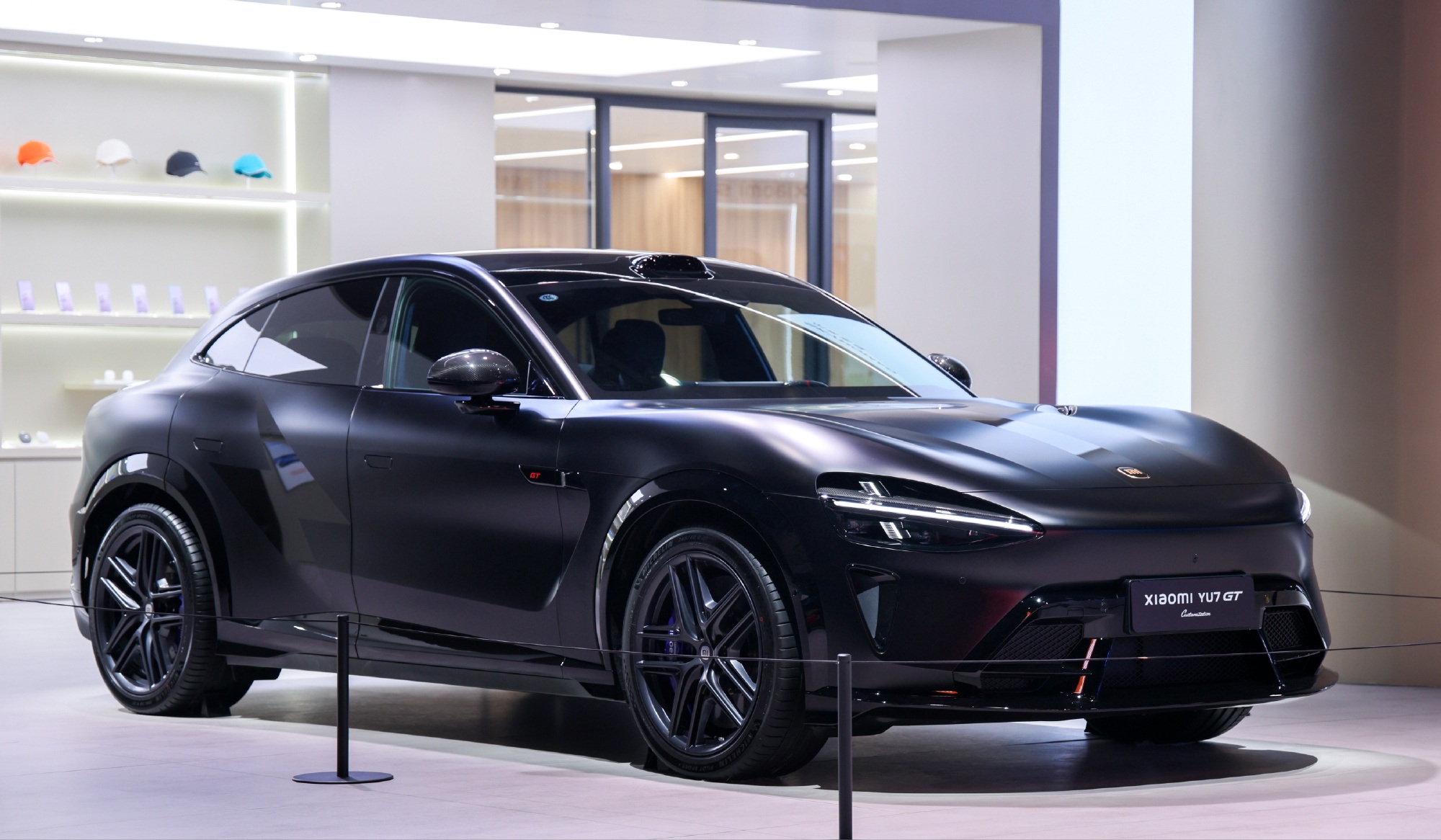
Whether it was the recent Chengdu SU7 Ultra accident, the earlier Tongling SU7 combustion incident, or the carbon fiber hood controversy—every incident has attracted intense attention and extensive coverage from the outside world.
The escalation of these incidents led to a flood of negative information flooding Xiaomi’s live-streaming channels for cars, forcing the temporary suspension of Xiaomi’s automotive live streams.
Lei Jun’s social media accounts also inevitably lost followers. Some netizens calculated that Lei Jun’s net follower growth has been negative in the past month, with a loss of as many as 290,000 followers.

In addition, due to negative content online, Xiaomi car owners—like Li Auto owners—have been labeled with various derogatory tags and even subjected to unwarranted online attacks.
This was already mentioned in a September update from Xiaomi’s Legal Department, which emphasized that these actions were carried out by “some MCN agencies and online trolls.”

Even Lei Jun had to publicly sigh: “Xiaomi Auto is one of the most slandered car companies.”
The continuous smearing and attacks by black PR and online trolls have harmed not only the car companies themselves but also the users who support these brands—who have at times become targets of attacks, damaging both brand and user images.
Some Xiaomi car owners even called on fellow owners to stand up and collectively resist all kinds of misinformation online.

In the end, the continuous smearing and attacks by black PR and online trolls have caused irreparable damage to the automotive industry, and this has strengthened the determination of car companies to unite in resistance.
Have Car Companies “Awakened”?
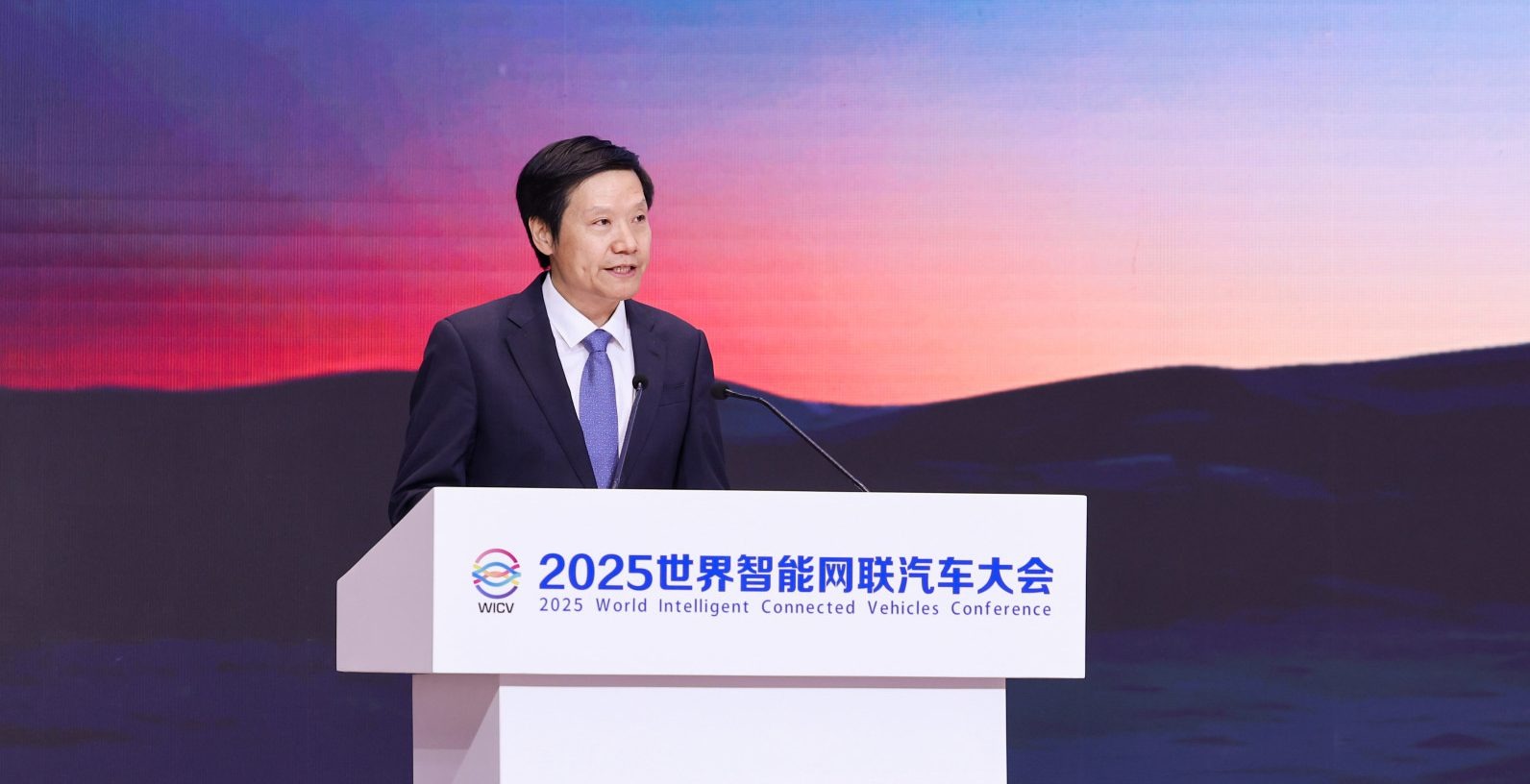
Today, at the 2025 World Intelligent Connected Vehicles Conference, Lei Jun stated that intelligent connected vehicles are not a zero-sum game, and he called on the entire industry—including car owners of all brands—to stand up and severely crack down on online trolls.
Whether Lei Jun’s remarks can lead car companies to reach a consensus overnight remains uncertain.
However, from the work results of the legal departments of various car companies and their active response to the six departments’ campaign to rectify online trolls and black PR, it is clear that black PR and online trolls have become a common “enemy” of car companies.
After all, competition in the automotive industry will always revolve around technology and products. Relying on smearing and attacks by black PR and trolls can never lead to long-term success.
So, in your opinion, after Lei Jun’s “awakening” speech, when will the automotive industry finally embrace a “clean” environment?
(End)
Discover more from ChinaEVHome
Subscribe to get the latest posts sent to your email.