Smart vehicles are the present foundation, Robotaxi represents the future of mobility, and robots are the next-generation platform that transcends automobiles.
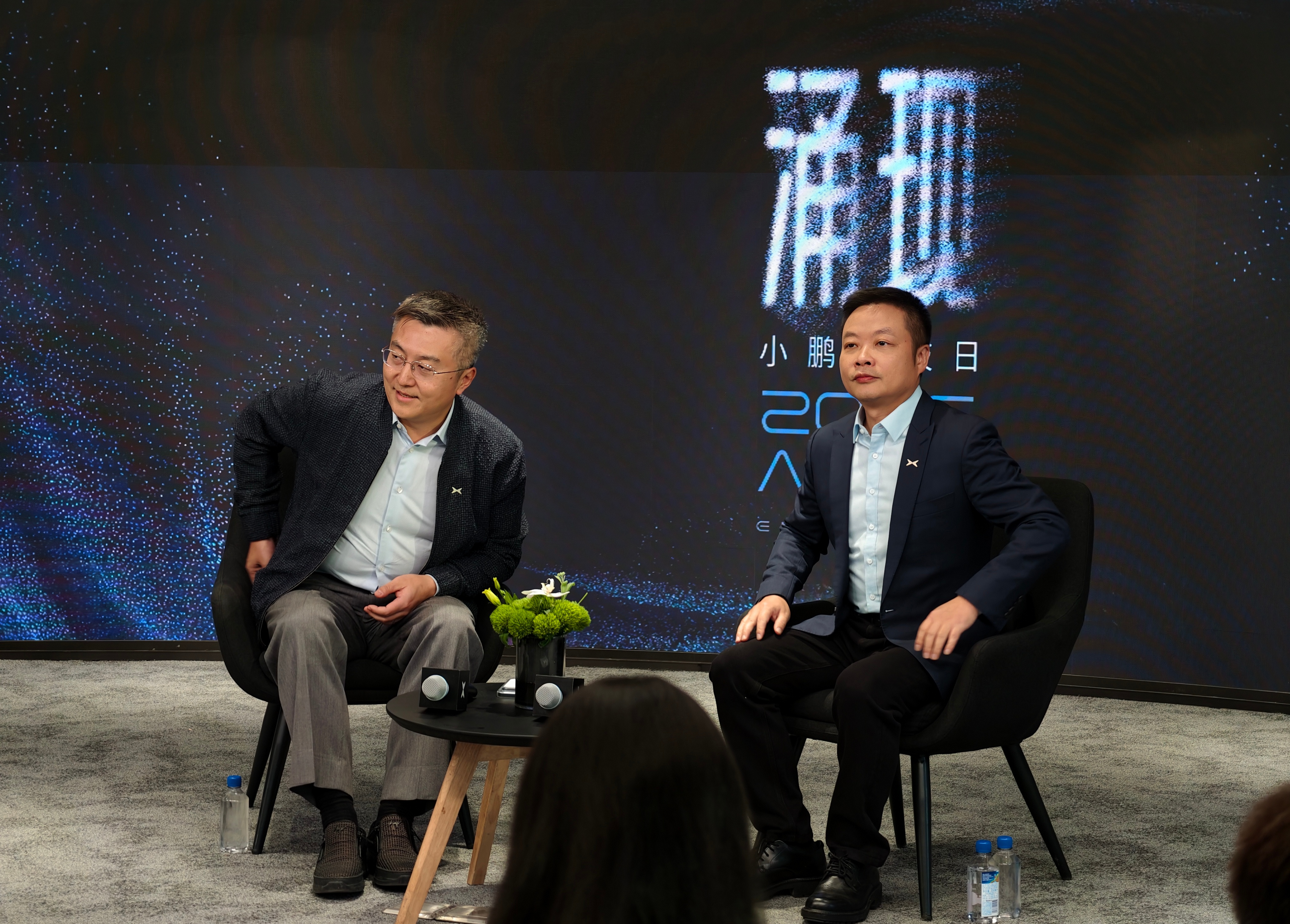
On November 6, following the 2025 Xpeng AI DAY, Xpeng CEO He Xiaopeng and Vice Chairman & President Brian Gu, along with other executives, attended a media group interview.
They addressed key market concerns including the Robotaxi strategy, commercialization of the humanoid robot IRON, collaboration and implementation of the Turing chip, and the globalization progress.

In the field of Robotaxi, Xpeng Motors has chosen a distinct path.
He Xiaopeng clearly stated that Xpeng’s positioning is as a “toolbox” provider. The company offers a complete solution including vehicles, software, and interfaces, which is then opened up to ecosystem platforms like AutoNavi and local operators for operation. This model is lightweight, flexible, and capable of quickly adapting to the regulatory and market environments of different countries and regions.
He Xiaopeng also revealed that the three Robotaxi models scheduled for mass production next year will target different price segments to meet diverse needs, and will include different versions such as seven-seater, six-seater, and five-seater configurations.

Simultaneously, Xpeng differentiates itself from other Robotaxi companies by developing pre-installed vehicles and focusing more on whether the vehicle has commercial value and user value. Furthermore, because the Robo can target end consumers (To C), it can significantly share BOM costs and R&D expenses, giving Xpeng inherent advantages in areas like R&D expenditure.
Regarding the highly anticipated new-generation IRON robot, Xpeng Motors revealed its high degree of synergy with the smart vehicle business. Officially, the robot and vehicles share a 70% reuse rate at the software and AI levels, and the perception systems and domain controllers are largely the same. This synergistic effect greatly accelerates the robot’s development process and effectively controls costs.

Facing a market estimated to be worth 20 trillion RMB in the next decade, Xpeng has shown great ambition. He Xiaopeng clearly proposed a mass production timeline: the goal is to achieve mass production of high-level humanoid robots by the end of 2026, with plans to initially deploy them in service scenarios such as guided tours, shopping assistance, and industrial inspection.
At this AI Day, Xpeng announced that its self-developed “Turing” AI chip will welcome its first launch customer, marking a critical step in Xpeng’s technological outreach. Brian Gu emphasized that Xpeng maintains a very open attitude and is willing to collaborate with various parties in areas like open-source software, chips, and electronic/electrical architecture.
At the model level, Xpeng has achieved a major breakthrough: its VLA model successfully eliminated the traditional “language” intermediate layer, allowing visual signals to be directly converted into physical commands for controlling the vehicle. He Xiaopeng explained that this avoids the delay and loss of information conversion, making perception and decision-making more efficient and richer, while the model still maintains interpretability, allowing the decision process to be traced.

The collaboration with Volkswagen has become a cornerstone of Xpeng’s global strategy. Brian Gu stated that the cooperation between the two parties has expanded from initial single-vehicle models to comprehensive and deep integration encompassing multiple models, electronic/electrical architecture, charging piles, and even intelligent driving.
In global market expansion, Xpeng is actively entering new markets including South Korea and is making every effort to promote the overseas deployment of its XNGP intelligent assisted driving system. Brian Gu revealed that the high-speed NGP function is expected to launch in the European market next year, while deployment in Hong Kong and Southeast Asian markets is also being actively advanced.
Discover more from ChinaEVHome
Subscribe to get the latest posts sent to your email.