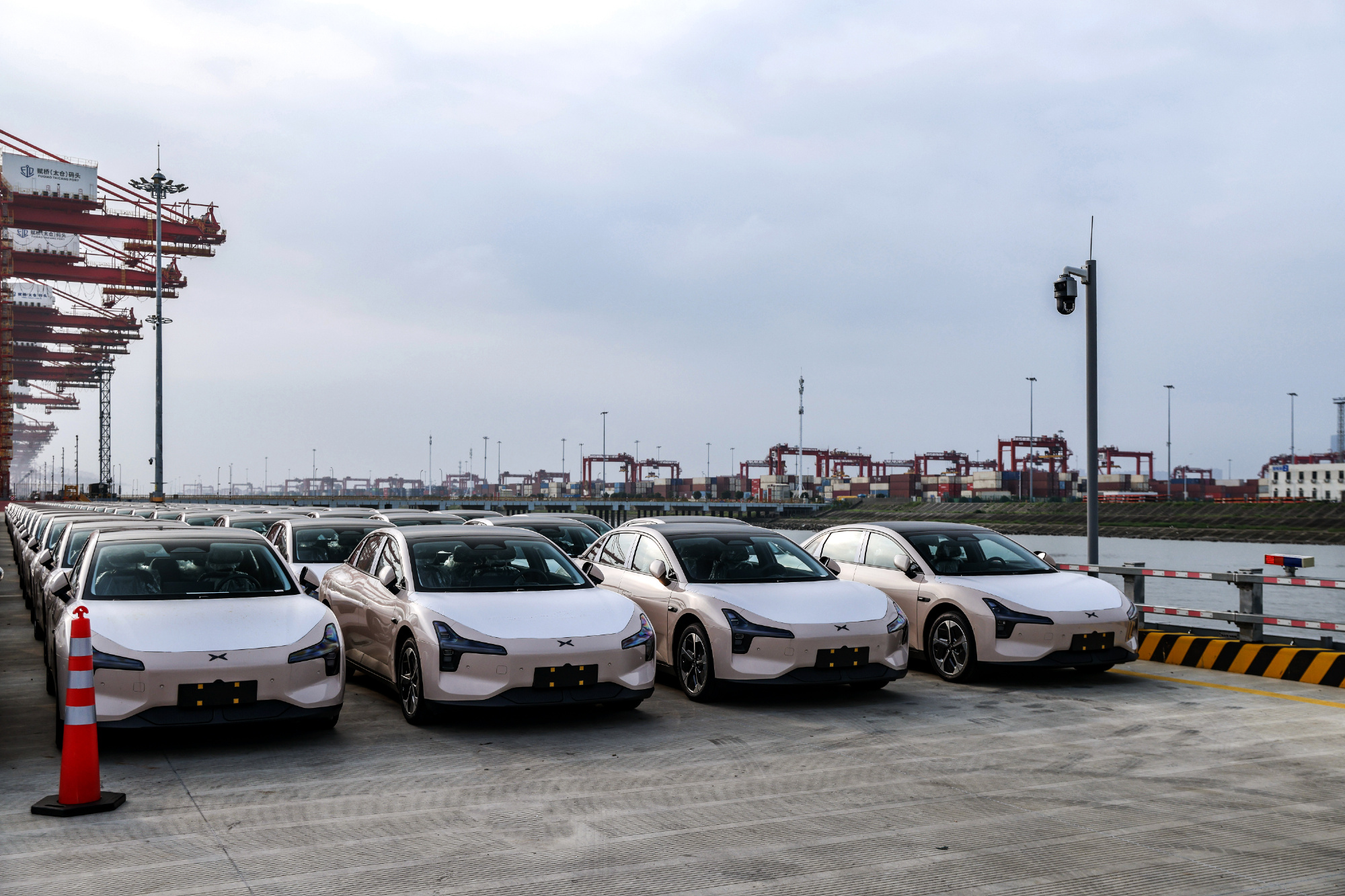
China’s auto export landscape has shifted. While Shanghai long held the top position, the rise of domestic automakers has made self-owned brands the core of new energy vehicle exports.
On November 28, Cui Dongshu, Secretary-General of the China Passenger Car Association, released an analysis report on China’s new energy vehicle (NEV) export market for January to October 2025.
Cui Dongshu stated that as China’s domestic NEV market transitions from being subsidy-driven to market-driven, the market competitiveness of Chinese new energy vehicles has significantly increased.
Data shows that from January to October 2025, China exported 2.65 million NEVs, a year-on-year increase of 54%. In October alone, NEV exports reached 328,000 units, surging 65% year-on-year.

Analyzing the energy structure of October exports: Battery electric vehicles (BEVs) accounted for 26% (down 2 percentage points year-on-year), plug-in hybrid electric vehicles (PHEVs) accounted for 14% (up 7 p.p.), hybrid electric vehicles (HEVs) accounted for 6% (up 1 p.p.), while pure internal combustion engine vehicles accounted for 44% (down 8 p.p.).
For the January-October period, BEVs accounted for 29% (up 2 p.p.), PHEVs accounted for 12% (up 7 p.p.), HEVs accounted for 6% (up 2 p.p.), and internal combustion engine vehicles accounted for 43% (down 11 p.p.).

Analysis of Changes in NEV Export Regions.
With Tesla’s entry into China, the structure of China’s auto exports changed. While Shanghai held the top position for many years previously, the rise of domestic Chinese automakers has made self-owned brands the core of NEV exports.
In 2025, the regions with strong NEV exports were Jiangsu, Shanghai, Zhejiang, and Anhui. The low average export prices in Tianjin and Beijing suggest these are likely primarily vehicles without VINs.

Reviewing the characteristics of NEV passenger car export destinations over the years, the year-on-year growth in 2025 NEV exports showed divergence.
NEV exports are primarily destined for two major markets: Europe and Asia, with the Asian market also having solid demand for lower-end vehicles.
This year, most major markets for NEV exports have seen good growth, with Israel being a notable exception for its poor performance. The NEV trend in the Indonesian market is also strong, establishing a new growth point for new energy vehicles in Southeast Asia.

Data shows the top 10 countries for China’s total NEV exports in October 2025 were: Belgium (27,907 units), Brazil (22,276 units), the United Kingdom (22,017 units), the United Arab Emirates (19,941 units), Mexico (19,006 units), the Philippines (17,962 units), Australia (15,007 units), Thailand (14,989 units), India (13,609 units), and Indonesia (11,388 units).
The top 10 countries for China’s total NEV exports from January to October 2025 were: Belgium (251,439 units), the United Kingdom (175,282 units), the Philippines (171,348 units), Brazil (163,593 units), Mexico (150,869 units), Australia (124,122 units), the United Arab Emirates (112,725 units), Thailand (112,308 units), India (88,607 units), and Indonesia (88,231 units).
Discover more from ChinaEVHome
Subscribe to get the latest posts sent to your email.