- FAW Jiefang and HiNa validated a 339‑kWh sodium‑ion electric heavy truck over 15,000+ km and seven months of full‑scenario testing.
- The truck retained over 90% usable capacity at −40°C, charged in 20–25 minutes, and boasts >8,000 cycle life claims.
- Successful validation positions sodium‑ion tech as a cold‑climate, cost‑stable alternative for mass commercial truck electrification.
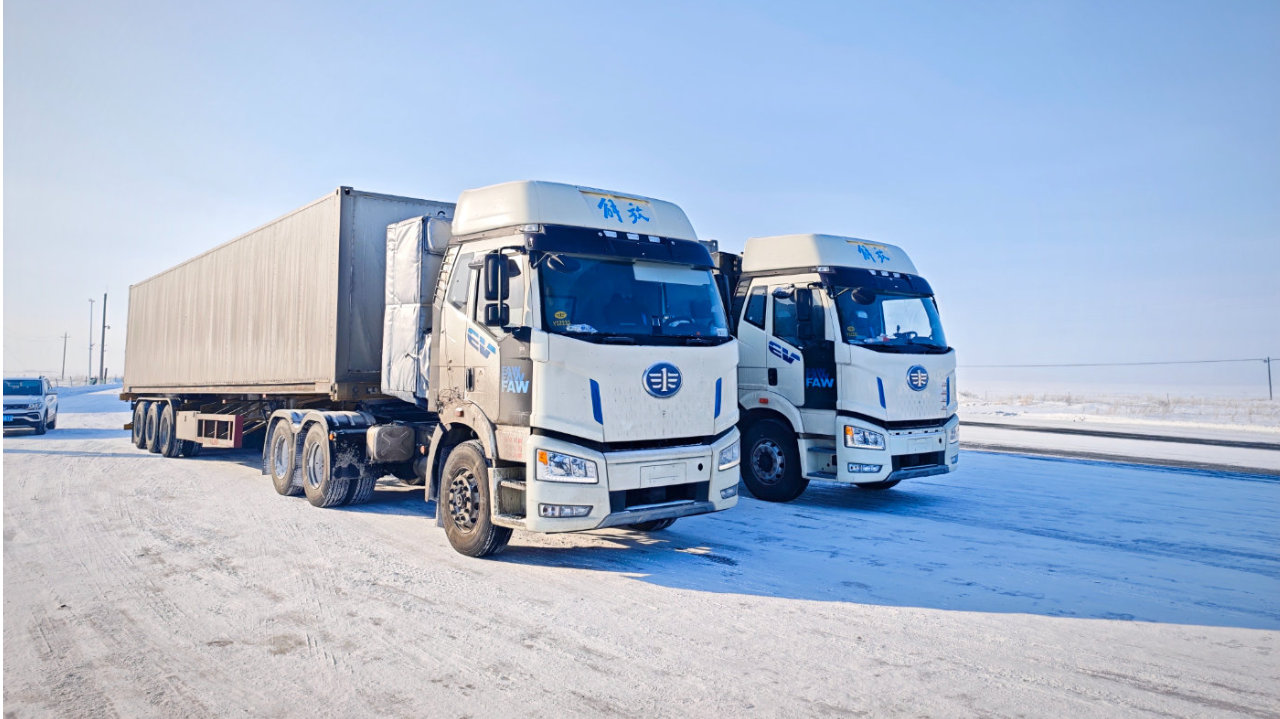
FAW Jiefang, the truck arm of FAW Group, said a sodium-ion battery-powered heavy-duty electric truck has completed full-scenario system validation. It marks the first time sodium-ion battery technology has undergone comprehensive verification in the heavy commercial vehicle sector.
The vehicle was jointly developed with sodium-ion battery maker HiNa Battery. The tested model is a Jiefang J6P electric tractor equipped with a 339-kWh sodium-ion battery pack.

Testing lasted nearly seven months, covering more than 15K km of road trials. Evaluation included bench testing, power performance assessments, vehicle reliability verification, extreme heat and extreme cold testing.
Official data showed the truck retained more than 90% usable battery capacity at -40°C. Fast charging takes 20-25 minutes. Battery cycle life exceeds 8K charge-discharge cycles.
The result pushes sodium-ion batteries beyond their traditional applications in energy storage systems, low-speed vehicles. More importantly, it moves the technology into the mainstream freight market, where technical maturity, commercial viability face tougher scrutiny.
FAW Jiefang, China’s long-time heavy-truck market leader, provided a testing platform close to real-world commercial operations. HiNa Battery ranks among China’s earliest companies to commercialize sodium-ion technology. Last year, its dedicated sodium-ion battery pack for commercial vehicles passed mandatory certification testing.

Lithium batteries still dominate the global EV market. Nearly all mainstream power batteries currently rely on lithium chemistry. Yet sodium-ion batteries continue to attract investment because the technology is not designed to replace lithium batteries outright. Instead, it targets several long-standing weaknesses in specific operating environments.
For China’s northeastern, northwestern regions, low temperatures remain a challenge for lithium batteries. Winter driving often brings range loss, slower charging speeds. Logistics operators care less about headline range figures; they focus on predictable operating efficiency.
Sodium-ion batteries offer a natural advantage in cold-weather performance. The ability to maintain more than 90% usable capacity at -40°C stands out as one of the technology’s strongest selling points.
Battery lifespan is another critical factor. Heavy trucks operate at high utilization rates almost every day. If the claimed 8K-plus cycle life proves achievable in commercial service, fleet operators could avoid battery replacement costs throughout a vehicle’s operating life, significantly lowering total ownership expenses.

Supply-chain considerations also support sodium-ion development. Lithium resources remain exposed to geopolitical risks, commodity cycles. Sodium is abundant, widely distributed, making it a potentially more stable long-term supplement to lithium-based technologies.
The broader significance lies in commercialization potential. If sodium-ion heavy trucks reach mass deployment, they could become an important complement to China’s truck electrification push.
China’s Ministry of Transport, together with 10 other government agencies, recently set a target for new-energy heavy trucks to achieve a 40% market penetration rate by 2030. In cold-climate regions, high-frequency operating scenarios, sodium-ion batteries’ low-temperature resilience, fast-charging capability could help accelerate progress toward that goal.
Discover more from ChinaEVHome
Subscribe to get the latest posts sent to your email.