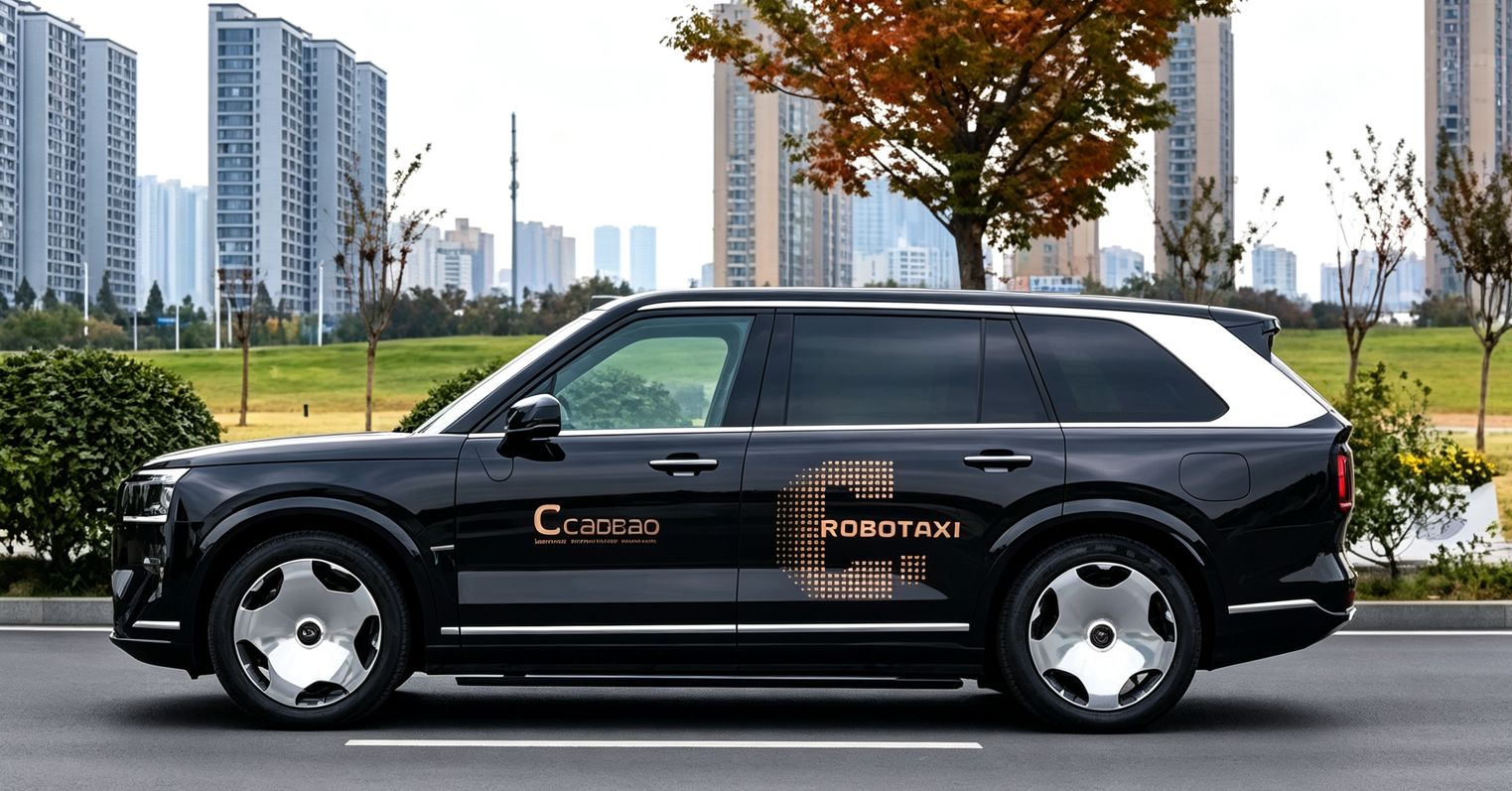
- CaoCao Mobility began driverless Robotaxi testing on public roads in Hangzhou without a safety operator.
- Test vehicles are linked to CaoCao’s RAS remote safety platform for monitoring, emergency handling, and remote assistance.
- Under Geely’s RoboX plan, CaoCao targets 100,000 Robotaxis and 100,000 Robovans by 2030.
CaoCao Mobility announced on July 27 that it has officially begun Robotaxi testing without a safety operator in the driver’s seat.
The tests are being conducted on real urban roads in Hangzhou’s Binjiang District.
Vehicles will receive ride assignments from designated pickup points, with the program using a small-scale and controlled approach to validate vehicle stability and service capabilities without an onboard safety operator.
Unlike previous testing phases that required a safety operator inside the vehicle, the latest program focuses on exploring operational procedures after removing the human operator from the driver’s position.

The test vehicles have been connected to CaoCao Mobility’s “CaoCao Intelligent Mobility Remote Safety Service Platform” (RAS).
This platform provides safety monitoring, abnormal situation handling, emergency communication and remote assistance during vehicle operation, providing backend support for driverless operations.
In April, CaoCao Mobility became the first company approved in Hangzhou to conduct road tests for intelligent connected vehicles without safety operators.
The company has already deployed a Robotaxi fleet of more than 100 vehicles in Hangzhou and launched what it describes as the world’s first “green intelligent mobility island.”

The facility integrates functions including automated battery swapping, automatic cleaning and vehicle preparation services, with the aim of improving operational efficiency for autonomous vehicles.
As a key implementation platform for Geely Holding Group’s RoboX strategy, CaoCao Mobility is currently developing its Robotaxi business around three areas: intelligent customized vehicles, autonomous driving technology and intelligent operations.
On the vehicle side, CaoCao Mobility is also developing dedicated Robotaxi models.
In April, the company unveiled “Eva Cab,” which it described as China’s first purpose-built Robotaxi developed specifically for autonomous driving scenarios.

The model has been redesigned around autonomous mobility requirements and is scheduled to enter mass production in 2027 for future large-scale operations in global markets.
In June, CaoCao Mobility unveiled its new RoboX strategy at the 2026 International Automotive and Supply Chain Expo in Hong Kong.
The company outlines plans to build a new intelligent mobility ecosystem centered on Robotaxi, Robovan and other autonomous transportation scenarios.
Under the RoboX strategy, CaoCao Mobility introduced its “Dual 100,000 Plan,” targeting the deployment of 100,000 Robotaxis and 100,000 Robovans by 2030.
Discover more from ChinaEVHome
Subscribe to get the latest posts sent to your email.