- CALB launches sweeping quality overhaul after 177Ah LFP “banana” cells caused swelling, leaks, and power loss.
- GAC Aion extends warranty to 8 years or 300K km and offers free monitoring, inspections, repairs, or replacements.
- CALB tightens production controls, rolls out traceability and cell redesigns to support high-mileage commercial fleets.
Domestic media reports indicate that Chinese power battery maker CALB has launched an internal quality reform program centered on manufacturing safety and product reliability.
The overhaul covers production traceability, validation systems, organizational management, and customer quality response processes. The move aims to improve cell consistency, long-term durability, and safety performance.

The adjustment comes after industry attention focused on quality concerns involving CALB’s 177Ah lithium iron phosphate (LFP) battery cells.
Recently, GAC Aion AION S series vehicles equipped with CALB 177Ah LFP cells received multiple complaints from fleet operators. Users reported issues including battery swelling, electrolyte leakage, sudden power loss during driving, and sharp range degradation.
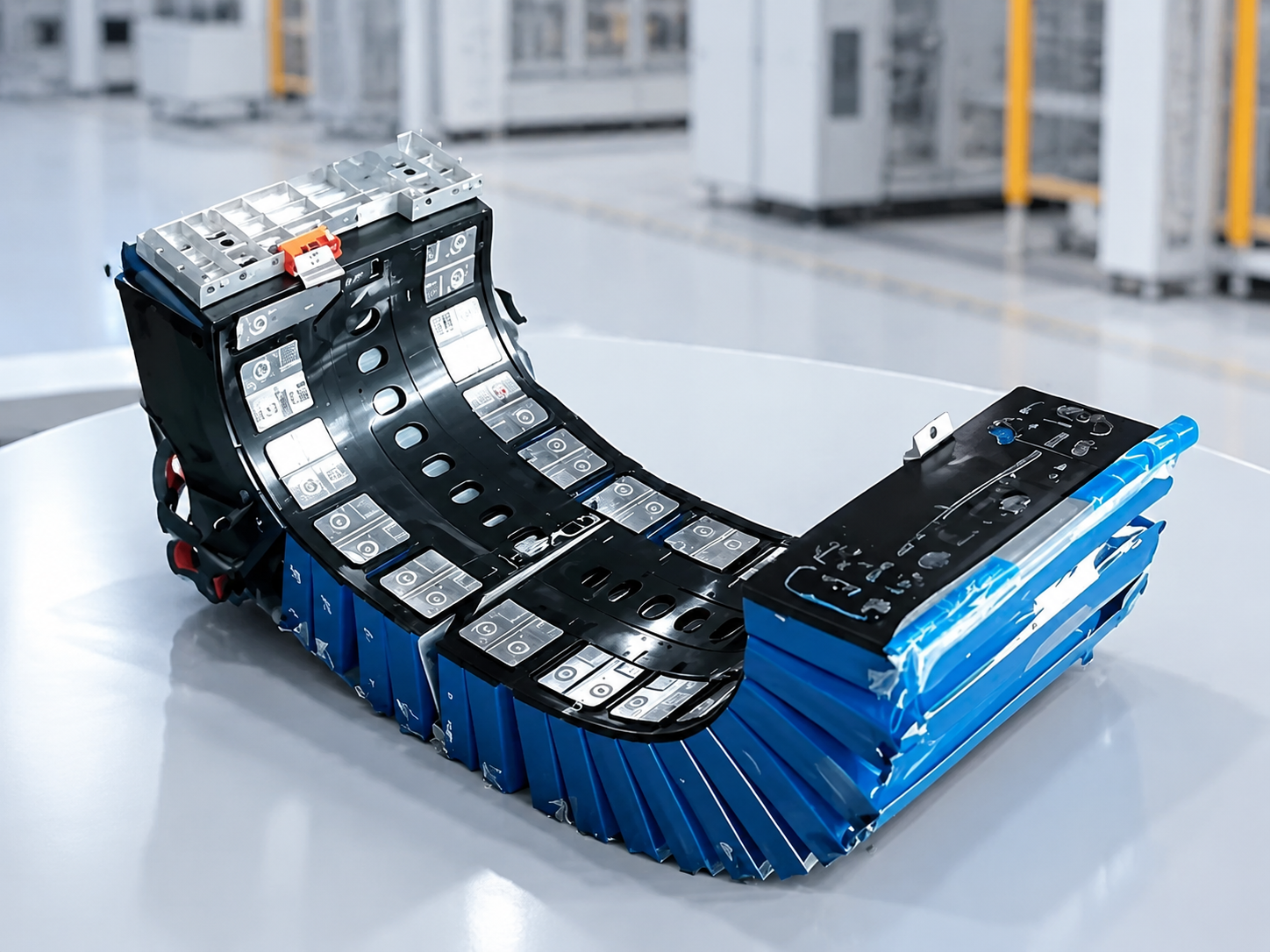
Some faulty cells showed visible bending deformation, resembling the shape of a banana. The incident was later referred to as the “banana battery” issue by industry observers.

The affected vehicles mainly involve AION S Plus, AION S Charming 580, and AION S MAX variants produced between 2022 and 2023.
Most of these vehicles operate as ride-hailing or taxi fleets. Under high-frequency commercial use, some vehicles developed battery abnormalities after running 150K-300K km.
Reported problems included reduced driving range, battery management system warnings, insulation faults, cell swelling, electrolyte leakage, and sudden power interruptions while driving.
After failures occurred, some owners turned to third-party inspections. Test reports showed that after excluding external factors such as crashes or water damage, some vehicle failures were linked to internal battery abnormalities.

On July 18, GAC Aion and CALB separately announced after-sales support measures for affected vehicles.
GAC Aion extended the warranty period for vehicles equipped with the battery from 8 years or 150K km to 8 years or 300K km. The company will also use vehicle data monitoring to identify abnormal vehicles, offering free inspections, repairs, or battery replacements.
CALB established a direct maintenance channel. Affected owners can visit designated service locations for free inspections, with repair and maintenance support provided based on test results.
Beyond customer support, CALB has started upgrading its internal quality system. The company is tightening manufacturing standards across key production stages.

For electrode coating, CALB raised requirements for online thickness monitoring and surface density control. Moisture tracking during electrolyte filling has also been upgraded from daily monitoring to roll-level traceability.
The company is also conducting reverse audits of raw materials, auxiliary materials, and additive formulas used in 2022 and 2023, while adjusting parts of its formulation system.
To better support high-mileage commercial vehicles, CALB’s R&D team has redesigned safety margins for cell housings, explosion-proof valves, and terminal welding structures. The upgraded cells are expected to deliver stronger durability and safety reserves for intensive fleet operations.
CALB remains one of China’s major power battery suppliers. Data from the China Automotive Power Battery Industry Innovation Alliance showed that CALB installed 5.2 GWh of domestic power batteries in June 2026, securing a 6.82% market share. The company ranked third in China, behind CATL and BYD.

Battery quality issues have previously triggered large compensation cases across the industry.
Earlier, battery cell defects from Sunwoda led to vehicle recalls. Geely’s battery subsidiary VREMT later sought compensation from Sunwoda Power over related issues. After negotiations, both sides reached a settlement, with Sunwoda Power agreeing to pay RMB 608 million ($90.1M) over five years.
The latest 177Ah battery dispute involves follow-up handling for about 213K commercial vehicles, creating another major challenge for CALB and GAC Aion as they work to resolve the issue.
Discover more from ChinaEVHome
Subscribe to get the latest posts sent to your email.