- BMW, Mercedes-Benz and Audi cut ICE prices sharply but saw China sales fall about 20% year-on-year.
- BBA electric models remain tiny-scale, often selling in the hundreds or low thousands versus NEV rivals' tens of thousands.
- Chinese buyers now prize batteries, software and ADAS, eroding legacy brands' pricing power in the RMB300K+ segment.
“A BMW 525Li with an official price of RMB 368K ($54.6K) can now be negotiated down to around RMB 280K ($41.5K) before insurance and taxes. A BMW 3 Series that cost more than RMB 400K ($59.3K) on the road a few years ago can now be bought for just over RMB 200K ($29.7K).”
The remarks came from a sales manager at a BMW dealership in Beijing. They offer a snapshot of the pressure facing China’s traditional premium brands.

Mercedes-Benz, BMW and Audi, long dominant in China’s luxury market with firm pricing and limited dealer discounts, have increasingly turned to price cuts to support sales.
The strategy reflects mounting volume pressure. In the first half of 2026, BMW, Audi and Mercedes-Benz sold about 262K, 233K and 210K vehicles in China respectively, with all three brands down about 20% year on year.
Lower prices can reduce the entry barrier, but they have done little to reverse the broader shift in Chinese demand toward new energy vehicles. NEV retail penetration reached 65.1% in July, up 11.6 percentage points year on year and 2.1 percentage points from June.
If fuel-car discounts reflect an active market adjustment, weak NEV sales expose a deeper problem for the three German luxury brands: the electric transition has yet to generate meaningful scale.

BMW’s pure-electric lineup remained weak in July. The BMW i3 sold about 1,000 units, while the iX1 reached around 753 units. The i5 sold just 235 units. From January to July, BMW’s pure-electric models combined for around 14.9K units.
The current BMW i5 and iX1 entered production phase-out in July. The i3 will follow in August. BMW’s first Neue Klasse model, the iX3, is expected to begin deliveries in China in the fourth quarter of 2026. The new model could provide a fresh test of BMW’s EV strategy in China.
Mercedes-Benz has also struggled to build scale with its electric lineup. In July, the electric GLC sold around 1,436 units. The electric CLA sold just 70 units. Monthly sales of the EQA, EQB and EQE SUV each remained below 20 units.

Audi’s performance was somewhat stronger, led by the E7X, a model based on a dedicated EV platform. The E7X sold 3,007 units in July. The E5 Sportback managed just 173 units. Q6L e-tron sales stood at around 529 units, while the A6L e-tron, Q6L Sportback e-tron and Q4 e-tron all remained below 600 units.
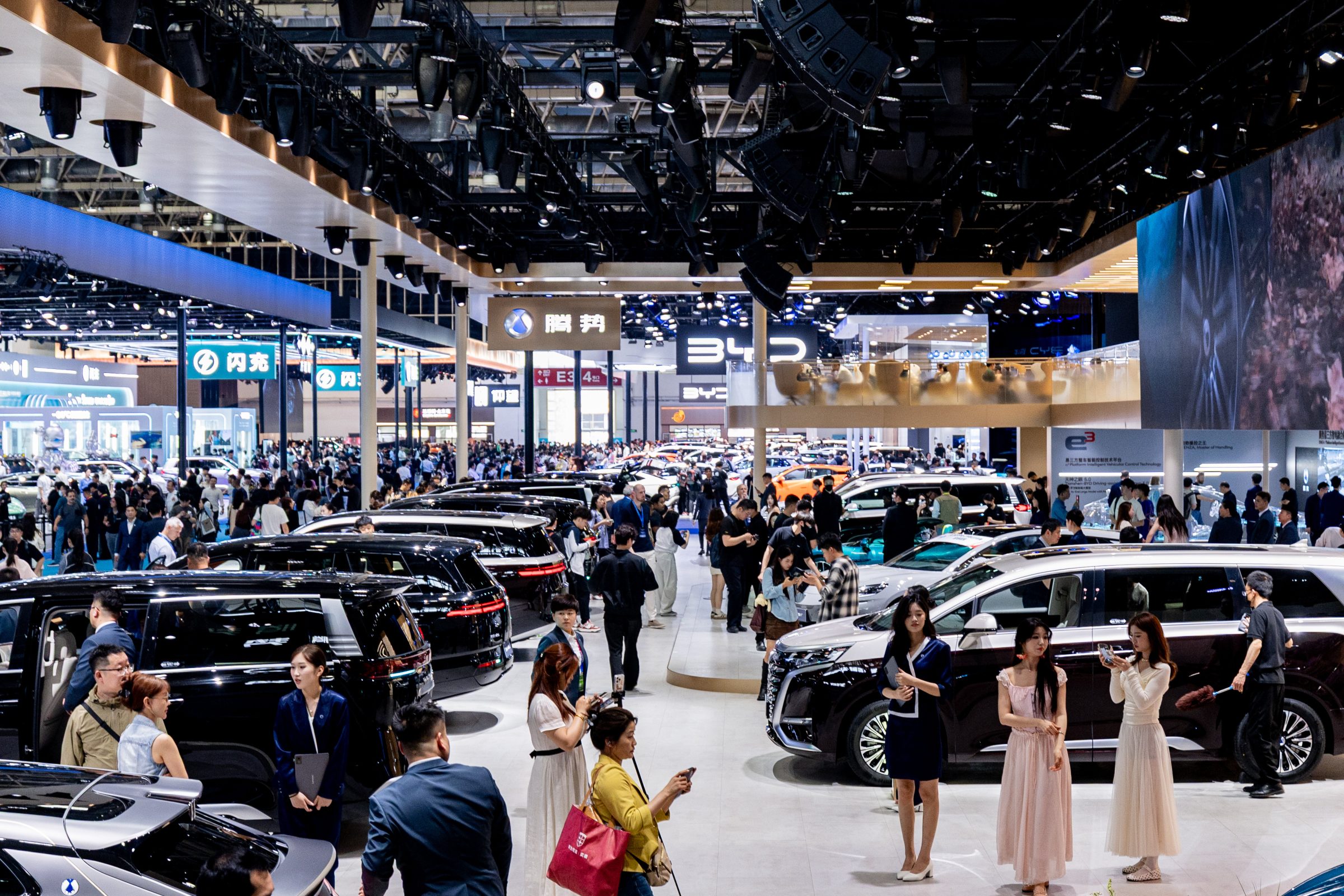
The gap with China’s mainstream NEV brands is widening. BYD, AITO, NIO and Zeekr now have multiple core NEV models capable of monthly sales in the tens of thousands. Many BBA(Mercedes-Benz, BMW and Audi) electric models remain stuck at thousands or even hundreds of units per month.
The problem for BBA is therefore no longer just falling fuel-car prices or shrinking ICE sales. Its electric lineup has yet to take over as the next growth engine.

More importantly, Chinese consumers are redefining what a luxury vehicle means. In the combustion era, brand heritage, mechanical quality, chassis tuning and brand premium were core selling points. In the EV era, battery, motor and electronic systems, smart cockpits, advanced driver assistance and software capabilities matter far more.
The shift is already visible in average transaction prices. In the first half of 2026, BMW’s average vehicle transaction price stood at around RMB 326K ($48.3K), compared with RMB 263K ($39.0K) for Audi and RMB 424K ($62.8K) for Mercedes-Benz.

By contrast, NIO averaged around RMB 404K ($59.9K), AITO around RMB 371K ($55.0K), and Zeekr around RMB 349K ($51.7K).
The RMB 300K-plus ($44.5K-plus) segment, once firmly controlled by BBA, is now attracting a growing number of Chinese NEV brands. The shift is changing more than market share. It is also weakening the pricing power that once sustained the premium enjoyed by traditional luxury brands.
Discover more from ChinaEVHome
Subscribe to get the latest posts sent to your email.