- BYD launches DaHan D‑segment sedan with pre‑orders from RMB 249.9K ($37.2K) to RMB 299.9K ($44.6K).
- DaHan packs a 1,008‑km CLTC range, 102.3‑kWh Blade battery, and 570 kW AWD 0–100 km/h in 3.3s.
- DaHan targets executive buyers with S‑Class‑sized cabin, rear entertainment, powered leg rests, and luxury trim.
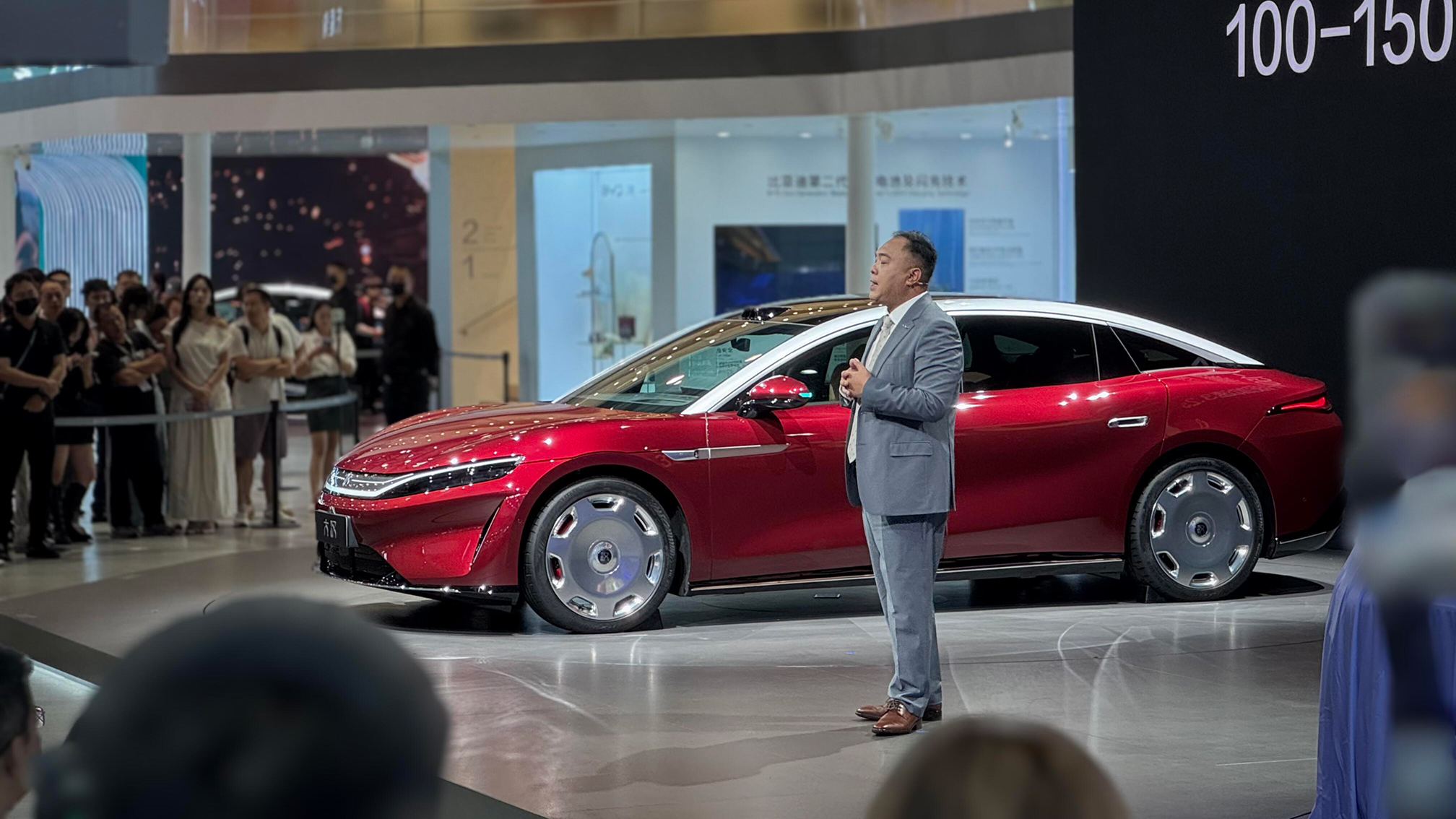
On Aug. 21, BYD unveiled pre‑order pricing for its new DaHan EV sedan under the Dynasty Series at the 2026 Chengdu Motor Show. The model came in three versions, with pre‑order prices ranging from RMB 249.9K ($37.2K) to RMB 299.9K ($44.6K).
The 1,008-km RWD LiDAR Premium starts at RMB 249.9K ($37.2K); the 1,008-km RWD LiDAR Flagship starts at RMB 269.9K ($40.2K); the 880-km AWD LiDAR Flagship starts at RMB 299.9K ($44.6K).

DaHan is the first “9 Series” sedan under BYD’s Dynasty lineup. It sits as a D-segment executive flagship, positioned above every other sedan in BYD’s portfolio.
The sedan measures 5,256 mm in length, 1,999 mm in width and 1,510 mm in height, with a 3,130 mm wheelbase. Its footprint comes close to the Mercedes-Benz S-Class.

The cabin takes cues from BYD’s flagship DaTang SUV. The front row gets a full-digital instrument cluster, a floating center screen and a passenger entertainment display, forming a three-screen layout. A head-up display is also fitted.
The dashboard uses a clean horizontal layout. The instrument cluster flows into the center console for a more unified look. Wood-grain trim and bright silver accents add a more upscale feel.

Compared with the comfort-focused cabins of earlier Han models, DaHan puts more weight on luxury and executive use.
For a D-segment executive sedan, the rear cabin is the main selling point. The 3,130 mm wheelbase, combined with a body length of more than 5.2 meters, leaves ample rear legroom. Rear seats get powered leg rests, ventilation, heating and massage functions.
The center armrest houses a dedicated control screen. Passengers can adjust climate zones, seat angles, sunshades and other functions from the rear. DaHan is BYD’s first sedan to feature a ceiling-mounted rear entertainment screen. It is also one of the few sedans in the market to offer such a setup.

The rear also gets smart dimming privacy glass, allowing occupants to adjust light transmission with a single touch. BYD says the feature is currently offered only on Yangwang U8 and DaHan across its lineup.
Despite its size, DaHan gets rear-wheel steering. BYD quotes a 4.95-meter turning radius, improving maneuverability on urban roads.
The EV powertrain uses a 102.326 kWh second-generation Blade Battery. CLTC range peaks at 1,008 km. The high-performance AWD version delivers a combined 570 kW, with a 0-100 km/h time of 3.3 seconds.
DaHan’s equipment matches its executive positioning. Likely rivals include the BMW 5 Series, Mercedes-Benz E-Class and other traditional executive sedans.

Direct competition is still limited in China’s 200K-300K RMB ($29.8K-$44.6K) large-sedan segment. The price band is already packed with large SUVs such as Leapmotor D19, XPeng GX and ONVO L90. Chinese buyers’ strong preference for SUVs adds uncertainty to DaHan’s sales prospects.
More importantly, DaHan carries the Han family’s push into a higher segment. BYD is using the D-segment flagship to bring the Han nameplate back into the core of China’s mainstream premium market.
The strategy also fits BYD’s 2026 push to lift both volume and pricing. Higher-end flagship models could help reshape the brand’s image beyond its long-standing value-for-money positioning.

BYD also unveiled the third-generation Tang’s interior at the show. The SUV gets a skyline-style screen, a large dual-screen layout similar to the Denza N8. It is expected to launch later this year.
Discover more from ChinaEVHome
Subscribe to get the latest posts sent to your email.