- BYD unveiled GW-scale Grid-forming BESS 2.0 with integrated GC Block, GC Flux PCS 2.0 and GC Master EMS 2.0 to push larger-capacity cells, tighter integration and lower build and operating costs for utility storage.
- For a 1GWh plant BYD offers 2-hour 7.5MW/15.5MWh (65 sets), 4-hour 7.5MW/31MWh (33 sets) and 6-hour 10MW/62MWh (17 sets) configurations, highlighting 1980Ah Blade cells and major reductions in components and workload.
- Targets global utility-scale rivals and large-project pipelines in UAE, Saudi Arabia, Poland and Japan, but execution risks include scaling overseas delivery, project timing, integration complexity and margin pressure on LCOE gains.
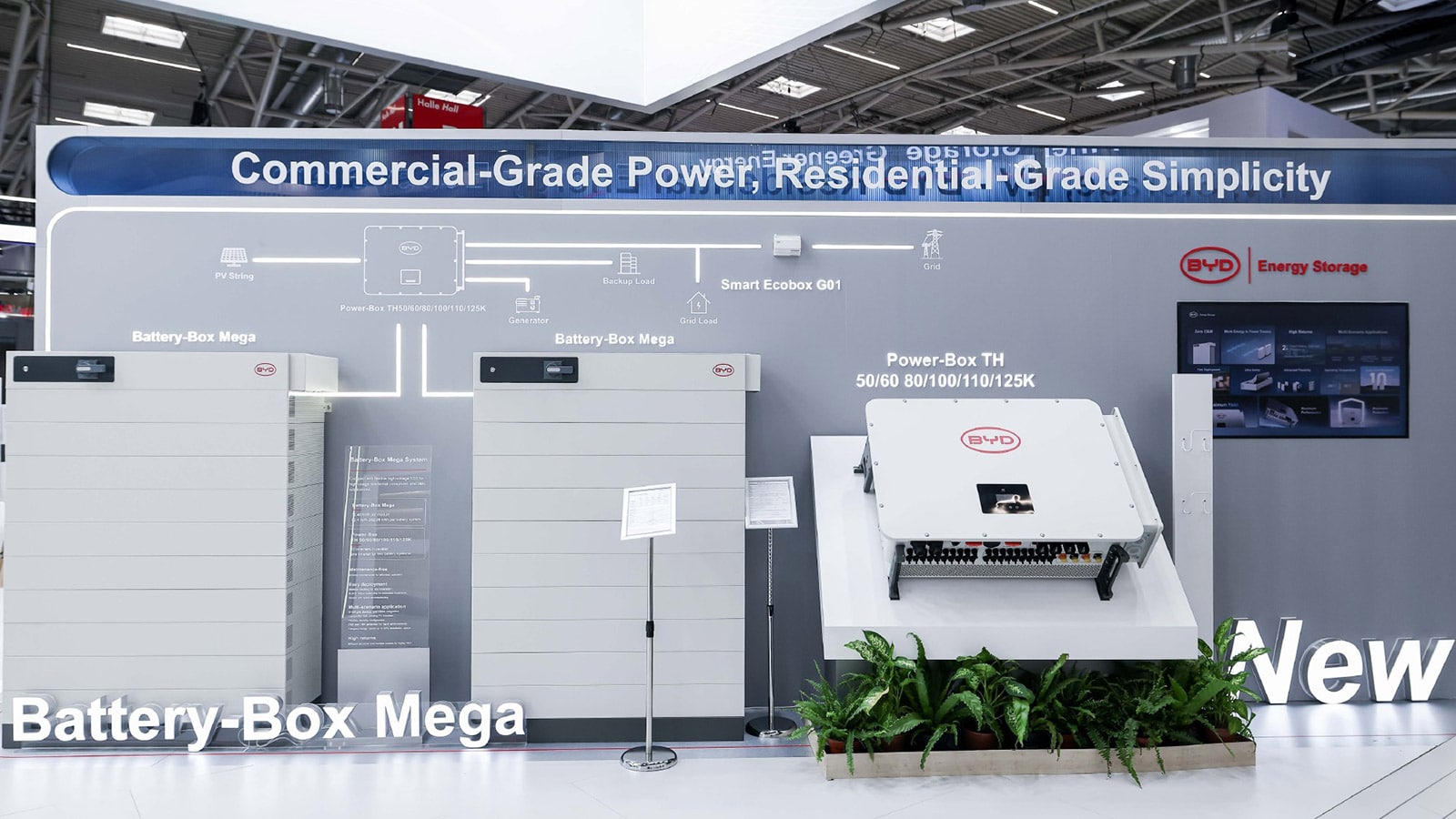
On September 15, BYD Energy Storage officially launched its GW-scale Grid-forming BESS Solutions 2.0, alongside three core products: the utility-scale GC Block, GC Flux PCS 2.0, and GC Master EMS 2.0.
Compared with the previous generation, the upgraded solution focuses on larger-capacity battery cells, higher system integration, and smarter energy management to reduce the construction and operating costs of large-scale energy storage projects.

For a 1GWh energy storage plant, BYD offers multiple configurations. A 2-hour storage system can use 7.5MW/15.5MWh units, requiring only 65 sets. A 4-hour system uses 7.5MW/31MWh units, requiring 33 sets, while a 6-hour long-duration storage system needs only 17 sets based on a 10MW/62MWh configuration.
The GC Block integrates BYD’s 1980Ah dedicated energy storage Blade Battery. In a 2-hour storage application, the total number of battery cells at a project site can be reduced from around 3M units in traditional solutions to less than 1M units.
The system cuts battery management complexity by 69.4%, reduces installation and commissioning workload by 18%, and lowers maintenance workload by 60%.

Compared with conventional energy storage systems, the new solution reduces cable usage by 68.1% and cuts site footprint by 17.2%.
BYD said the GW-scale Grid-forming BESS Solutions 2.0 can improve overall system efficiency by 2.7%, increase lifetime energy throughput by 3.1%, and reduce levelized cost of electricity (LCOE) by 5.5% over the full lifecycle.
Last year, BYD Energy Storage launched its first-generation GW-scale grid-forming energy storage solution, Haohan.

The system uses the world’s largest 2710Ah dedicated energy storage Blade Battery, with a minimum unit capacity of 14.5MWh and 10MWh of capacity packed into a standard 20-foot container.
While Haohan focused on ultra-large capacity and high integration, the 2.0 solution further improves system efficiency, operating costs, and grid support capabilities. With upgrades to GC Flux PCS and GC Master EMS, BYD is shifting from standalone storage equipment toward a complete grid-scale energy solution.
As global demand for energy storage continues to rise, BYD Energy Storage is entering a new phase of large-scale deployment.
Data from SNE Research showed that global energy storage system (ESS) shipments reached 461.3GWh in the first half of 2026, up 71% YoY. BYD Energy Storage ranked fourth globally, with battery system shipments reaching 35.7GWh, up 73% YoY.

Beyond China, BYD Energy Storage is accelerating the rollout of large-scale overseas projects.
In the Middle East, BYD signed an 11.275GWh energy storage cooperation agreement with UAE energy company Masdar and is also involved in multiple large-scale storage projects in Saudi Arabia, developing a full delivery capability covering manufacturing, transportation, and operations.

In Europe, BYD is working with Greenvolt Power on Poland’s Siedlce energy storage project, with a total capacity of 600MW/2.4GWh. The project is planned to deploy the Haohan energy storage system.
BYD also introduced the Haohan energy storage system in Japan this year, expanding into the country’s grid-side energy storage market.
Discover more from ChinaEVHome
Subscribe to get the latest posts sent to your email.