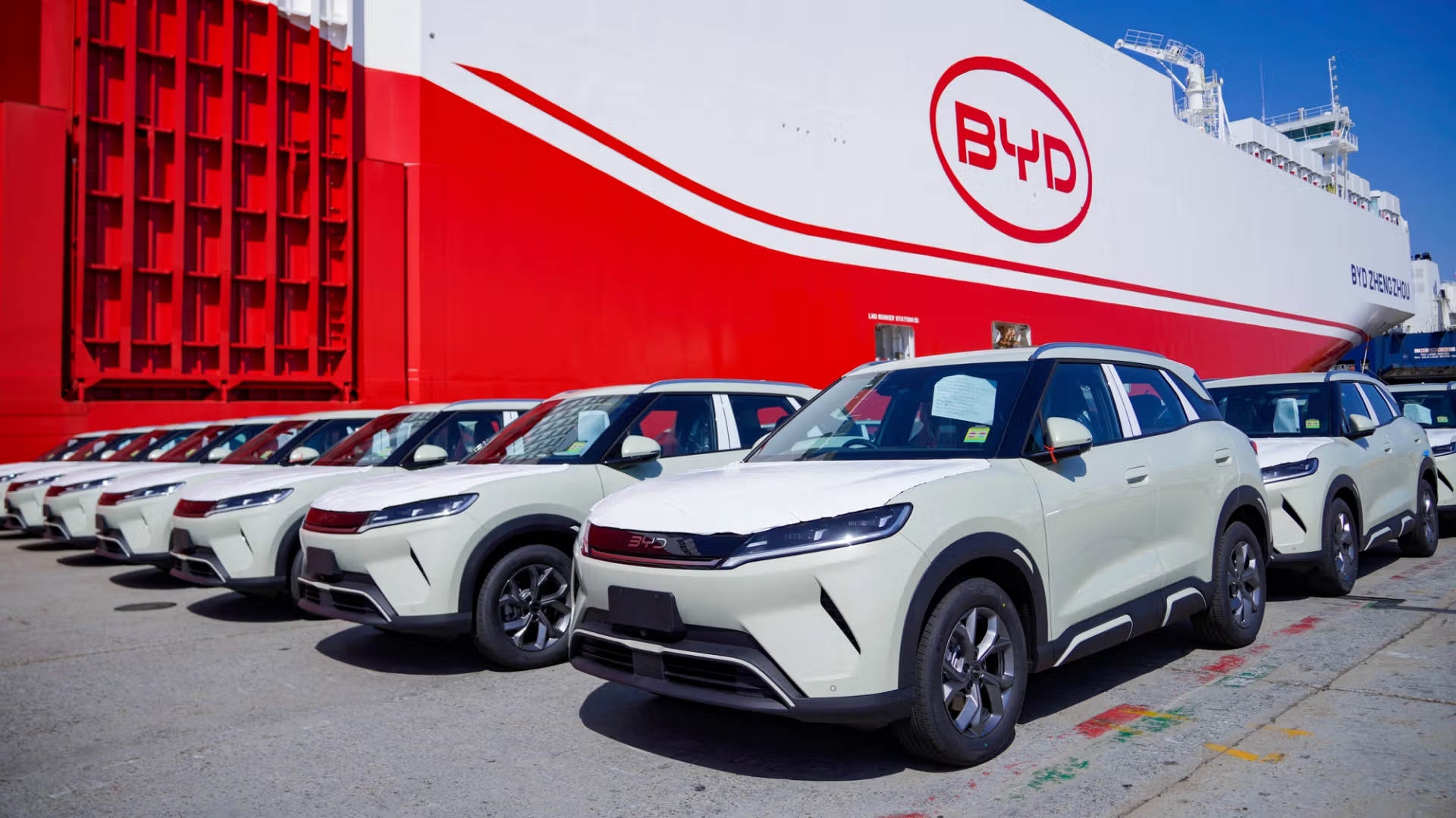
- Chinese automakers overtook Japanese rivals in 39 countries through aggressive overseas expansion and EV focus, driven by domestic competition and rising global EV demand pressuring legacy share.
- BYD, Leapmotor and others helped lift Chinese combined shares notably: Germany 6% (up 2 points), Italy 12% (up 6 points), Brazil 19% (up 10 points); exports 4.472 million NEVs through Oct 2026 (up 139.7%).
- Directly contesting mainstream Japanese volume brands in Europe, Brazil and Southeast Asia, risks include regulatory barriers in the US and India, local production scaling, dealer network gaps and margin pressure from rapid expansion.
Chinese automakers accounted for a larger share of new-car sales than Japanese manufacturers in 39 countries during the first nine months of 2026, according to data from U.S. research firm Mobility Global cited by Nikkei Asia.
China added 14 markets to the list this year, including eight in Europe.
Major automotive markets such as Germany, Italy and the Netherlands were among those where Chinese brands overtook their Japanese counterparts.
The study covers 150 countries and regions but compares the market shares of Chinese and Japanese automakers in only 93 markets where manufacturer-level sales data are available.

The 14 newly overtaken markets are Austria, Belgium, Germany, Italy, the Netherlands, Portugal, Slovenia, Spain, Brazil, South Korea, Iraq, Kuwait, the United Arab Emirates and Tunisia.
In nine of these markets, Japanese brands experienced an absolute decline in market share.
This indicates that Chinese automakers’ gains stem not merely from overall market expansion, but also from directly eroding the market position of established competitors.
In Germany, Europe’s largest automotive market, Chinese brands increased their combined share to 6% in the first nine months of the year, up 2 percentage points from a year earlier. Japanese brands lost 1 percentage point to 5%.
BYD’s sales in Germany more than tripled from the same period last year.
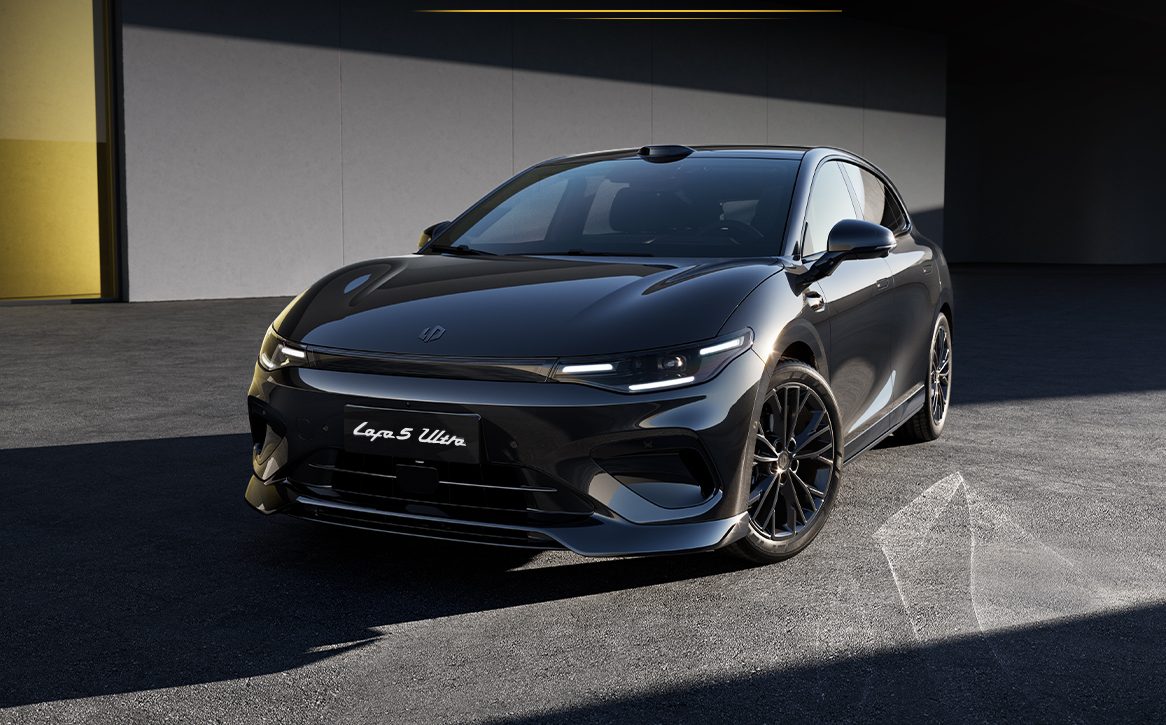
In Italy, Leapmotor helped drive a 6-percentage-point increase in Chinese brands’ combined market share to 12%.

Data from Italy’s automotive industry association ANFIA show that Leapmotor’s electric vehicle sales in the country increased elevenfold in the first nine months of 2026.
The brand captured a 25% share of the EV market. Its partnership with Stellantis has also helped it gradually build out a local sales network.
Outside Europe, developments in Brazil and Southeast Asia offer a clearer picture of how Chinese automakers are challenging Japanese brands in markets where the latter have traditionally held strong positions.
In Brazil, Chinese brands increased their combined market share by 10 percentage points year over year to 19%.
BYD recorded significant sales growth, while its factory in the country, which began production in 2025, is now operational.
The shift is even more pronounced in Southeast Asia. Japanese automakers have long dominated the region through established dealership networks, extensive internal combustion engine vehicle lineups and local manufacturing operations.

However, Japanese brands’ combined share across Southeast Asia fell 6 percentage points to 54% in the first nine months of 2026, while Chinese brands gained 7 percentage points to reach 18%.
In Thailand, Japanese brands’ share dropped 8 percentage points to 56%, while Chinese brands gained 11 percentage points to 32%.
This narrows the gap between the two by nearly 20 percentage points from a year earlier.
The market-share gaps between Japanese and Chinese brands also narrowed by 16 percentage points in Indonesia and 7 percentage points in the Philippines.
Growing demand for electric vehicles has been a major factor behind Chinese brands’ market-share gains. Higher fuel prices have also encouraged some consumers to switch to new energy vehicles.
Japanese automakers, however, have not lost ground across the board.

Their combined market share remains higher than that of Chinese brands in 54 countries, and they continue to rank first in 28 markets, mainly in Southeast Asia, Africa and the Middle East.
Japanese brands hold more than 50% of the market in 16 of those countries. By comparison, Chinese automakers rank first in market share in only 19 countries.
In the United States, demand for hybrid vehicles has helped Japanese brands increase their market share to 32%. In India, Japanese automakers remain in the lead with a 44% share.
Chinese manufacturers face barriers to expanding in both markets due to regulatory constraints and local market conditions.
Meanwhile, intensifying competition in China’s domestic market is pushing automakers to accelerate their overseas expansion.
According to the China Passenger Car Association (CPCA), China’s exports of new energy passenger vehicles reached a cumulative 4.472 million units in the first 10 months of 2026, up 139.7% year over year.
Discover more from ChinaEVHome
Subscribe to get the latest posts sent to your email.