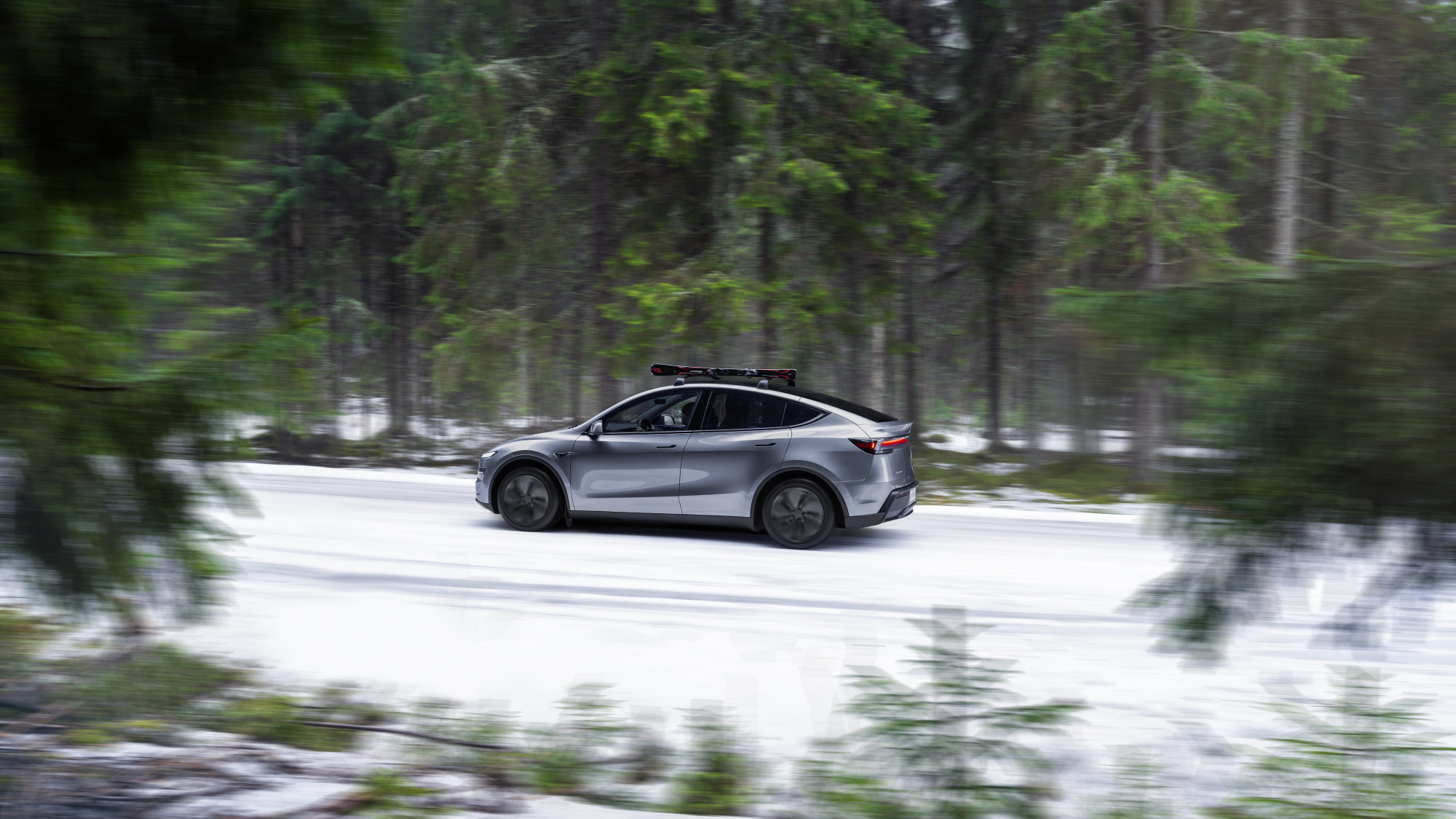
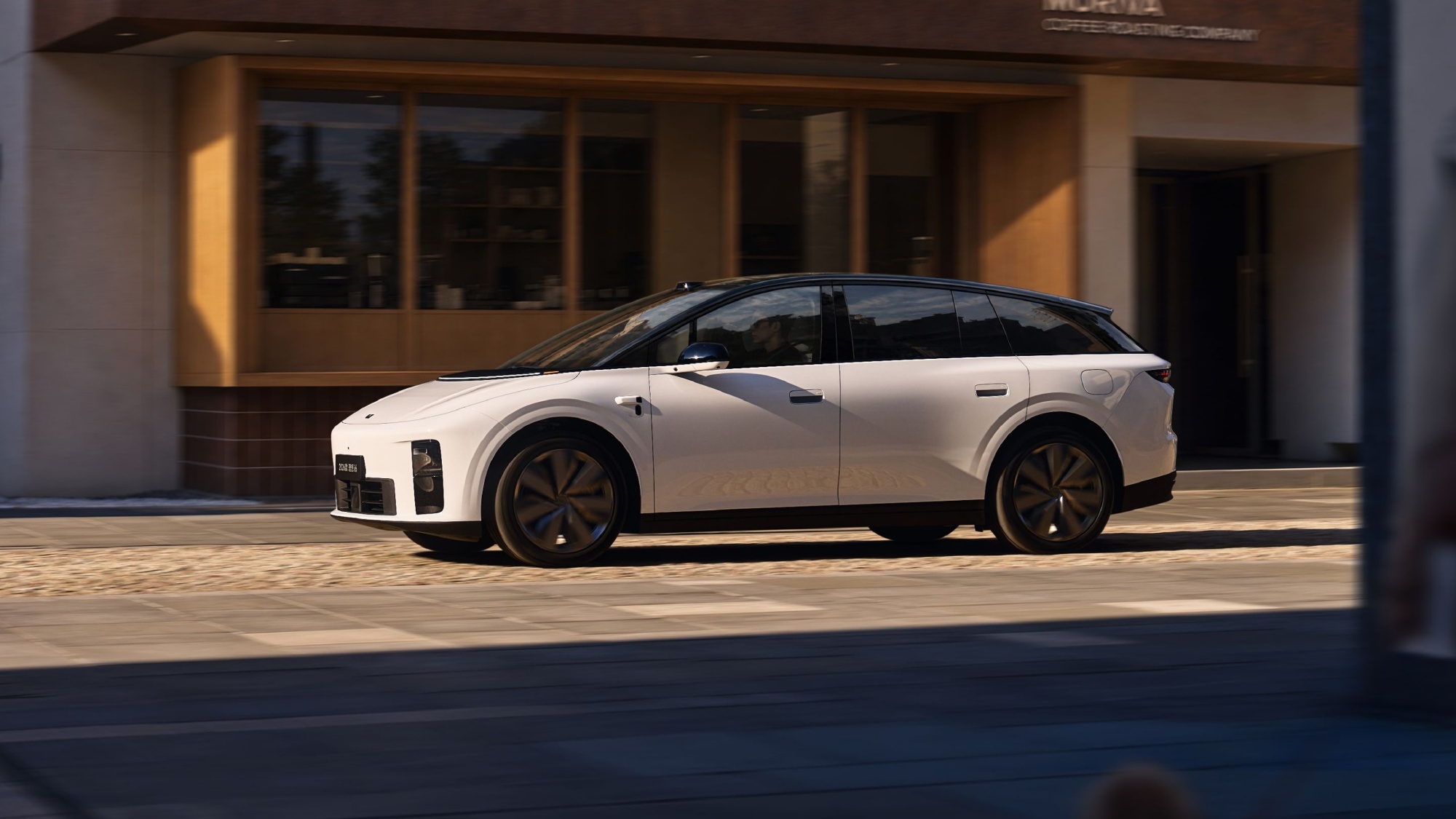
NIO and Li Auto fans clash over design, space, charging, and pricing amid fierce comparisons of the L90 and i8.
After Huawei and Xiaomi dominated the automotive discussion boards for several days, NIO and Li Auto have returned to the spotlight with the debut of the ONVO L90 and the Li Auto i8.
Since the interior renders of the i8 and L90 were released on Tuesday, the new energy vehicle community has witnessed a resurgence of debates between NIO and Li Auto supporters. Over the past few days, the two camps have argued about everything from cabin space and driving range to charging infrastructure—and even stock prices.
The similarities in size, market positioning, and energy replenishment systems between the Li Auto i8 and ONVO L90 have provided ample room for heated comparisons and discussions.
These two models are of significant strategic importance to each brand.
For Li Auto, the i8 marks the brand’s first attempt to scale production of a fully electric vehicle—it must make a strong debut. For NIO, the ONVO L90 is a crucial step toward profitability and serves as a litmus test of the company’s internal restructuring efforts.

Previously progressing along separate paths, Li Auto and NIO now find themselves in direct competition on the pure electric vehicle track. Both brands are eager to prove themselves—and so are their supporters.
People often say “truth emerges through debate,” but after several days of fierce arguments, has a clear winner emerged?
Let’s take a look.
Interiors
This week’s release of interior images for both the Li Auto i8 and the ONVO L90 finally gave fans an outlet for the anticipation built up since February, when both brands unveiled stylized exterior images around the same time.
At first, only a leaked image of the Li Auto i8’s driver-side door was available. Some viewers criticized its overly minimalist design, arguing that it didn’t convey the premium feel expected from Li Auto—especially when compared to the more intricately designed ONVO L90, which is positioned at a lower price point.

In the eyes of some consumers, the ONVO L90 looked like a fully furnished apartment, while the Li Auto i8 resembled a bare-bones version.
Perhaps in response to this perception, Li Auto’s designers released additional interior images. These fueled counterarguments asserting that the i8 had a more refined and structured door panel design, whereas the L90’s intricate lines were seen as cluttered and lacking the elegance of a true luxury vehicle.

Li Auto CEO Li Xiang later posted on Weibo, stating that if interior design is akin to decorating a home, then the i8 is “clearly a relaxing family residence, not a clubhouse, art gallery, five-star hotel, or KTV.” He emphasized that Li Auto prioritizes user needs over innovation for innovation’s sake.

Many interpreted his comments as a veiled criticism of the ONVO L90’s more flamboyant design, sparking a new round of debates. Critics of the i8 began saying that the L90 “looks like a KTV,” which supporters of the i8 then used to deflect claims that their model lacked luxury.

The debate didn’t stop there. Discussions soon expanded to whose ambient lighting was more advanced, and whether the L90’s layout borrowed too heavily from Li Auto’s earlier L9 design—no clear consensus emerged.
By Thursday, July 17, media outlets had released static experience videos of the Li Auto i8. Even when these videos mentioned only minor drawbacks, critics compiled lists of all possible flaws and circulated them widely online.

Although the debate began with interiors, it quickly shifted to the issue of space—arguably the most contentious battlefield.
Space
Which car is more spacious, the Li Auto i8 or the ONVO L90? Over three days, this question yielded conflicting answers.
Before the release of static experience videos for the i8 on Thursday, the general consensus was that the ONVO L90 offered more space. Early comparisons, based on official interior renders and live photos, highlighted headroom differences in the third row, with many pointing out that taller passengers might bump their heads in the i8. Some users even swapped the images of the two vehicles to mock the i8’s perceived spatial shortcomings.

Additionally, the positioning of the second-row seats in the promotional images for the i8 drew criticism during evaluations of the second and third-row layouts.

But the most widely circulated image was a side-by-side silhouette overlay of both vehicles. This rendering showed the ONVO L90 not only featuring a 240L front trunk but also superior legroom and headroom in the second and third rows compared to the i8.

This image even briefly appeared on ONVO’s official WeChat Mini Program, along with a comparison to the Li Auto L8. However, as the image began to gain traction, ONVO quickly removed the content.

Later, the image was scrutinized for potentially exaggerating the differences. While the two vehicles do have trade-offs in size and space, the disparity was not as dramatic as the illustration suggested.
Perhaps as parody or simply for fun, someone later created a similar silhouette comparison between the Li Auto i8 and the RV Vala Pro, humorously implying that passengers in the latter could stand upright.

Until Thursday, the prevailing belief was that the i8’s third-row space was significantly smaller than the L90’s—opposing voices remained fringe until real-world testing began to shift the narrative.
Blogger @63充电中 conducted a side-by-side test of the two models, ensuring consistent seat configurations for fair comparison. His results differed from the early consensus: he found that the i8 had about a fist’s width of knee room and roughly four fingers of headroom in the third row. The L90 had only two fingers of knee room but the same headroom.

Some were surprised—“Didn’t expect the i8’s third row to be larger”—while others pushed back against the results.
In these real-world tests, when the second and third rows were in normal positions, the L90 offered more headroom than the i8, while the i8 had 2–3 fingers more knee room.
The L90’s better headroom comes from its taller build, but its relative lack of knee room stems from a different strength: cargo space.

The ONVO L90, when fully occupied with six passengers, still has room for 10 suitcases between its front and rear trunks. This “something extra” became a new critique against the i8, which lacks a front trunk. Some bloggers also argued that the i8’s rear trunk capacity was inferior to that of the L90.
To give users more rear trunk space, ONVO apparently sacrificed some third-row knee room.
Li Auto supporters countered by questioning the practicality of a front trunk, calling it “innovation for innovation’s sake.” ONVO supporters rebutted with real-world scenarios—fishing trips, scenic outdoor stops, and picnics—to demonstrate the usefulness of extra storage.
Range and Charging Infrastructure
On Thursday, along with the i8 static experience videos, Li Auto also announced the completion of its “9×9 Expressway Grid” ultra-charging network.

This project took 2 years and 3 months to complete and now covers 31 provinces with 18 major highways. Li Auto claims there is one supercharging station every 152 km, for a total of 959 stations.
Li Auto declared that it has the highest number of high-speed supercharging stations among automakers, though this claim is not without controversy.
For example, some commenters on Weibo pointed out that certain stations require drivers to exit the highway or were incorrectly marked. Others suggested Li Auto should provide a clear map of its charging network—like NIO does—so users can better understand where the charging stations are located.
What is undeniable is that after the MEGA model struggled during its launch in March 2024, Li Xiang realized how important the charging experience is for premium EVs. That realization spurred Li Auto to ramp up the rollout of its supercharging network.
Li Auto’s fully electric vehicles now support 5C charging speeds, making fast charging a core part of the battery’s value proposition. As of 5:00 PM on July 18, the company claimed it had 2,892 supercharging stations nationwide.

This robust infrastructure gave Li Auto fans more confidence that the i8 could match—or even surpass—the L90 in terms of range and energy replenishment.
The i8 offers two battery options: 90.1kWh and 97.8kWh, with CLTC ranges of 670km and 720km, respectively. The L90, with its 85kWh pack, delivers 570km or 605km.
When the ONVO brand launched on May 15, 2023, it promised larger battery options in the future—but to date, there has been no further information.
The L90’s smaller battery and shorter range are seen as disadvantages. And now that Li Auto is proactively highlighting its supercharging network, NIO supporters—long touting “battery swapping in three minutes” as their killer feature—have started to push back.
NIO fans were particularly annoyed at Li Auto’s “most supercharging stations built by an automaker” claim.
As of July 9, NIO had built 1,000 high-speed battery swap stations as part of its “Nine Vertical Expressways × Eleven Horizontal Expressways” initiative. Including non-highway stations, NIO now operates 3,403 battery swap stations.

While NIO hasn’t disclosed how many charging stations it operates, it has 26,765 charging piles. Assuming 6 piles per station, that would equal 4,460 stations; assuming 8 piles, that’s about 3,345 stations.
So, who is truly the “infrastructure king”? The debate continues.
Even though Li Auto now has stronger battery range and a rapidly expanding charging network, NIO’s “3-minute battery swap” still fills a gap in ONVO L90’s longer charging time. It remains to be seen how these strategies will balance out.
Stock Prices
Among all the points of debate over the past few days, stock price might be the most puzzling battleground.
On July 17, Li Auto executive @硬哥 posted a screenshot of various Chinese EV stocks. Out of seven brands, only NIO’s stock was declining. He captioned the image with: “What does the stock price tell us?”

To NIO supporters, this post implied that the market lacked confidence in the ONVO L90 and that its buzz was nothing more than fan-driven hype. Meanwhile, Li Auto supporters interpreted the post as evidence that the i8’s product strength had earned market approval. Some fans even emphasized the green downward line in the chart as symbolic proof.

In response, on July 18, NIO supporters posted a counter-screenshot showing NIO, XPeng, Li Auto, and Xiaomi stock trends—this time with Li Auto as the only one dropping. They used the same caption: “What does the stock price tell us?”—turning @硬哥’s message back on Li Auto.

Whenever a new car is unveiled, stock prices are often treated as an early indicator of market reception. However, it’s not uncommon for a model’s sales to run contrary to its stock trend. In reality, stock prices may serve only as a limited reference point, not a definitive verdict.
The Battle Begins
The heated “duel” between supporters of NIO and Li Auto over the ONVO L90 and Li Auto i8 didn’t stop at interiors, space, charging, or stock prices.
Once all core specifications were revealed, the debate expanded to even more technical and strategic fronts:
- The assisted driving hardware and paper specs of the L90 were criticized for being inferior to the i8;
- The L90’s powertrain performance was questioned in comparison to the i8;
- Li Auto i8’s weight control was critiqued;
- Some speculated that Li Auto was deliberately opening showrooms in front of ONVO stores to steal foot traffic.
Every day brought a new argument—no topic was too niche.
This fierce back-and-forth may continue until both vehicles officially go on sale and settle into stable delivery patterns. Only then might the war of words finally die down.
So, who’s winning?
In terms of public attention, both sides benefited this week. The ONVO L90 surprised many with its ¥279,900 ($39,200) pre-sale price, entering a market space usually occupied by higher-end models like the Li Auto i8 and Tesla Model Y L. Meanwhile, the i8 showcased a more distinct identity and refined maturity, earning recognition for evolving Li Auto’s brand language.
But in the end, whether either model succeeds will depend on how the market reacts post-launch.
Discover more from ChinaEVHome
Subscribe to get the latest posts sent to your email.