HIMA and Tesla drive 800+ km EV adoption, with IM LS9 leading range-extenders and market-wide minimum ranges increasing.
On August 8, the latest new vehicles were listed by the Ministry of Industry and Information Technology (MIIT), with this month’s key buzzword for pure EVs being “800+ km” range.
According to the public announcement, the updated Tesla Model 3 single-motor long-range version achieves a maximum pure electric range of 820 km, while the STELATO S9T pure electric version reaches 801 km.
In the range-extender segment, the IM LS9 delivers over 400 km pure electric range, setting a new domestic record.

It is foreseeable that new models launching this autumn will continue to “compete upward” in range: pure EVs targeting 800 km, and range-extender models raising their pure electric range to rival that of pure EVs, enabling “one charge per week.”
In fact, other popular models such as the new XPeng P7 and Xiaomi YU7 have also broken through the 800 km pure electric range mark.
The year 2025 can be seen as the one when pure electric range anxiety disappears from the vehicle side—starting from models priced in the RMB 200,000–300,000 ($28,000–$42,000) segment.
For the second half of the year, which new models will set fresh range records? And which will seize the range advantage in their respective segments? Let’s take a closer look.
Pushing into the 800 km club
Tesla will launch a Model 3 “single-motor + long-range” version, equipped with a 78.4 kWh battery pack and achieving 800–830 km range, matching the current Model 3+ in battery capacity.

Back in 2020, Tesla had already released a “single-motor + long-range” standard version, with a 76.8 kWh ternary lithium battery and 668 km range. However, in 2021, Tesla discontinued this variant.
For a long time thereafter, when other automakers offered the full combo of “single-motor + standard range, single-motor + long range, dual-motor + long range,” Tesla lacked one of the options.
Now, Tesla has finally filled the gap left by the earlier Model 3, and breaking through the 800+ km range mark also means that the Model family’s highest range has entered the “8” era.
This move is understandable—within the RMB 200,000–300,000 ($28,000–$42,000) pure electric sedan market, the Model 3 is being squeezed by competitors such as Xiaomi SU7, Zeekr 007, and IM L6, all of which have long since reached 800+ km ranges.
In the first half of 2025, Model 3 sales in China were 91,919 units, compared to 155,692 units for Xiaomi SU7.
Meanwhile, Harmony Intelligent Mobility Alliance (HIMA) has also kept up the push for longer ranges, steadily bringing more models into the “800 km club.”
For example, the new STELATO S9T comes with a 97.6 kWh battery and a maximum range of 801 km, making it the third 800+ km pure EV under HIMA after the LUXEED R7 and S7.

It is reported that the S9T will be priced between RMB 300,000–400,000 ($42,000–$56,000).
If true, its rivals will include the NIO ET5T and Denza Z9GT. In terms of everyday range, the S9T outperforms the other two.
The ET5T comes with 75 kWh or 100 kWh batteries priced at RMB 298,000 ($41,720) and RMB 356,000 ($49,840) respectively, with a maximum range of 710 km; it can also rent a 150 kWh battery to achieve 1,010 km CLTC range.
The Z9GT is equipped with a 100 kWh battery, 630 km range, and its Pro version is priced at RMB 354,800 ($49,672).
Tesla and HIMA’s product plans are clear, and with more popular models joining in, 800 km pure electric range may soon become a “standard feature” for RMB 200,000-class ($28,000) models.
Super range-extenders spark a new round of competition
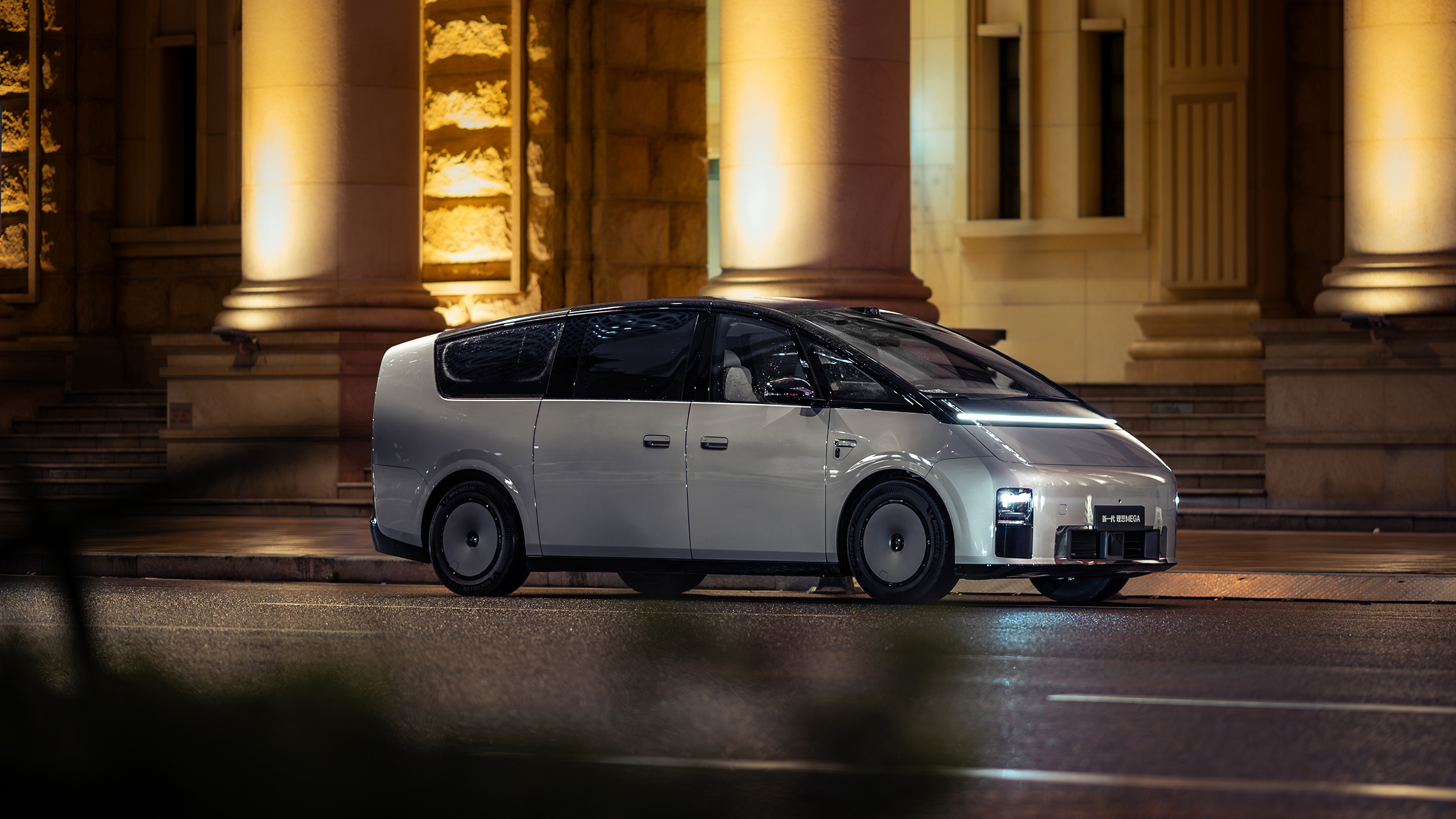
The IM LS9 also appeared on the MIIT list this time, signaling a new wave of range competition in the “super range-extender” segment this autumn.

As a full-size “9-series” range-extender SUV, the LS9 will compete directly with the AITO M9 and Li Auto L9. Its pure electric range in the 400 km bracket could be a decisive advantage.
The LS9 uses a large 65.9 kWh battery for a 450 km range. In comparison, the M9 uses a 52 kWh battery for 290 km, while the L9 has a 52.3 kWh battery for 280 km.
Thanks to its large battery, the LS9 surpasses the M9 and L9 in pure electric range, joining the “400+ km pure electric range-extender SUV” category.
Beyond the LS9, more range-extender models with 400 km pure electric range are coming in the second half. For example, the Zeekr 9X will use a 70 kWh battery for 380 km range and will launch in Q3.
Meanwhile, just hours before publication, the XPeng X9 range-extender officially appeared on the MIIT list.

A picture posted by He Xiaopeng on Weibo showed the X9 range-extender with “450” stickers on the body, leading netizens to speculate that it represents a 450 km pure electric range.
It’s not just high-end range-extenders—models under RMB 200,000 ($28,000) will also see new entries. The soon-to-be-launched Shangjie H5 range-extender uses a 32.6 kWh battery for a 230 km range.

Its rivals include the Leapmotor C11 with a 41.7 kWh battery and 300 km range, and the Sealion 07DM with a 26.6 kWh battery and 150 km range.
In the sub-RMB 200,000 ($28,000) range-extender SUV market, the H5’s pure electric range is average—but even two years ago, 200 km was already considered generous.
With most of 2025 behind us, as these new models roll out, the “minimum” pure electric range offered by automakers will rise further, easing user range anxiety.
By this time next year, we might see standard versions of pure EVs breaking the 1,000 km range barrier and range-extenders surpassing 500 km, continuing to set new records.
Are you satisfied with this new wave of range competition?
Discover more from ChinaEVHome
Subscribe to get the latest posts sent to your email.