XPeng is just one step away from achieving a profitable quarter.
The earnings report released yesterday afternoon showed that in the second quarter of 2025, XPeng:
- Delivered 103,181 new vehicles, a year-on-year increase of 241.6%;
- Achieved revenue of RMB 18.27 billion($2.53 billion);
- Generated automobile sales revenue of RMB 16.88 billion($2.33 billion), a year-on-year increase of 147.6%;
- Attained an overall gross profit margin of 17.3%, compared with 14% in the same period of 2024;
- Reached an automobile gross profit margin of 14.3%, versus 6.4% in the same period of 2024;
- Suffered a net loss of RMB 480 million($66.2 million), down from RMB 1.28 billion($176.7 million) in the same period of 2024;
- Held cash and cash equivalents of RMB 18.81 billion($2.59 billion), compared with RMB 14.25 billion ($196.8 million) in the same period of 2024.
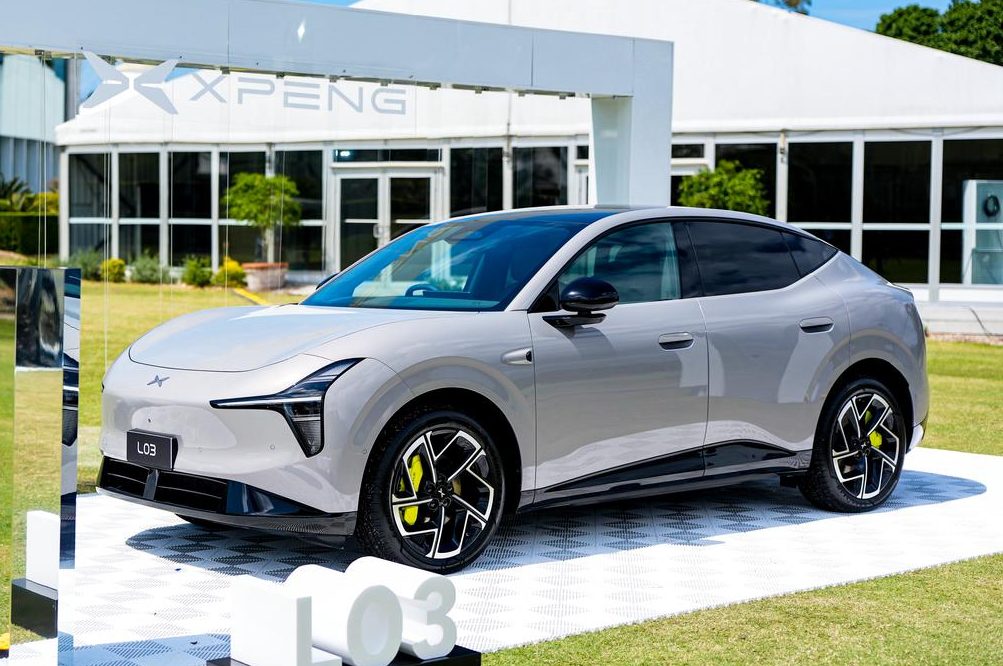
Since the second half of 2024, XPeng has achieved rapid sales growth relying on cost-effective models such as the M03 and P7+. However, the long-term profitability of an automobile company cannot depend solely on mid-to-low-end models, and XPeng is no exception.
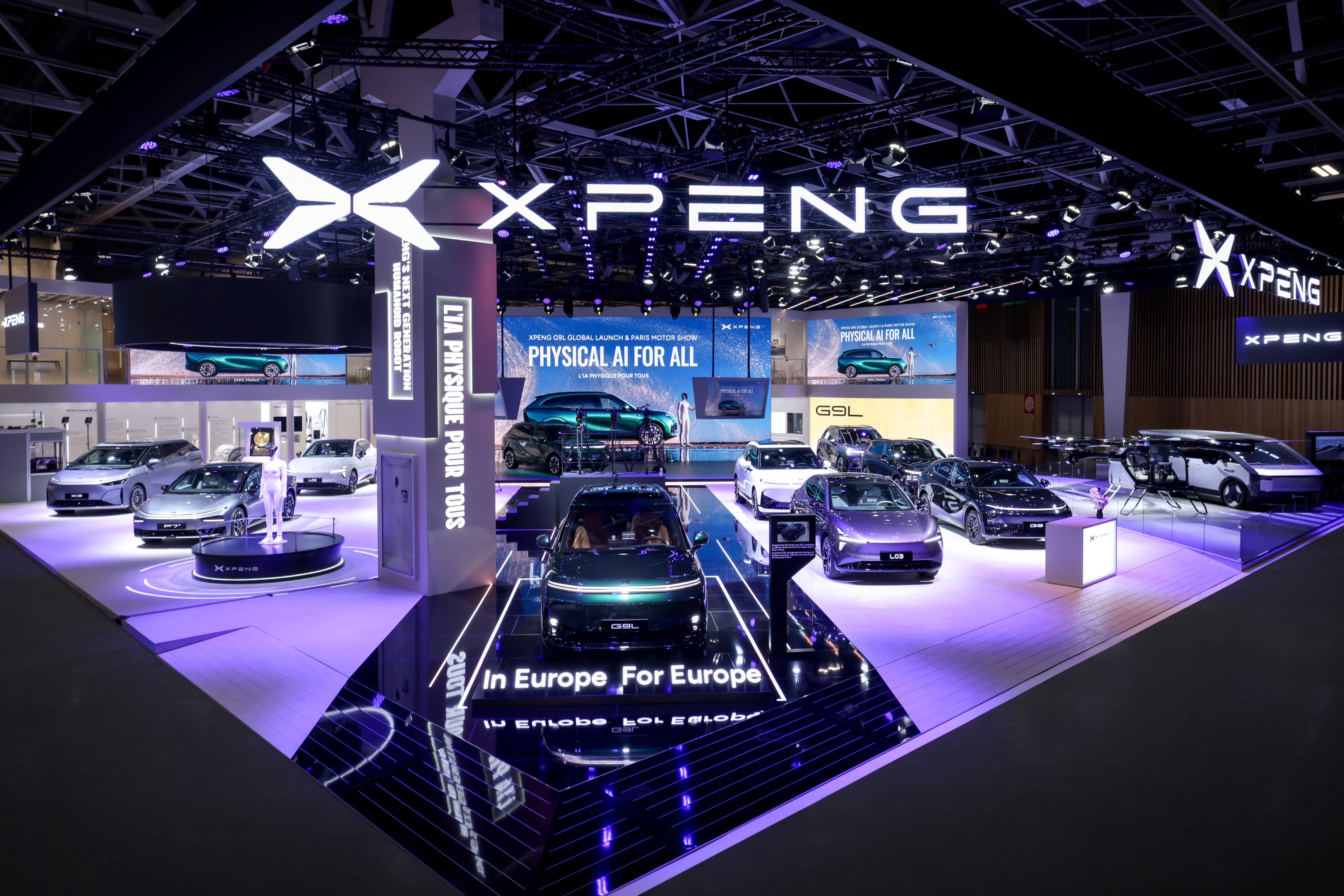
For the remaining part of 2025, XPeng will launch a number of high-end models, including the all-new P7 in the 300,000 RMB ($41,600) class and the extended-range version of the X9 in the 400,000 RMB ($55,500) class, to lay the groundwork for profitability in the fourth quarter and beyond.
In the Chinese market, where cost performance is pursued and “it is easy to move up from the bottom but hard to stay up”, what will XPeng use to build its high-end narrative?
The information revealed at tonight’s earnings conference may be part of the answer.
Reducing Dependence
The significant reduction in XPeng’s net loss is inseparable from the support of software service fees from Volkswagen.
In the second quarter of 2025, XPeng’s service and other revenues reached 1.39 billion RMB ($192.1 million), higher than RMB 1.29 billion($177.8 million) in the same period of 2024 but lower than RMB 1.44 billion($198.6 million) in the first quarter of this year. The net losses for the two periods were RMB 1.28 billion($176.7 million) and RMB 660 million($91.1 million) respectively.
As the application scope of the electronic and electrical architecture jointly developed by XPeng and Volkswagen expands from pure electric vehicles to fuel vehicles and plug-in hybrid vehicle platforms, the revenue life cycle of this project for XPeng may be longer than previously expected.
XPeng acknowledged this in tonight’s earnings conference, stating that “once the vehicles (cooperated with) Volkswagen start SOP, it will basically become XPeng’s third recurring revenue source”.
This revenue helped XPeng achieve an overall gross profit margin of 17% in the second quarter – Goldman Sachs had previously predicted this would happen in the fourth quarter.
However, reliance on Volkswagen’s cooperation fees cannot be a solid foundation for XPeng to enter a positive cycle.

At the same time, when referring to the improvement in gross profit margin in the second quarter, XPeng also stated that it was related to the decline in the delivery proportion of the M03 in the second quarter.
In the second quarter, XPeng launched the M03 Max version starting at RMB 129,800($17,890). Moreover, its higher-positioned G6/7/9 also completed their launches and deliveries. Coupled with the increase in delivery volume, this led to the improvement of XPeng’s overall gross profit margin.
Evidence of this is the change in XPeng’s average price per vehicle. In the second quarter, the average price per vehicle dropped from RMB 225,800($31,150) in the same period of 2024 to RMB 163,600($22,560), which was an increase compared with RMB 152,800($21,030) in the first quarter.
Looking at the increase in both the overall gross profit margin and the automobile gross profit margin of XPeng in the second quarter, it is still inseparable from the replacement and release of higher-positioned models. High-endization is a good remedy for XPeng’s gross profit margin.
Large-scale Implementation of Intelligentization
XPeng has established one of the battlefields for its gross profit margin breakthrough in the commercialization of intelligentization.
Over the past 11 years, even in 2023 when its survival prospects were not optimistic, XPeng still invested RMB 5.277 billion($729.2 million) in research and development, accounting for 17.2% of its annual revenue, which shows XPeng’s emphasis on research and development, especially on assisted driving research and development.
Hundreds of billions of investments need to be effective in fields such as private cars, humanoid robots, and Robotaxis. Therefore, in the next two years, we will see the large-scale implementation of XPeng’s intelligent technology capabilities.

He Xiaopeng revealed at tonight’s earnings conference that starting from the XPeng G7 Ultra and the all-new XPeng P7 Ultra versions to be launched in the third quarter of this year, all Ultra versions of XPeng’s models will be equipped with 3 self-developed Turing AI chips, with an effective computing power of 2250 TOPS, and will deploy VLA+VLM large models.
The effect of this hardware and software configuration is, of course, to widen the gap with competitors in terms of intelligent capabilities.
He Xiaopeng said that the initial version of VLA will start gray-scale push in August, matching the industry’s Max experience. After feedback and iteration of several versions, the year-end version is expected to be significantly improved, and starting from 2025, it will widen the gap with other competitors in the market.
Confidence comes from the accumulation over the past 11 years, as well as He Xiaopeng’s statement that the scale of the model deployed by XPeng on the vehicle side will increase by an order of magnitude, that is, at least 1 billion parameters, and the operating frame rate of the VLA model “will be more than twice that of its peers”.

A smarter “brain” and a more agile “cerebellum” are also the confidence for XPeng to achieve mass production of L4 models in 2026. By then, XPeng will start pilot operations and services of Robotaxi in some regions in China. At the same time, XPeng’s humanoid robot will also start mass production in the second half of 2026.
The AI narrative is becoming a new catalyst for sales and market value for XPeng and global new energy vehicle companies.
Regarding the upward development of its automotive business, XPeng is no longer, as usual, obsessed with technological attributes, but has begun to focus on brand and emotional value.
Sharp Weapon: New P7
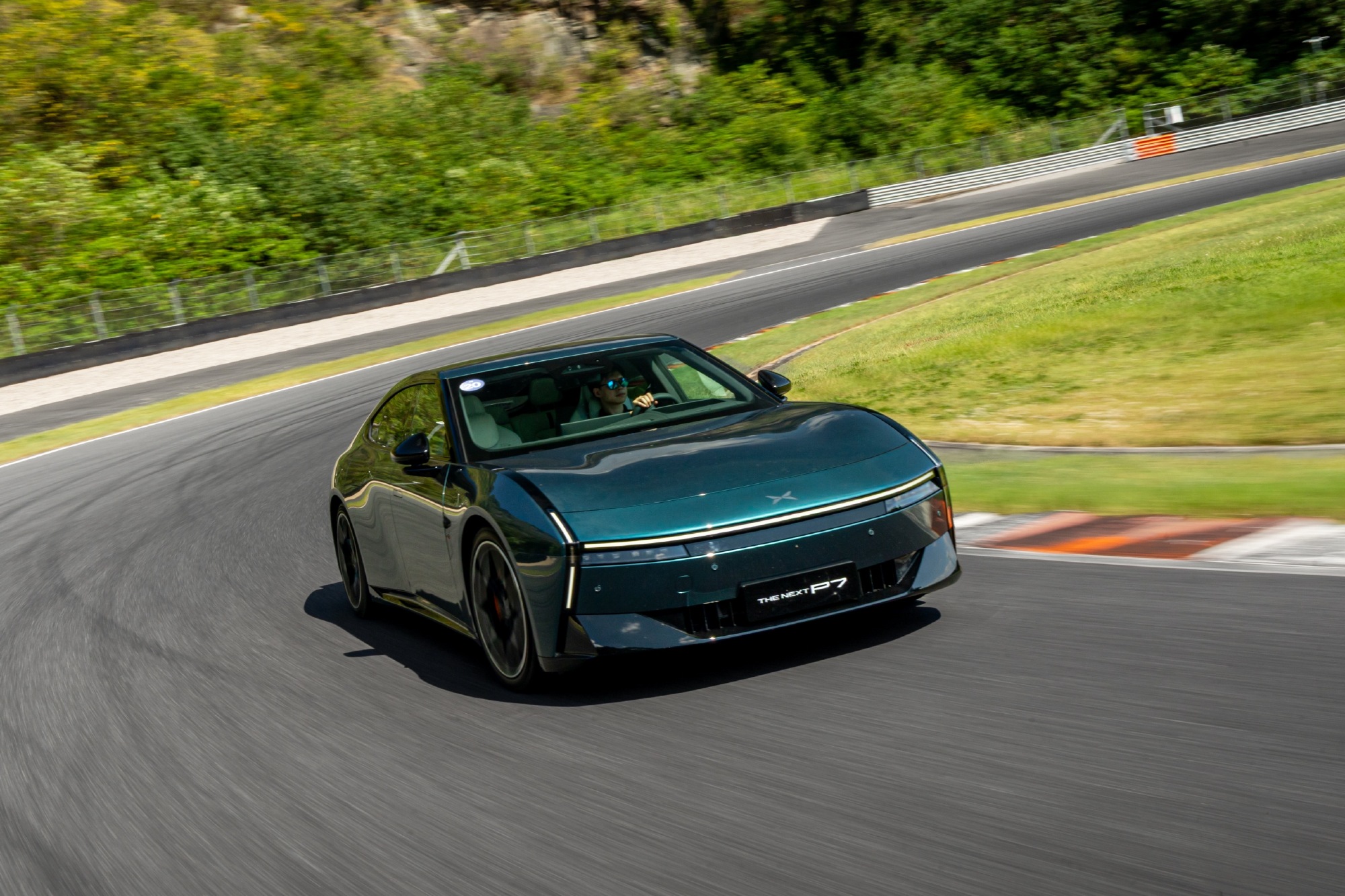
On August 27, XPeng will welcome one of its most important models since 2025 – the all-new XPeng P7.
Its importance comes not only from inheriting the name “P7” but also from XPeng’s new thinking on high-endization and premium.
From the pre-sale conference of the new P7 to tonight’s earnings conference, He Xiaopeng clearly stated that the company’s strategy has shifted from “technology first” to “design first”, and the new P7 is the first result of this transformation.
Its goal is to become a product with leading technology and appearance. To this end, the company has invested heavily in styling teams in Shanghai and Guangzhou, elevating design to a strategic height equal to that of assisted driving.
Coupled with the homologous chassis jointly developed with Volkswagen, the high-level intelligent driving and intelligent cockpit based on Turing chips, XPeng will achieve “dual capabilities in one vehicle” in the new P7, becoming a true “all-rounder” player.

The first reliable result of this strategic adjustment is that He Xiaopeng revealed that the small order data of the new P7 has broken historical records, and the user profile shows a high proportion of men and a younger age group, attracting a large number of potential customers who did not pay attention to XPeng before, achieving a “breakthrough” for the brand.
The mission of the new P7 is to further increase XPeng’s average price per vehicle and gross profit margin with a higher pricing, and it is also an important variable for XPeng to achieve its profit target in the fourth quarter.
He Xiaopeng said that XPeng is confident that “the new P7 can rank among the top three pure electric sedans within 300,000 RMB ($41,600), and among those between RMB 200,000($27,700) and RMB 300,000($41,600)”.
(End)
Discover more from ChinaEVHome
Subscribe to get the latest posts sent to your email.