In September, Tesla’s Model Y led new energy SUV sales, with BYD’s Sea Lion 06 and Xiaomi’s YU7 following closely.
Compared with the sedan segment, the monthly ranking of new energy SUVs remains more stable. The list of top 10 models in September was identical to August’s, with only minor shifts in position.
Tesla maintained its end-of-quarter momentum as the Model Y widened its lead, delivering 51,173 units, nearly doubling BYD’s Sea Lion 06, which ranked second with 30,532 units, reinforcing its commanding position.
Not only did the Model Y and Sea Lion 06 post strong performances, but Xiaomi’s YU7 also achieved a milestone — buoyed by the ramp-up of its Phase II plant, its monthly sales surpassed those of the SU7 for the first time, becoming Xiaomi’s new bestseller. Meanwhile, BYD’s Yuan UP gained traction with a newly launched RMB 74,800 ($10,500) variant, boosting monthly sales.
Other models such as the HIMA-backed AITO M8 and Leapmotor C10 remained steady, while BYD Song Pro and Li Auto L6 saw year-on-year declines, signaling that model upgrades or dealer incentives may be needed to sustain competitiveness.
So, who were the winners among new energy SUVs in September?
Here’s what the data reveals.
No. 1 Tesla Model Y: 51,173 Units

As always, Tesla’s end-of-quarter push delivered results.
In September, Tesla Model Y sales surged 29.8% month-on-month and 6.2% year-on-year, marking the 18th consecutive month as China’s best-selling SUV. The Model Y outpaced the runner-up BYD Sea Lion 06 by more than 21,000 units.
While its dominance is no surprise, an unexpected development came on October 17, when Tesla announced that the Model Y L’s estimated delivery date was now set for December 2025, adding that its Shanghai Gigafactory “is in the midst of an expansion drive.”
No. 2 BYD Sea Lion 06: 30,532 Units

Entering its second full delivery month, the BYD Sea Lion 06 ramped up its challenge to Tesla.
The model sold 30,532 units in September, a 20% month-on-month increase, ranking as China’s No.2 SUV overall. Of that total, 20,956 were pure electric and 9,576 plug-in hybrids — underscoring its “EV-led, hybrid-assisted” strategy.
As the successor to the Song PLUS, whose peak monthly sales exceeded 50,000 units, the Sea Lion 06’s current 30,000-unit performance may only be the beginning.
No. 3 BYD Yuan UP: 25,919 Units

Unlike its more volatile sedan lineup, BYD’s SUV portfolio continues to grow steadily.
The Yuan UP recorded 25,919 units in September, up 31.9% month-on-month and 61.8% year-on-year, cementing its dominance in the sub-RMB 100,000 ($14,000) EV SUV segment. It now trails only the Model Y, Sea Lion 06, and Geely Boyue L in total SUV sales.
The RMB 74,800 ($10,500) “Navigator Edition” with a 301 km range, launched in August, significantly lowered the entry price, fueling the surge. With year-end approaching, the Yuan UP may soon target 30,000–40,000 monthly sales.
No. 4 Xiaomi YU7: 22,369 Units

In September, Xiaomi YU7 outsold its sibling SU7 for the first time, delivering 22,369 units, a 35.2% monthly increase, becoming Xiaomi Auto’s new volume leader.
Since its June 2025 debut, cumulative sales have topped 47,000 units, reflecting strong market demand.
The rise is closely tied to the start of production at Xiaomi’s Phase II factory, which began operations in September with an initial monthly capacity of 25,000 units — 60% higher than Phase I. Xiaomi has stated that once line optimization is completed, capacity could reach 40,000 units per month in Q4, shortening delivery wait times.
No. 5 HIMA AITO M8: 21,244 Units

The Huawei-backed AITO M8, part of the Harmony Intelligent Mobility Alliance (HIMA), maintained stable performance with 21,244 units sold in September, slightly below 21,537 in August.
Since its May debut, the M8’s monthly deliveries have remained steady at around 21,000 units, with total deliveries now exceeding 70,000. The current order lead time remains four to seven weeks.
The M8 Pure Electric version, whose production began at the Chongqing Super Factory on September 8, delivered 2,448 units in its first month, reaching 15 cities including Changsha and Shanghai. With the new M7 now in market, the question is whether the M8 can sustain its pace.
No. 6 BYD Song Pro: 13,542 Units

The Song Pro sold 13,542 units in September, up 6.8% month-on-month but down 7.5% year-on-year. Anticipation of a model refresh and dealer incentives may have influenced sales.
Facing growing competition from models like Leapmotor C10 and Geely Galaxy L7, BYD has been expanding its county-level retail network across China’s central and western regions.
A new Song Pro variant will launch on October 23, featuring 71 km, 75 km, and 115 km all-electric ranges — aligning with China’s updated purchase tax exemption policies and the broader market shift toward longer-range plug-in hybrids.
No. 7 Deepal S05: 13,163 Units

The Deepal S05 saw its best month since launch, with 13,163 units sold in September, up 68.6% month-on-month.
Its success was driven by the new Long-Range Edition priced from RMB 129,900 ($18,230), offering 620 km of range, a 2.88-meter wheelbase, and standard DEEPAL AD PRO driver assistance — strengthening its position against BYD Yuan PLUS and Geely Galaxy E5.
Deepal also expanded internationally: the S05 officially entered the European market in September, priced from €28,990, becoming the brand’s second European model after the Deepal 07.
No. 8 Leapmotor C10: 12,663 Units

Leapmotor C10 sold 12,663 units in September, down 5.4% month-on-month but up 76.4% year-on-year, marking its fifth consecutive month above 10,000 units. The C10 accounted for 21.2% of Leapmotor’s total sales, ranking as the top-selling mid-size SUV among emerging EV brands.
Leapmotor’s September promotions — including up to RMB 17,000 (2,385) in final-payment credits and RMB 5,000 ($702) per-unit financing subsidies — helped boost overall deliveries to 60,000 units.
Exports also hit a record of 6,888 vehicles shipped abroad in September, led by the C10, B10, and T03 models, which together contributed 6,855 units.
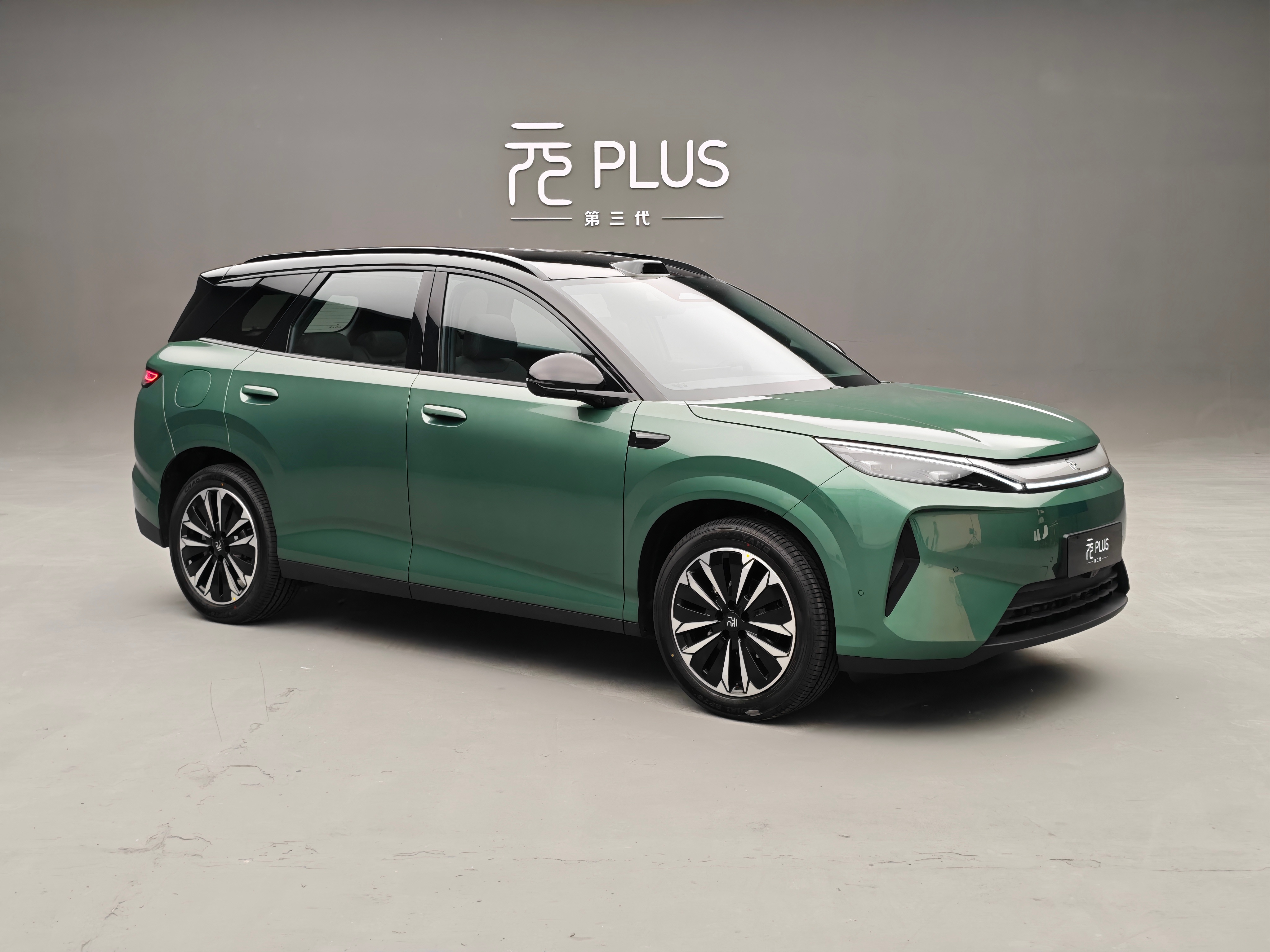
No. 9 BYD Yuan PLUS: 12,661 Units

The Yuan PLUS achieved 12,661 units in September, up 5.6% month-on-month but down 50.5% year-on-year.
Despite the decline, it remained ninth among all NEV SUVs, maintaining strong competitiveness in the RMB 100,000–150,000 ($14,030–21,050) segment.
Facing intensifying market rivalry, BYD plans to enhance the Yuan PLUS lineup. A new model appeared in the October MIIT filing, featuring a 230 kW motor (up from 150 kW) and a top speed increase from 160 km/h to 180 km/h — one of BYD’s most notable new entries this month. However, BYD has yet to announce a launch date.
No. 10 Li Auto L6: 12,325 Units

As Li Auto’s current volume anchor, the L6 sold 12,325 units in September, up 9.9% month-on-month but down 51.5% year-on-year, representing 36.3% of Li Auto’s total sales.
On September 10, Li Auto rolled out its VLA Driver Model via OTA to AD Max versions, significantly upgrading autonomous driving capabilities.
However, L6 sales were partially affected by the debut of the Li Auto i6, launched on September 26 at the same starting price of RMB 249,800 ($35,050).
Together, the L6 and i6 are expected to form the backbone of Li Auto’s sales momentum in the coming quarters.
Discover more from ChinaEVHome
Subscribe to get the latest posts sent to your email.