According to Jacky, 99% of XPeng’s new vehicles use LFP batteries, maintaining a zero-fire safety record since the brand’s inception.
Since early October, EV battery safety has regained public attention, amplified by Li Auto’s MEGA fire incident. High-energy-density ternary lithium batteries offer longer range but raise safety concerns.
Unlike many high-end EVs still relying on ternary lithium, XPeng continues to focus on the lithium iron phosphate (LFP) route. On October 27, Jacky, XPeng’s Senior Director of Powertrain, addressed public concerns about battery safety on Weibo.

Jacky stated that 99% of XPeng’s vehicles use LFP batteries, maintaining a zero-fire record since the brand’s founding. Over the past five years,
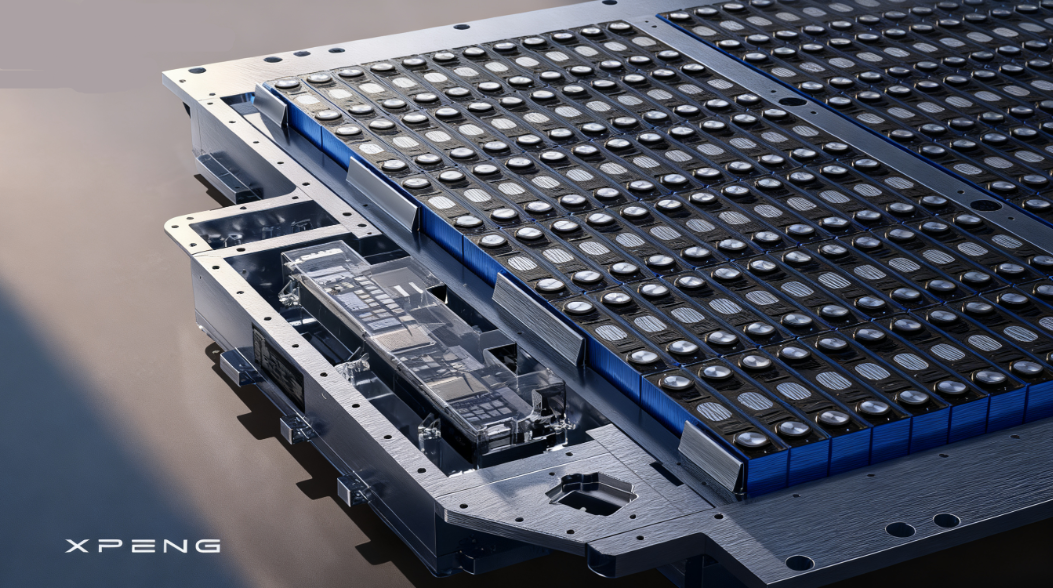
XPeng has completed full-stack R&D on battery packs, covering hardware and software, designing all packs to 10 times national standards, capable of withstanding thermal runaway for 24 hours without fire or explosion.
XPeng’s battery packs feature a 4-3-4 three-dimensional structure, with side collision resistance up to 80 tons and bottom impact tolerance of 2000J.
Coupled with an AI battery management system monitoring over 2,500 signals per second and 14 AI predictive strategies, risks can be detected up to three months in advance.

Regarding charging performance, XPeng’s 5C ultra-fast LFP battery improves charge speed by 30% while reducing fire risk through materials and system-level design. AI management regulates temperature and current, allowing fast charging across the full temperature range without lithium plating.
Notably, the upcoming X9 EREV version will debut this battery, supporting 2,000 charge cycles with minimal degradation and achieving the lowest energy consumption among hybrid MPVs.
According to ChinaEV Home, the X9 EREV model features a 63.3 kWh battery and 60L fuel tank, offering a combined range of 1,602 km, verified under rigorous global conditions.

Traditionally, LFP batteries were seen as safe but limited in energy density and charging speed, constraining their use in mid- to high-end vehicles.
XPeng’s approach seeks to break this perception by enabling fast charging while maintaining safety, offering a potential new direction for future EV battery development.
Next-generation solid-state batteries are advancing rapidly but remain some years from mass deployment. In the meantime, balancing performance and safety remains a critical challenge for automakers.
Discover more from ChinaEVHome
Subscribe to get the latest posts sent to your email.