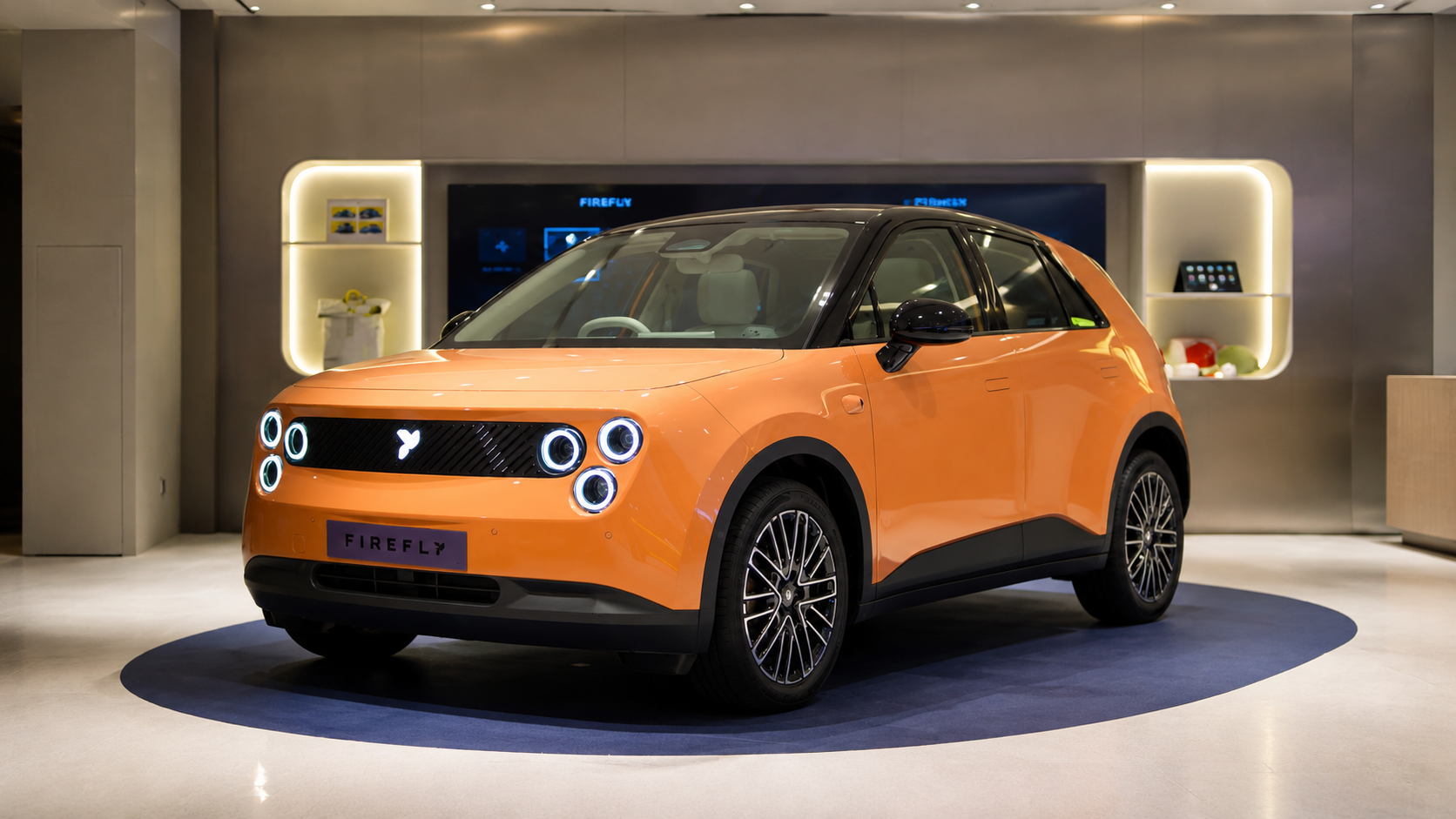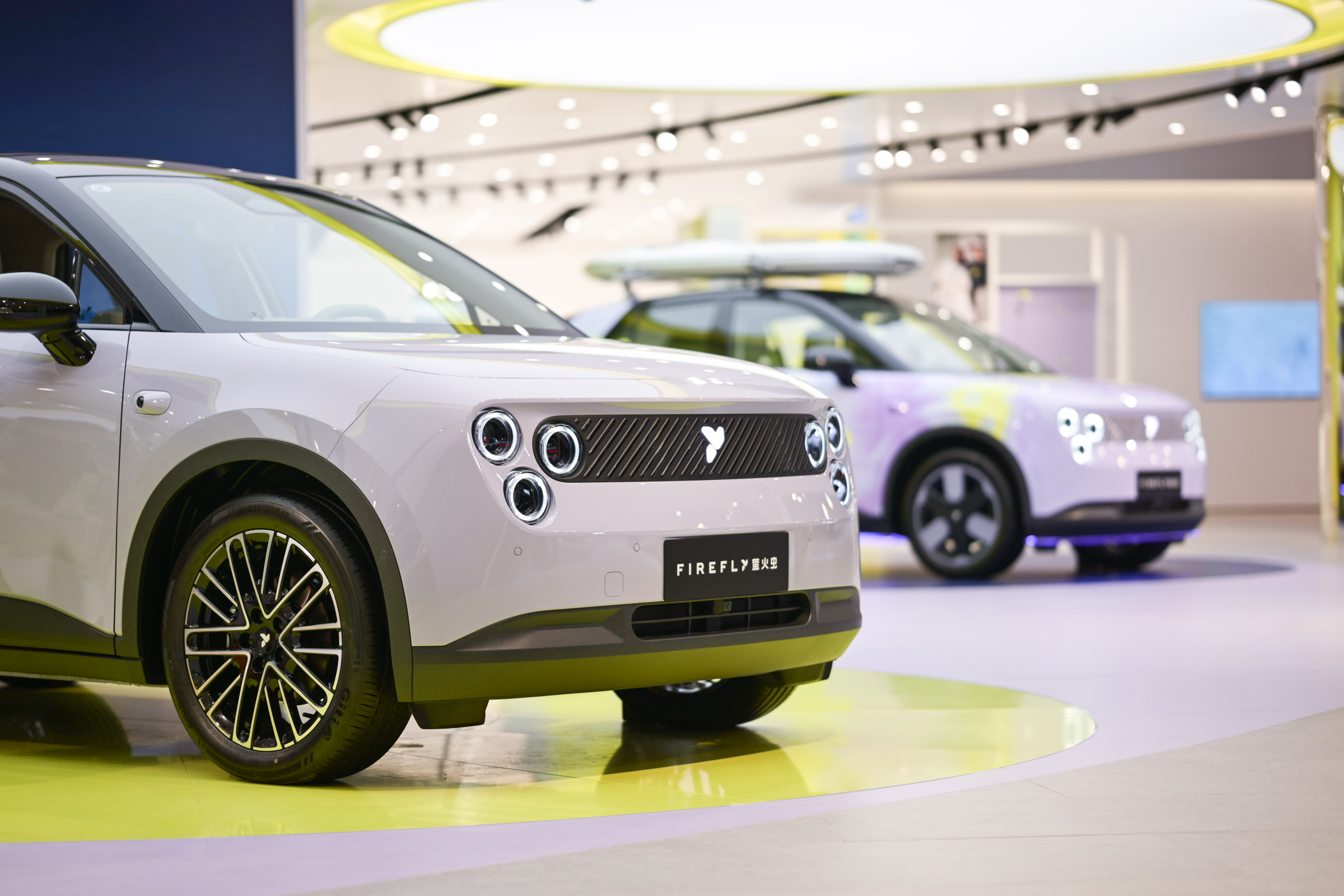
After proving itself in China, Firefly is now shifting its focus outward — and its global push is about to accelerate.
Firefly, NIO’s small EV sub-brand, has come a long way in less than a year. What began with widespread skepticism over its “triple-beam headlights” is now a steady rise in deliveries: from over 3,600 units in May to 5,912 in October, surpassing the combined totals of the MINI, Smart and VW ID.3 in China.

Domestic performance shows Firefly made the right product bet.
But as a model designed from day one for global markets, the real question has always been: how will it expand overseas?
Yesterday, Firefly released a short video featuring NIO VP and Firefly President Daniel Jin, announcing that the brand’s first right-hand-drive vehicle has rolled off the production line and will soon be shipped to Singapore.

In the video, Daniel said this milestone means Firefly now has full global adaptability — becoming, in his words, a “true global premium small-car brand.” He also confirmed that Firefly will accelerate its international rollout in 2026.

But how will that rollout happen? Where does it begin? At what price point? And with what advantages?
Two days ago, ChinaEV Home sat down with Daniel Jin at NIO’s headquarters in Shanghai for a relaxed, candid conversation about Firefly’s global strategy.
Daniel explained that Firefly originally planned to debut in Europe first, but geopolitical tensions between China and Europe became evident as early as early 2023. In July that year, Europe announced additional tariffs. Firefly then adjusted its global launch order — leading to the revised timeline of “China in April, Europe in August.”
With domestic sales now stabilizing around 6,000 units per month, Daniel said “going global” has become a more urgent priority.

Compared with combustion vehicles, EVs have a shorter commercial lifecycle — roughly two years before the next iteration. “Entering a market one month later is essentially losing one month of viable sales,” he noted. “That’s why we want to open more markets as soon as possible next year.”
As for where Firefly will go first, Daniel made it clear Europe remains a central focus. The global small-car segment is about 15 million units a year — and Europe alone accounts for roughly 5 million.
Markets outside the EU tariff zone, such as the UK, are just as important since Firefly faces a 20% tariff when entering the EU.

Firefly will prioritize markets without punitive tariffs, while also advancing in Southeast Asia, South America and Central America.
At the upcoming Guangzhou Auto Show, Firefly will announce its Southeast Asia timeline.
In Europe, Firefly will enter Luxembourg, Austria, Greece and Portugal from Q4 2025 to Q1 2026, and accelerate expansion in countries where NIO already operates direct stores, including Germany, Denmark and Sweden.
Deliveries have already begun in the Netherlands, Norway and Belgium.
We asked Daniel where Firefly expects its first overseas “breakout market” — the place where strong sales can create spillover effects.
He said that if he had to pick one country in Europe, it would be the UK.
The reasons were straightforward:
• It’s a right-hand-drive market;
• There are no punitive tariffs;
• Local small-car brands are weak, leaving space for new entrants.
“And the UK is MINI’s birthplace — our relevance to MINI and Smart is even stronger,” he said. “We hope the UK becomes our breakthrough market.”

For Southeast Asia, Daniel believes there is potential but limited volume, given the region’s lower purchasing power.
As for rumors of a range-extended version for the Middle East, he clarified that Firefly had done early research, but it won’t proceed.
On distribution strategy, Firefly also made adjustments. The team initially considered a fully direct-sales approach, but soon realized it would be too slow, too capital-heavy and inefficient.
Now the brand uses more flexible combinations:
direct sales + exclusive national distributor model,
direct sales + general distributor/agent,
and even direct sales + dealer networks in some markets.
Daniel emphasized that no matter the partnership model, Firefly strictly enforces its brand CI/VI and store design guidelines to maintain a consistent brand image.
Many national distributors are willing to build new stores — partly because they expect to handle NIO, ONVO and Firefly together. Store standards are based on NIO’s requirements.
He added that using national distributors also helps Firefly enter the leasing segment more easily, which is the dominant vehicle acquisition method in many overseas markets.

On pricing, Daniel noted that Europe’s 20% tariff significantly affects Firefly’s competitiveness. Originally, Firefly could have been priced at €25,000–€26,000 — “almost unbeatable” in Europe.
But tariffs forced a “one price per country” approach, with an average price of around €29,900, which he says still carries competitive strength.
With right-hand-drive production underway, distribution channels taking shape, and multiple regions opening simultaneously, Firefly’s global expansion has only just started to accelerate.
Discover more from ChinaEVHome
Subscribe to get the latest posts sent to your email.