China’s used-car disposals reached 921,000 units in November, up 9.3% month-on-month but still 5.3% lower year-on-year.
On December 2, the China Automobile Dealers Association and Jingzhengu released the China Automobile Value Retention Report (November 2025).
With year-end purchase-tax adjustments approaching, demand has been partly stimulated, while dealers and financial institutions have been actively pushing transactions.
Used-car disposals reached 921,000 units in November, up 9.3% month-on-month but still 5.3% lower year-on-year.
Against the backdrop of rapid new-car iteration and ongoing official price reductions, overall used-car value retention continued to weaken. Small cars were the only segment to post an increase, rising to a 53% retention rate.

Value retention across luxury brands also slipped. Porsche continued to lead with a 64.6% retention rate, though slightly down from 66.2% in the previous month. Land Rover continued its steady upward trend in the overall ranking.
As luxury brands accelerate electrification, residual support for older combustion-engine models has eroded further, speeding up depreciation in the used-car market.
Notably, Tesla ranked mid-pack among EV brands, outperforming several established ICE brands.

Mainstream joint-venture brands delivered mixed results. Toyota’s value retention rose to 54.9%, supported by its growing lineup of electrified models.
Kia’s Sportage regained attention in the used-car market, lifting the brand’s overall retention rate to 51.3%.
French brands Citroën and Peugeot also bounced off recent lows, rising to 48.4% and 45.4%, respectively.

Chinese self-owned brands were relatively less affected, with their new-energy transformation beginning to show results.
BYD and NIO saw notable improvements in November, reaching 45.2% and 40.5%.
Among leading domestic brands, GAC Trumpchi and Tank continued to hold steady, with retention rates of 55.8% and 55.5%, matching last month’s levels.
Leapmotor and Wuling, benefiting from lower new-car pricing, raised their retention rates to 44.4% and 43.9%.

New-energy used-cars continued to face intense pricing pressure from the new-car market. BEV retention declined from 42.0% in October to 41.3%, while PHEVs fell from 43.7% to 42.4%, marking notable drops.
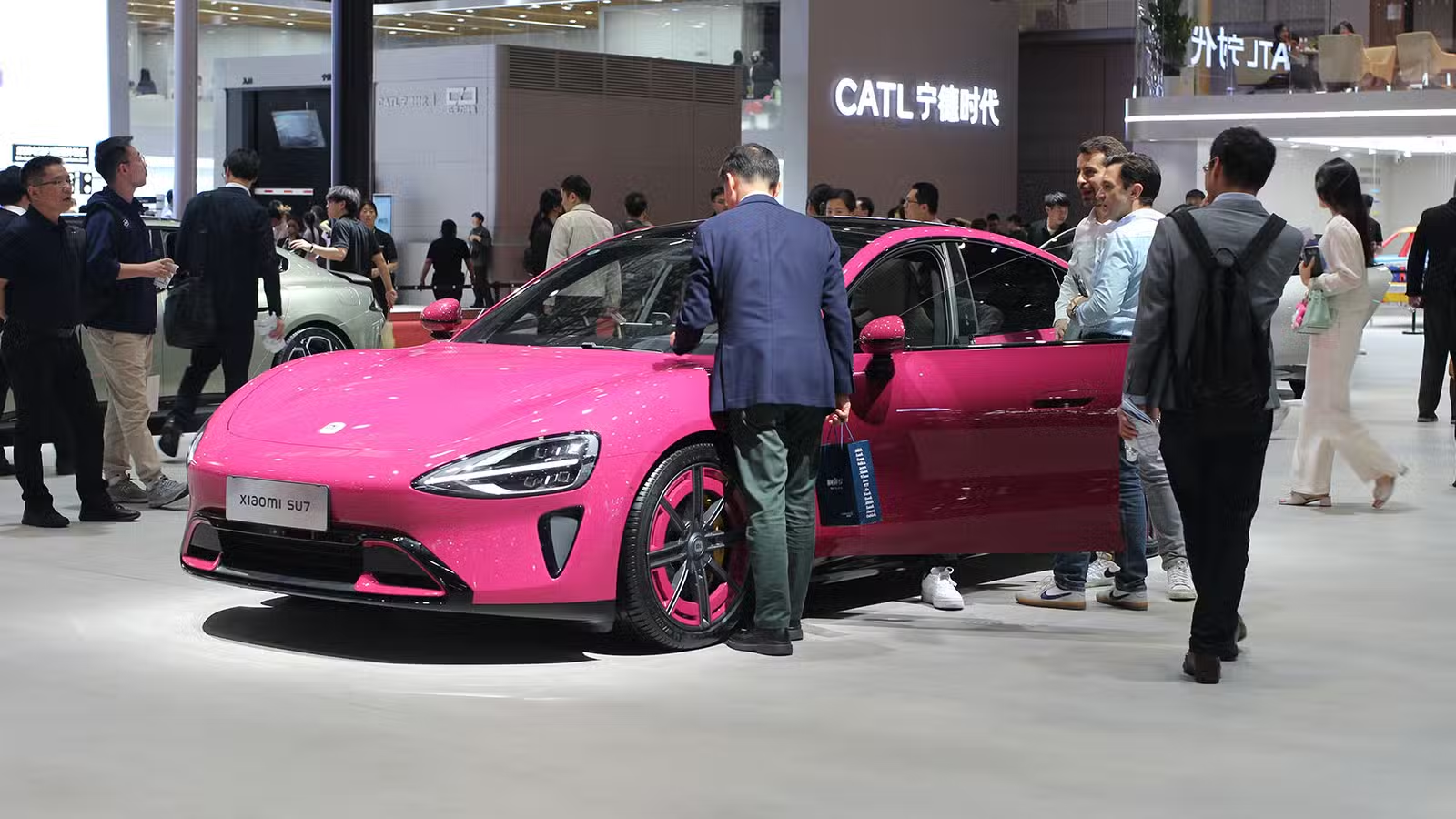
Among one-year-old BEVs, domestic brands dominated the Top 15 list. Xiaomi SU7 led with an 81.5% retention rate, followed by Aito M9 at 81.3% and Li Auto MEGA at 79.1%.
For three-year-old BEVs, the Tesla Model 3, Porsche Taycan, and Denza D9 ranked top three with retention rates of 52.2%, 51.8%, and 48.9%.

In the PHEV segment, domestic brands continued to dominate the monthly rankings, with SUVs making up the majority.
Among one-year-old PHEVs, the Aito M9, Cayenne E-Hybrid, and Tank 700 New Energy led with retention rates of 82.2%, 81.6%, and 78.8%.
Among three-year-old PHEVs, luxury brands retained their advantage, with the Cayenne E-Hybrid and Panamera E-Hybrid leading at 55.6% and 54.6%, while the Li Auto L9 fell from the top spot in October to third place, declining to 52.0%.

Overall, the continued loosening of the new-car pricing system is exerting deep pressure on the used-car market, with brand positioning and the pace of electrification emerging as key factors shaping retention performance.
With purchase-tax adjustments imminent, volatility in the year-end used-car market remains worth watching.
Discover more from ChinaEVHome
Subscribe to get the latest posts sent to your email.