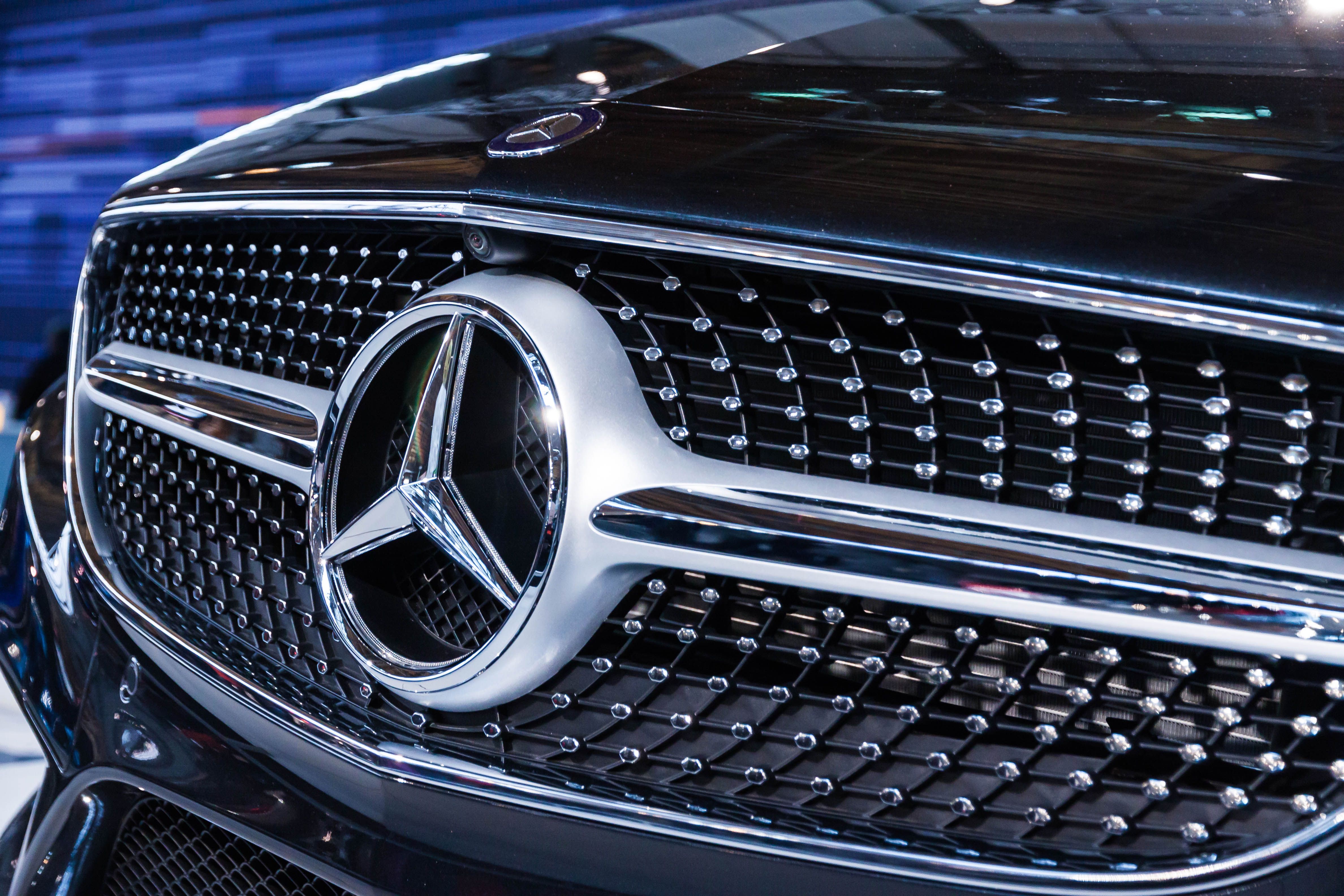
- Mercedes-Benz reportedly halted China production of the CLA L EV after just 627 sales in H1 2026.
- CLA L EV’s premium hardware and 866km range failed to beat Chinese rivals on smart features and space.
- Weak launch exposes luxury brands’ struggle to match China-focused software, ADAS, and cockpit ecosystems.
Mercedes-Benz has reportedly suspended production of its China-made CLA L electric vehicle, according to German automotive media MBPassion, though the company has not confirmed the move.
MBPassion reported that Beijing Benz, Mercedes-Benz’s joint venture plant in China, recently stopped production of the CLA L EV. Mercedes-Benz has not yet commented on the report. It remains unclear whether the production halt is temporary or whether output will resume.
The report said sluggish sales may be a key reason behind the potential production adjustment.

Data showed that since the CLA L EV launched in China at the end of 2025, the model recorded only 627 units in sales during the first half of 2026.
Monthly sales stood at 35 units in January, 21 units in February, before briefly rising to 358 units in March. Deliveries then dropped to 52 units in April and 161 units in May, with no new registrations recorded in June.
The CLA L EV was positioned as a key new energy vehicle for Mercedes-Benz in China, with expectations to strengthen the automaker’s EV competitiveness. However, its six-month market performance highlights the challenges facing the model in the world’s largest EV market.
The CLA L EV is the first China-made model based on Mercedes-Benz’s new MMA (Mercedes Modular Architecture) electric platform. It is also Mercedes-Benz’s first EV featuring an extended wheelbase specifically designed for Chinese consumers.

Built on the overseas CLA platform, the China version received localized upgrades. The vehicle measures 4,763mm in length with a 2,830mm wheelbase, extending the wheelbase by around 40mm compared with the global version to better meet Chinese consumers’ demand for rear-seat space.
The CLA L EV is equipped with an 89kWh battery pack, delivering a maximum CLTC range of 866km. It uses an 800V high-voltage architecture, supporting up to 325kW DC fast charging. Mercedes-Benz said the model can add around 370km of range within 10 minutes.
The CLA L EV is priced between RMB 229K ($33.8K) and RMB 285.6K ($42.2K).
On paper, the CLA L EV combines Mercedes-Benz’s brand appeal, an 800V platform, and long-range capability. However, its weak sales reflect the rapid evolution of China’s EV market as consumer priorities shift.

In the RMB 200K-300K ($29.5K-$44.3K) electric sedan segment, rivals such as Xiaomi SU7, Denza Z9GT, and XPeng P7 also offer 800V platforms and large-capacity batteries, while gaining advantages in smart features, cockpit experience, and vehicle space.
Chinese consumers now have a wide range of local EV options in this price range. Mercedes-Benz’s brand premium alone is no longer enough to secure strong competitiveness.
At the same time, the brand advantage Mercedes-Benz previously relied on in China is facing growing pressure from new energy competitors.
The cooling response to the CLA L EV reflects a broader challenge for traditional luxury automakers transitioning into China’s EV market.
Chinese consumers are shifting attention from brand recognition and vehicle size toward intelligent driving, smart cockpit ecosystems, OTA updates, and battery-electric powertrain technologies. These areas have become core strengths for Chinese EV companies in recent years.

Companies including BYD, Huawei, XPeng, and Li Auto have already brought advanced driver assistance systems and smart cockpit technologies into models priced below RMB 200K ($29.5K).
By comparison, traditional luxury brands are still building software capabilities, localized R&D systems, and intelligent vehicle technologies, leaving them behind in the race.
For Mercedes-Benz, the CLA L EV’s performance shows that the traditional strategy of relying on brand influence and luxury positioning is losing effectiveness in the EV era. As automotive competition moves deeper into the smart vehicle stage, luxury brands will need more than electric models. They must build China-focused R&D capabilities, software ecosystems, and user experience systems to compete.
Discover more from ChinaEVHome
Subscribe to get the latest posts sent to your email.