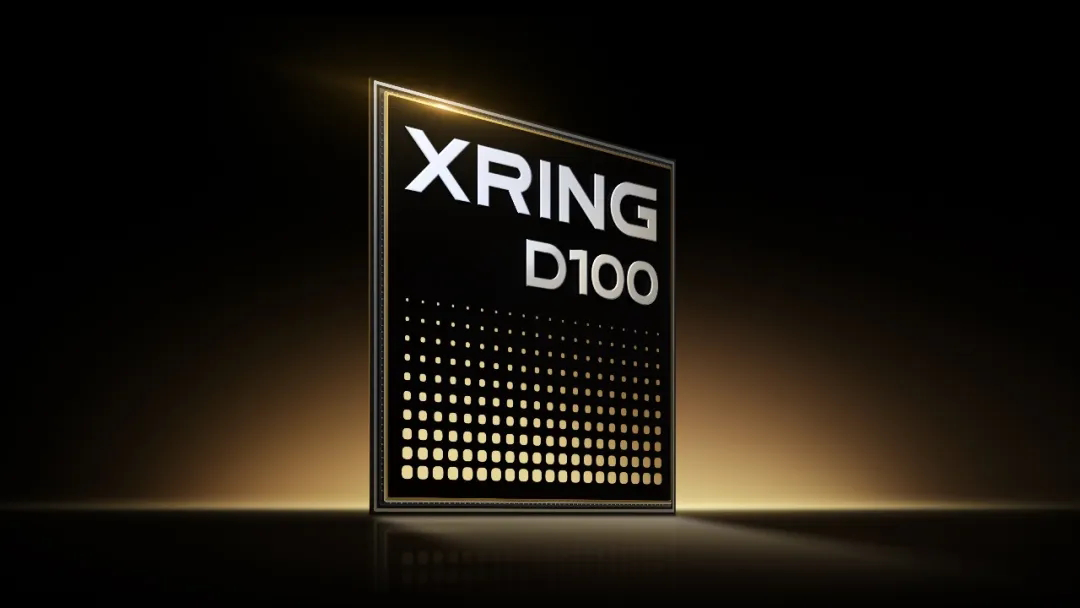
- Xiaomi unveils XRING D100, a 3nm autonomous-driving AI chip ready for commercial use in 2027.
- D100 packs 20-core CPU, 16-core NPU and up to 160GB unified memory, running >200B-parameter models locally.
- Xiaomi now fields a full XRING chip portfolio after $3.12B investment and ~3,000-chip team expansion.
On Aug. 24, Xiaomi held a tech briefing on its XRING semiconductor platform and officially unveiled the XRING D100, its first in-house AI chip designed for autonomous driving.
Xiaomi CEO Lei Jun said the chip is China’s first 3nm high-compute AI chip for autonomous driving.
It has completed development and validation and is scheduled to enter commercial use in 2027.

The XRING D100 is built on a 3nm process and integrates a 20-core high-performance CPU and a 16-core high-compute NPU.
The chip also supports up to 160GB of unified memory and can run models with more than 200 billion parameters locally.
The D100 has not yet entered production vehicles. Xiaomi has instead installed the chip in its AI Cube Prototype, a high-compute terminal designed to demonstrate the chip’s local AI capabilities.
The move represents another step in Xiaomi’s in-house semiconductor strategy, extending its chip development efforts from consumer electronics into automotive applications.

In May 2025, Xiaomi unveiled its first self-developed flagship SoC, the XRING O1, based on a 3nm process. The chip has been used in the Xiaomi 15S Pro and some of the company’s flagship tablets.
At the XRING technology briefing, Xiaomi also unveiled two other chips, the XRING O3 and XRING O100, alongside the D100.
The XRING O3 is positioned as a flagship AI SoC and is scheduled to debut in Xiaomi’s next-generation foldable flagship, the Xiaomi 18 Fold.
The XRING O100 is a high-bandwidth AI accelerator chip and is also scheduled for commercial use next year.
Xiaomi now has an in-house chip portfolio spanning smartphones, AI terminals and automotive intelligent driving.
Lei said Xiaomi has invested more than RMB 21 billion ($3.12 billion) in chip development since restarting its large-scale semiconductor program more than five years ago, with its chip team now approaching 3,000 employees.
Competition among automakers to develop their own autonomous driving chips is also intensifying.

XPeng’s self-developed Turing chip has secured a production program with Volkswagen Group, with cumulative shipments exceeding 200,000 units.
NX9031X, developed by NIO subsidiary Shenji Technologies, has become standard equipment on several core NIO and ONVO models, with cumulative shipments exceeding 300,000 units.
Li Auto’s self-developed M100 entered mass production in May and has already been deployed in the new Li L9 Livis, new Li L8 Livis and next-generation Li L6.
In late May, BYD launched the Xuanji A3, its in‑house 4nm automotive‑grade AD chip capable of L3 and L4 autonomy, which has entered scaled production.

Beyond chips themselves, the automotive industry is also moving to establish more comprehensive standards for automotive semiconductor certification and qualification.
Last Monday, five automotive chip certification and accreditation standards approved by China’s State Administration for Market Regulation were officially released.
The standards represent the world’s first qualification evaluation framework covering organizations across the automotive semiconductor industry chain.
Discover more from ChinaEVHome
Subscribe to get the latest posts sent to your email.