- BYD’s Fangchengbao unveiled the Ti9 flagship SUV, a six-seat plug-in hybrid launching in Q4 2026 as the brand pushes upscale, rugged family EVs to take share from established rivals.
- The Ti9 measures 5,270 mm by 1,999 mm with a 3,130 mm wheelbase, uses a 1.5T engine plus dual motors producing 400 kW, a 66.48 kWh battery with 310 km WLTC electric range, and combined range over 1,600 km, priced RMB 250K–300K (about $37.3K–$44.7K).
- Directly targets Xiaomi Skynomad N90 and XPeng G9L, but execution risks include final pricing surprises, scaling a new DMS hybrid platform, production timing and margins under heavy price competition.
BYD’s Fangchengbao brand unveiled the specifications and features of its flagship SUV, the Ti9, on September 29.
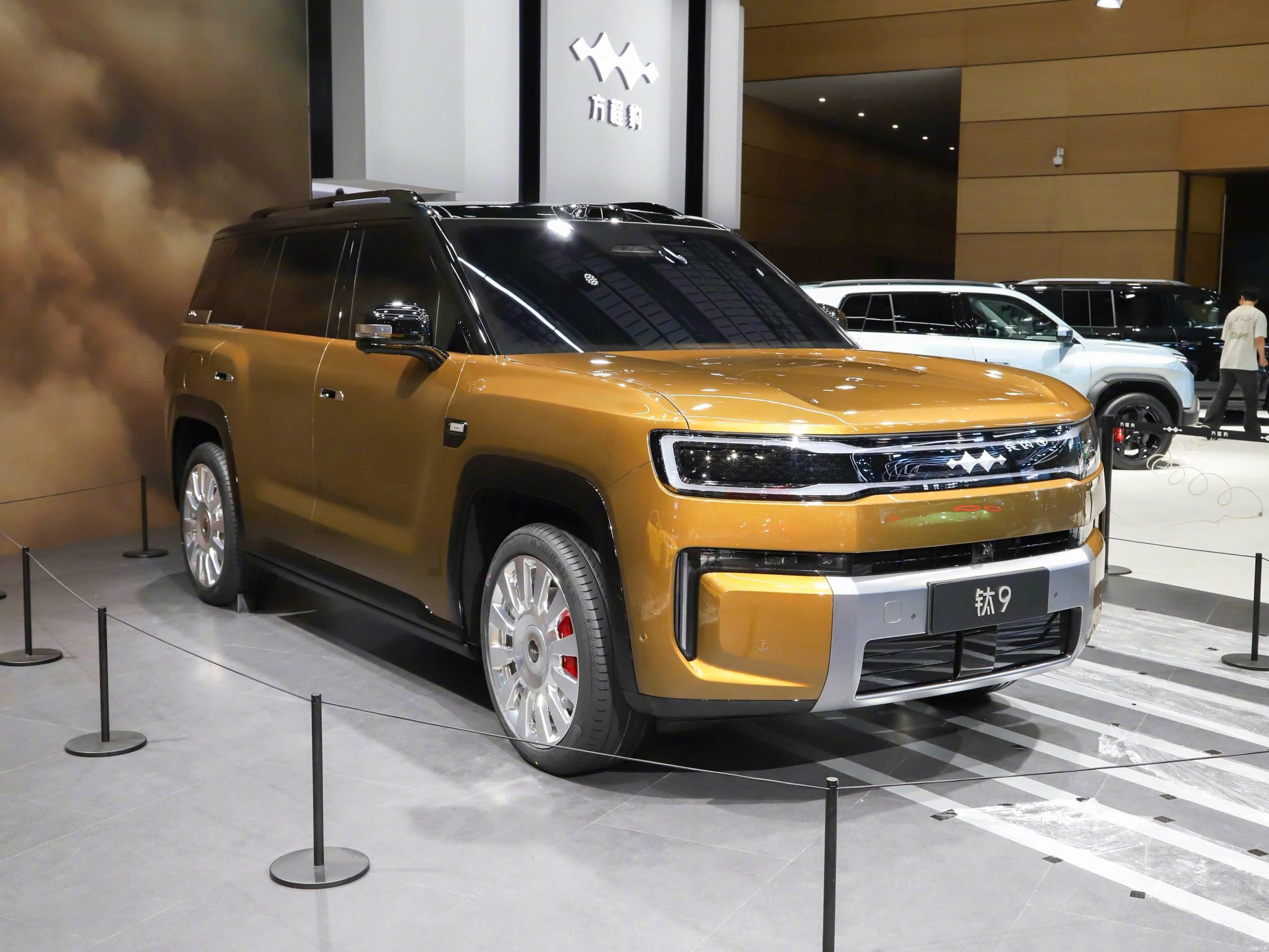
The Ti9 is a six-seat, plug-in hybrid large SUV measuring 5,270 mm long, 1,999 mm wide and 1,850 mm tall, with a 3,130 mm wheelbase. It comes in six exterior colors: Shimmering Gold, Meteorite Black and Cosmic Silver in solid finishes, plus Stellar Gold, Crimson Cloud Red and Deep Space Blue in two-tone finishes.

The Ti9 retains Fangchengbao’s signature rugged, boxy styling, with a full-width light bar, split headlights and angular body lines. Its dual-section tailgate adds everyday practicality while preserving its off-road-inspired look.
Inside, the Ti9 features a 30-inch panoramic display with multiple interactive UI functions, alongside a separate instrument screen and an AR head-up display. A column-mounted gear shifter frees up space around the center console.
The layout resembles that of Denza’s upcoming N8. Both models are among BYD’s first in recent years to adopt a large integrated display. Alongside the Horizon Screen design used in the third-generation Tang and the N8, BYD is exploring new approaches to its smart cockpit design.
Despite its rugged exterior, the Ti9’s cabin is geared toward family travel. The second row features zero-gravity seats, while all seats offer ventilation, heating and massage. Other features include a 21.4-inch ceiling-mounted rear screen and a smart refrigerator with heating and cooling functions.

The Ti9 is based on BYD’s new DMS hybrid platform. According to the company, the platform supports three functions: left-right torque distribution for off-road driving, torque-based body stabilization, and switching from four-wheel drive to two-wheel drive to reduce energy consumption in daily driving.
The SUV also supports Megawatt Flash-Charging, the iATS intelligent all-terrain recognition system and rear-wheel steering. Driver-assistance features include the God’s Eye B system and TSC high-speed tire blowout stability control.

The Ti9 uses a plug-in hybrid all-wheel-drive system combining a 1.5T engine with front and rear electric motors. The engine delivers a maximum 115 kW, while the motors produce a combined 400 kW. Its 66.48 kWh battery provides a WLTC-rated electric range of 310 km, with a combined range exceeding 1,600 km. A pure-electric version is also planned.
The Ti9 is expected to be priced between RMB 250K ($37.3K) and RMB 300K ($44.7K). It will compete with models such as the Xiaomi Skynomad N90 and XPeng G9L.

Fangchengbao’s Ti7 and Fangcheng S were both priced below market expectations. The Ti9’s final pricing could also bring a surprise. For Fangchengbao, pricing will be key to determining whether its flagship SUV can replicate the Ti7’s market performance.
Discover more from ChinaEVHome
Subscribe to get the latest posts sent to your email.